Episode 28 - Self-Advocacy: The Most Important Rule That Nobody Teaches You
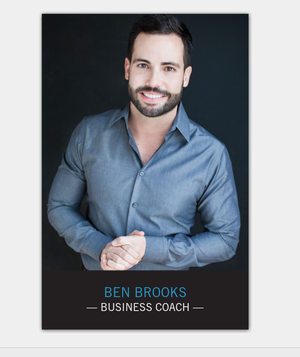
Self-advocacy – knowing what you need, asking for it specifically, and being willing to hear no and then ask again – is the single highest-leverage career skill most people were never taught. In this solo episode, Ben Brooks, founder of PILOT and host of The Lift, makes the case that in a world of fewer job openings, collapsing middle management, and remote work visibility gaps, waiting for good work to get noticed is no longer a viable strategy. The good news: research shows people underestimate a “yes” by about 48%. The bad news: most people still aren't asking.
Why is self-advocacy the most underrated career skill?
Here is an unwritten rule most organizations never put in the handbook: good work does not automatically get noticed. Waiting is a strategy, and it happens to be a bad one. It is also, unfortunately, the most popular one. Also unfortunately, it has compounding costs in resentment, burnout, and being quietly passed over for things you deserved.
Self-advocacy is simply knowing what you need or want, asking for it specifically, and being willing to hear no – and knowing when to ask again. It sounds obvious. But for a significant portion of the workforce, especially people from underrepresented backgrounds who never saw this behavior modeled, or were actively discouraged from exhibiting it, it's the one skill that determines more than almost anything else whether they get what they're capable of having.
The current moment makes this more urgent, not less. Fewer job openings mean you can't easily escape a situation that isn't working; instead, you have to fix it where you are. Middle management layers are collapsing, which means the passive visibility that used to come from proximity is disappearing. And remote and hybrid work norms have exacerbated what researchers call passive face-time bias: the same employee with identical performance is perceived as significantly more valuable when they're physically within 50 feet of a decision-maker than when they're remote.
The people who navigate all of this successfully are not necessarily the most talented.
They're the ones who ask.
What gets in the way of asking?
The restraining forces are real, and they're worth naming because they don't go away just by knowing that self-advocacy is a good idea.
The biggest one is fear of rejection. Neuroscience researcher Naomi Eisenberger found that social rejection activates the same brain circuits as physical pain, which is why being told no can feel disproportionately awful and why we avoid it even when the rational case for asking is obvious.
The reframe that matters: if you haven't been told no recently, you probably haven't been asking enough. A healthy rejection rate is a sign you're operating at the edge of what's possible, not a sign you're failing. Think of it less like a report card and more like a smoke alarm. If it never goes off, you might not be cooking.
Fear of looking ungrateful is the second restraining force, and it's particularly acute right now. A lot of people are “job-hugging” (staying quiet because they're relieved to have employment). But gratitude doesn't require silence. You can love your apartment and still want a bigger one. These are not contradictions.
The third is fear of being labeled a complainer, a diva, or not a team player. The distinction that matters: advocacy takes responsibility for your own situation. Complaining offloads it. One is something an adult does. The other is not.
And then there's the restraining force that's hardest to see: most people don't realize that the people around them are advocating, negotiating, and asking for things constantly. You just don’t see them doing it. The assumption that you're operating in a pure-merit system is one of the most expensive beliefs a person can hold.
There is also the cost of silence. A year of unnecessary travel. A year of staying quiet about what you actually need. A decade of an unvoiced want.
Maria, a PILOT program participant who had worked at her organization for over a decade in a development role she'd quietly outgrown, made an ask in a one-on-one with the president of her organization that changed her life. She is now the Head of HR for a thousand-person organization.
How do you make the ask – and make it work?
This is where most advice falls apart, because it stays vague. So let's be specific.
Start with your unmet need. What's not working? What do you want that you don't have? Where is the gap between what you're contributing and what you're getting? Name it precisely.
Instead of “I want more challenge,” try “I want to lead the Q3 client presentation.” Vague asks produce vague answers or no answers at all.
Frame the ask as shared information, not a demand. “I work best when I have X” tends to land better than “I need X,” not because you should have to soften your needs, but because you're giving the other person something they can actually act on. You're solving a problem together, not issuing a request. The most powerful version of this is the “shovel-ready” ask: don't just name what you want, make it as easy as possible for the other person to say yes. Want to hire someone? Don't ask for headcount. Come with a job description, org chart placement, KPIs, budget, and a hiring plan. (Yes, it is more work upfront, but that is also precisely why it works!)
One underrated move: ask someone else to advocate for you. Sponsors, mentors, champions, and executive assistants are all legitimate resources. Getting someone with access to help you get in the room is also self-advocacy. It just involves more than one person.
Research on over 14,000 requests across multiple studies and found that people underestimate how often others comply with their asks by about 48%. We assume the answer is no before we ever open our mouths, in turn doing all the emotional labor of rejection without ever getting the benefit of trying. A Harvard Business Review analysis found that negotiating an offer almost never costs you the offer. The fear that asking will backfire is almost always larger than the actual risk.
When you get a no, it's usually a “not now,” not a not ever. Ask when the context has changed, when you can make a stronger case, or when you've broken the ask into smaller pieces. And if you get something vague in response – not a yes, not a no – press for clarity: when can you follow up? When would be a good time to revisit this? Set the expectation that you'll be back on the issue.
What to do this week:
Think of one ask you've been sitting on. Something you've been avoiding because you're not sure it'll land, or you're worried about how it'll come across, or you've been telling yourself it can wait. Name it, specifically. Name who you'd be asking. And make the ask before the end of this week. Not when it's perfect. Not when the timing is better. Now. The odds are better than you think, and the cost of silence is higher than you're accounting for.
Related Episodes
– Religion at Work: Rev. Mark Fowler on Moving from Passive Tolerance to Active Inclusion
– Send More Emails and Still Sign Off at 5 P.M.: Justin Kerr on Managing Expectations, Time, and Teams
Stay Connected with The Lift
Subscribe to The Lift on Apple or Spotify
Join our mailing list
Take our listener survey
Follow Ben on LinkedIn & Instagram (& Jetson, too)