Episode 04 - Send More Emails and Still Sign Off at 5 P.M.: Managing Expectations, Time, and Teams with Justin Kerr
This week on The Lift, Ben is joined by Justin Kerr, also known as “the efficiency monster,” a former senior executive at brands like Levi’s, Uniqlo, Old Navy, and Gap. Justin is the author of the “survival guide” How-To series (How to Cry at Work, How to Quit Your Job, How to Write an Email, and How to Be a Boss).
Key takeaways:
Over-communication at work reduces anxiety and “status check” micromanagement
Clear expectations and deadlines are a core leadership skill, not just a nice-to-have, especially when managing up and across teams
Time management and early-morning routines create more freedom outside of work
Structured one-on-ones and pre-read agendas make meetings more efficient, build trust with executives, and speed up decision-making
Small process improvements (like better emails and links) compound into big efficiency gains, so you don’t have to “change the whole system” to make work easier
Remote work has real limits for learning, feedback, and leadership development, and in-person connection still plays a crucial role in how teams grow
In this episode of The Lift, Justin Kerr introduces us to his niche superpower: known as the “Efficiency Monster,” Justin is obsessed with making work simpler, faster, and less stressful through clear communication, sharp time management, and ruthless expectation-setting.
Justin’s philosophy can be summed up in three words: send more emails.
Not longer emails. Not more confusing emails. But more proactive, specific, expectation-setting messages that keep your boss, peers, and stakeholders fully informed so they never have to chase you for status. That one extra “FYI” or deadline reminder may take another 30 seconds in the moment, but it can save you hours of scrambling, anxiety, and follow-up meetings down the line.
Justin explains why over-communication is not a weakness or a sign of insecurity. It’s actually a high-level leadership skill. If your boss is asking you for status, Justin says you’ve already failed. The anxiety in the system shows up as “just checking in” emails, Slack pings, and surprise questions in meetings. Sending more thoughtful updates up front fills the space before it floods with concerns.
A big part of Kerr’s framework is his obsession with time. He’s a committed morning person and spent two decades in corporate roles without ever working past 5:00 p.m. – not because he was coasting, but because he built his days differently. He’d start extremely early, completing his deep work in those quiet morning hours before the offices started bustling. During that time, he’d send the emails, updates, and pre-reads that made the rest of the day run more smoothly.
For Justin, time equals freedom. Working in corporate America wasn’t selling out; it was a way to fund his creative life, which included bands, record labels, zines, and later, books. All of that was only possible as long as he kept his workday tight and efficient. That meant a radical commitment to priorities. He argues that if you don’t know your top three priorities in life, it’s almost impossible to design your schedule in a way that makes sense.
This conversation also dives into one of Justin’s favorite tools: the structured one-on-one meeting. In his view, you cannot be truly good at your job without a recurring 30-minute one-on-one with your manager. But it’s not enough to just “show up and chat.” He recommends:
Sending a written agenda by 5:00 p.m. the day before, so your boss can pre-read and prepare
Printing or bringing that agenda into the meeting, in priority order, to build momentum: quick wins first, harder asks later
Treating that time as your responsibility to manage, not just something the boss drives
This approach works at every level, even for the C-suite. Executives, Justin notes, are often lonelier and more uncertain than people realize. They want clarity, confidence, and structure from their leaders, not more ambiguity.
Justin breaks work down into two simple domains: people and process.
People: relationships, trust, triggers, and individual differences. We all bring our family histories and emotional wiring to work; a manager’s tone or look might trigger old childhood patterns. Without self-awareness, it’s easy for simple feedback to spiral out of control.
Process: the repeatable workflows – emails, forms, slides, approvals – that either make work easier or wildly inefficient.
According to Justin, most people are waiting for some “grand organizational redesign” to fix broken processes. But real progress comes from small, local improvements: adding the right link to an email, creating a simple agenda template, or sending a pre-read to a difficult stakeholder so they can’t derail a meeting with “I’m hearing this for the first time.”
Finally, Justin shares his hot take on the future of work: Remote work doesn’t fully work – at least not for everything. While digital tools can streamline process and documentation, he believes leadership, learning, and relationship-building still require in-person time. In his view, AI and automation should handle more of the process work. But the human side, including feedback, trust, creativity, and culture, happens best when people are actually together.
If you’ve ever felt buried in Slack messages, frustrated by vague expectations, or stuck in a cycle of last-minute requests, this episode will give you practical and immediately usable tools to change the dynamic.
And yes, you may walk away sharing Justin’s belief that the secret to an easier work life might just be three deceptively simple words: send more emails.
Links:
Full Transcript
Read the full transcript
Justin: No one's ever walked into work. No one's gone on a podcast and been like, the secret to life is send more emails. But I would say that I'd want that almost to be the headline on my work tombstone: send more emails. Because by sending more emails, yes, it took 30 seconds or one more minute. But I'm doing that to save me hours and hours of work on the backend.
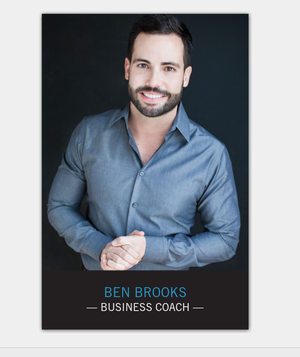
Ben: Welcome to The Lift, the show about leadership, growth, and getting what we want. I'm your host, Ben Brooks. For over a decade, I've worked with CEOs, their executive teams, HR departments, and entrepreneurs to identify what drives their success and what holds them back. And now I'm excited to share those insights with you on The Lift. We pull up to see the bigger picture from accomplished leaders who know how to get things done in a rapidly changing world. We've got all of that and a lot more coming up next on The Lift. This may be a surprise to some, but most problems at work aren't actually about performance or effort. They're about unclear communication. Someone wasn't explicit enough, and suddenly expectations don't match. Deadlines feel shaky, anxiety goes up, and everyone ends up with a headache. That's why today's episode is all about communicating better, more explicitly, and managing expectations before things go sideways. Joining me today is Justin Kerr. Justin is a bestselling author and the creator of Mr. Corpo, a modern no-fluff guide to workplace excellence. His books include How to Be a Boss, How to Cry at Work, and my personal favorite, How to Write an Email, which honestly should be required reading. He's also a former senior executive at Levi's, Uniqlo, Adidas, Old Navy, and the Gap. I've known Justin for a long time, and he's always been known for his radically clear, no-nonsense approach to communication and expectation setting. He's even got a nickname: the Efficiency Monster. Today on The Lift, Justin's gonna help us set clearer boundaries, communicate with less stress, and manage expectations in every direction at work — up, down, and across. Justin Kerr, welcome to The Lift.
Justin: Hello.
Ben: It is bright and early for you.
Justin: Yes, yes, yes. My favorite time of the day.
Ben: You're a morning guy.
Justin: A morning guy. To me, if you get up early in the morning, everything in your life is easier. And so when I meet someone who's like, I sleep in, it's hard for me to get up, I kind of look at them and I'm just like, you are an alien to me and we can never be friends and I can't relate to you, and let's just kind of go our separate ways.
Ben: Were you like this as a little kid? Were you rocking outta bed early and organizing your day?
Justin: Yes. I think really when I think about it, we went to church at 7:00 AM in the morning every Sunday growing up, so I had the rest of my day to do whatever I wanted on Sunday, and that was fantastic. And I had friends that would go to church at 11 o'clock, and it's like, can you come play? And they're like, no, I gotta go to church. And then they gotta do lunch, and the whole day's ruined. So that's probably where it started. And then I carried that on, and then — you know, I know we're gonna talk about work and things like that and work culture — that's where I really hit the ground running, was anytime I had any issues at work, you just get into work earlier the next day and you have the time to solve stuff. So to me, it's a secret to success.
Ben: Well, it is a peek into your psyche, Justin Kerr. You know, I know you've gotten the nickname, the Efficiency Monster, and this early riser thing sort of seems like you're in character there. What's the genesis of that nickname?
Justin: I don't know how you feel about nicknames that are self-imposed. You know, I think a lot of people look down on these ideas.
Ben: No, no, no. Nicknames can come — a good idea can come from anywhere.
Justin: You know, for me, Efficiency Monster was something — when I kind of started doing these books and writing books and going on tour, I kind of described myself that way because I liked the idea that, hey, efficiency, that's great. And the idea of a monster is, hey, it's a little bit scary. It's a little bit overwhelming. And there's some dark edges to this, you know? And so being an Efficiency Monster means yes, I am obsessed with finding the most simple way to get things done, create simplicity outta chaos, get into work. I think I worked 20 years in corporate America, never worked past 5:00 PM, and people are like, how did you do that? And I'm like, because I was really scary in the morning and got up and went to work at 6:30 and did all my work by 8:30. Then I sat back, drank a coffee, checked the internet, and by the time everyone else rolled into work, I was already on, had done everything. And so I think that that name is purposely a little bit on edge of — Efficiency Monster, you must be great — and it's like, but there's some things that are scary about it.
Ben: Well, monsters sometimes are powerful, right? They're a formidable force. And I'm just thinking even you versus your internal competition at work, in the internal labor market, on a C-suite team — that you know, you start to have even more influence if you're a step ahead. It's often, you know, that if you're in front of something, everyone else is sort of following or reacting to you.
Justin: That's exactly it. I'm definitely someone that — it's not always that I was an Efficiency Monster 'cause I'm trying to get ahead or I'm trying to do these things. I'm also an Efficiency Monster just because I want my life to be simple and easy and I don't want to be at the behest of someone else. And so if I'm staying ahead, if I'm overcommunicating — that's probably my favorite word in the workplace, is overcommunicating — if I'm doing that, then you can't bother me. Because I'm getting you all the information you need, so you're not gonna send me one of your stupid emails or one of these questions that I don't want to answer, because I've already given you all the information. So, you know, it's a little bit selfish. I'm doing it so that you don't bother me. That's part of the psyche and rationale. It's just like, I want my life to be simple and easy and no surprises. That's another big theme for me.
Ben: And in terms of what's important to you, kind of on a values perspective — 'cause we'll talk about efficiency, we'll talk about managing expectations, we'll talk about communication — why does people not bothering you or, you know, not being status matter to you? Because some people wouldn't care; this is part of the deal. Why is that important to you?
Justin: Gosh, this is like therapy also.
Ben: Oh yes. This is a — and it's a free one.
Justin: You know, I mean, I'm tempted to go deep and say, you know what? When I was a kid, my dad did silent treatment to me. If I ever did anything wrong, he wouldn't talk to me for a week. Or sometimes it was a month, or sometimes it was six months.
Ben: Whoa.
Justin: And so I think that created a psyche in my head where it's like, I need to do everything right so that I don't get into this dynamic. And I don't think it's a big leap to say when I got to work in this — you know, sure, let's say paternal — relationships of boss, employee, approval, disapproval. For me, I had kind of trained myself to — if I want to do everything right so that things don't go wrong, so that I don't get in, you know, this dynamic that is absolutely, you know, paralyzing to me, I've gotta be on top of everything. And that extra effort, you know, that's probably what put me in that state of mind. Wow — you just took me to a place I don't even know I wanted to go there. But I just said it.
Ben: We're kind of spelunking right now. We didn't know we were going down this part of the cave, but we both got our hard hats on and our light and our picks, and we're there. So you get the silent treatment if you had not done something right or he was disappointed. And so there's sort of a penalty box, if you will.
Justin: Yeah, that's a good way to put it.
Ben: And you wanted to sort of avoid that penalty box with managers. And I love that you brought up the paternal thing, because I have often thought that people show up a lot like they do with their parents as an employee, and people often manage as they are parents to others or as they were parented, even though that's often very dysfunctional. It is our root of a sort of power dynamic in our adult life, where very few people have that sway over us, like a supervisor or manager in the workplace.
Justin: You know, I think as a manager, it's incredibly challenging when you're handed other human beings and you're told to, quote, be in charge of them, and you're trying to give them feedback, or you give them a look across the table, or you sit them down to say, hey, I think this went well, but you know, this part could have gone better. And their reaction is outsized, where you're just like, why did they react like that? And you don't know that — oh my gosh — their dad used to look at them like that. So you looking at them like that has triggered that response, and you don't know that background. And so all of a sudden things start evolving quickly. So yeah, I think we are products of how we are raised, the different experiences we've had. We bring all of that into the workplace, we throw you together, and we're like, this human being who was a good individual performer, you're now in charge of three other human beings that you know nothing about. You know nothing about their history, their family history, their current situation, and now you're trying to get them to send good emails. You know, this is a recipe for a big, messy stew, you know?
Ben: Well, it speaks to sort of this idea of managing expectations. And expectations are — there's an expectation science, people study this, this is a field — and you've written a number of books, and that's where we had first met. You had given a talk in a seminar at NeueHouse — it was at a coworking space. I had a groovy time there.
Justin: I remember it well. Yes.
Ben: And you and your fabulous late wife were there, and I was quite captured by how plain-spoken, in a very clear way, you were about what's going on between coworkers and between managers and employees, and that you really took ownership to manage what people expected of you, and you made things extremely explicit. Which is — years later, you know, I've learned that being explicit is one of the core parts of being an effective leader in organizational dynamics. So tell us about generally the idea of managing expectations in the workplace, and how individually that's so important, not just at a corporate goals level.
Justin: One of my favorite quotes is from Oprah: you teach people how to treat you. And so I always use the example of, if you answer emails at 6:00 PM and 7:00 PM or on a weekend, then you've taught that person, I will answer emails at six and 7:00 PM, or I will check my email on the weekend. So now there's an expectation that you answer emails on the weekend, and now you're in a vicious cycle of, why do I always do work? Because you've set expectations that you do these things. So I think that applies to all of our individual interactions in the workplace, which is, I'm teaching you how I want to be treated. And so that comes down to, I've set clear expectations. Now we're gonna get into that groove. And, you know, for me, my philosophy in the workplace as an individual is, you have to take ultimate responsibility. You are never a victim. And so let's say I set a deadline for Wednesday at 3:00 PM. Well, I don't just sit around and wait till Wednesday at 3:00 PM for the deadline, and then be like, Ben, where is the information? I told you the deadline — why isn't it here? I think it's my responsibility to make sure you hit that deadline. So on Tuesday, at the end of day, I'm re-forwarding that email to you, being like, hey, just a reminder — wanted to make sure you're on track for that Wednesday at 3:00 PM. In the morning, I'm checking: hey, just wanna make sure we're on track for that. I'm following up, I'm forwarding it now. A lot of people are gonna say, why do I have to do that, versus, I gave you the deadline, it's your responsibility? But to me, I wanna make sure I get that by 3:00 PM 'cause my life is easier. So I'm gonna do two extra follow-ups to make sure I get that information. Because if I don't do that, guess what? It gets at 3:00 PM, you say, hey, I was busy, I'll get it to you by five. But now guess what? You've ruined my life, because now you're not getting me that info till five. Now I have to work past 5:00 PM, which I really, really don't like. You know, everything waterfalls from there, all because I didn't wanna send one more reminder email to make sure you're gonna do the thing I need you to do.
Ben: Well, it's very clear, 'cause I think there is uncertainty and anxiety in a system. And a system can be two or more people. And so if you don't know if they're doing it on time, or if they haven't let you know that it's not gonna be on time or that they need something, the system is anxious. And that's the status thing, and that's the circling back, and that's the pinging on Slacks and Teams, et cetera, that people hate about work. But it's really rooted in lack of certainty and clarity that manifests in anxiety.
Justin: You're hitting on something just gigantic. I talked about it from the boss relationship to an employee or — by the way — a peer-to-peer interaction. But yes, let's talk about the idea of — I believe in the workplace there is an empty space between you and me. If we work together — let's say you're the boss on the employee — there's an empty space that exists there. Now I have two choices. One is, I wait for you to ask, fill up that space with questions, anxiety, emails, annoying things that you're sending me, asking for. And then I'm constantly living in a world of reaction, and I'm, you know, surprised, and things are urgent, and I can't control my day and the flow of information. The alternative — the one I subscribe to — is, I am going to flood the field with so much information that you are not going to have time to send me your annoying questions and emails. I'm constantly forwarding: FYI. Hey, I'm on track for Wednesday at three o'clock. Hey, I'm actually gonna get it to you by noon. Hey, I just met with Julie, things are going great, that report's gonna be ready on Friday. I'm giving you so many updates, and I'm not asking, do you want updates? I'm just sending 'em to you. Hey, here's the update. Here's my question. I'm filling that field between you and I with all of my information, for the simple fact that you can't fill it with all of the stuff that's annoying to me. So I think whenever I hear someone say, oh, I'm bogged down in emails, oh, I'm getting all these questions, all these meeting requests — to me, what I'm hearing is, you are living in a reactionary victim point of view. Versus be proactive, get the information out there, and then people don't bother you. If you're giving updates, if you're sharing the information, there's no need for all these follow-ups and check-ins and anxiety and weird conversations when the boss walks by and goes, oh, I'm so scared to ask Justin if he's gonna hit that Wednesday 3:00 PM deadline, but I need to. So I'm gonna try and hit a bank shot by talking about something really weird, and then he's not gonna pick up on it. And you know, life at office is so hard and complicated. It's like, no — just ask for what you need.
Ben: I think that a lot of folks are in that defensive, you know, show up at 8:55 for the nine o'clock meeting and scramble through the day. And you had said something to me, more or less, that if your boss is asking you for status, you failed.
Justin: That's right. That's exactly — that's your first clue.
Ben: That's a defect in the system.
Justin: Yep. That's your first clue. Like, oh, you just asked for something. Okay, yeah, of course I'm gonna get it for you, but that is my first indicator: I should have given you an update. The fact that you don't have what you need, when you need it, should be a learning experience for me, where I say, okay, next time I need to get this to them earlier, or I need to be proactive on this. So those are little clues. Anytime someone's asking you for the information, that means, ooh, I missed a chance to overcommunicate to them in advance of that.
Ben: When I interview people for jobs and I talk about the way to get the worst outta somebody, I say, how does the boss get the best outta you and the worst outta you? Damn near a hundred percent of the time, it's micromanagement is the worst, and they don't like being micromanaged and all these things. But I always probe into that to say, well, how did you wind up being micromanaged? Because sometimes you have a truly overbearing, controlling maniac of a boss — but even still, you can get in front of that person. But so often people need micromanagement and they resist it; then that's what they need. And so I think what you're talking about is actually more of that space and getting in front of it. And again, I explained — I said, look, if I ask you for status, it means I've already been thinking about it. I've been worrying about it. I may have done my own self-service in Slack for HubSpot or some other tool to try to find it, which is a waste of time. Then I have to decide: is it a good time for me to reach out to you about this? And how many things have I asked you for, and are you having a good day? And then I have to figure out, how do I do that in a tone that doesn't make me feel sharp or what? And give context, and the amount of — and again, I try to probably over-index, I'm being thoughtful — but it's very inefficient for me to know where the status of a thing is that someone is responsible for and accountable for, and being paid for.
Justin: Well, I think there's that. I think there's also this missing moment in the workplace, which is, when a boss has an employee, or when two coworkers get together, there should be almost a mandated moment where it's like, let's spend 15 minutes — 'cause 30 minutes sounds like a lot. 15. Everyone has 15 minutes in their calendar. You should be forced to sit together for 15 minutes, and you each set a timer, and you say, for five minutes, here's how I like to work. I get nervous towards deadlines. I'm someone who likes to follow up. And you can explain these things, because, by the way, that's an exercise in self-awareness, one, which most people don't do at work, but also, two, telling the other person, this is how we can work well together. I tell people when I meet them, when I'm working with them, I say: I'm obsessed with time. Things have to be on time. Things have to start on time. Things have to end on time. If you walk in one minute late, that is a death pill to me. And so if I tell you that, you know — okay, I know Justin is obsessed with time, so I'm gonna make sure I show up on time. Now I wanna sit for five minutes and listen to you. For the next year, you're gonna be able to have a great working relationship, because you spent 15 minutes telling each other: this is what I like and don't like. This is what's important to me, and this stuff I don't care about. I don't care what time you come into work or leave work, just get your work done. Okay, now I'm not gonna pretend to work at 5:30 'cause you're still in the office. You know, stupid, stupid stuff like that, where we're all trying to read each other's minds. It's better to tell the honest things so we can see each other for real. Rather than, you know — I always like the word bank shots. People are trying to bounce it off three walls to get it in the basket, versus just walk up and just drop it in the basket.
Ben: You mentioned the efficiency part, and this time part is so important to you. At a philosophical level, what does time represent to you? Why does that matter to you so much?
Justin: I grew up in corporate America. I kind of went to work there when I was 21, and, you know, I kind of went through this anxiety of: am I a sellout? Am I wasting my life? What's going on? I had friends that were in bands, I had, you know, people, artists that were doing interesting things, and I was like, should I be doing that? Why am I working in corporate America? And what I came to realize was, all my friends that were in punk bands and doing cool stuff, they still had a nine-to-five job. It's just their job paid them $15 an hour. And so what I realized was, hey, why don't I make my job a nine-to-five job, and I'll make, you know, whatever — it's a hundred dollars an hour. So then it became, okay, I'm okay working in corporate America as a means to give me the freedom — with money that comes with having income — to buy the art supplies, to rent the studio time. And so then what I said is, hey, if they're leaving work at five o'clock, I will leave work at five o'clock. And then I said, how do I leave work at five o'clock? I said, you know, what's the free time in my day? Everything in the morning. No one's ever called me and been like, hey, let's go hang out at 6:00 AM. Hey, let's go get a drink at seven. I mean, I'd be open to that kind of call, but you know, for the most part, I was like, these are the free hours. So I was like, you know what? If I want to have — time equals freedom to me — or the things I want to do in creative pursuits starting at 5:00 PM, I will do everything I can to achieve that. And that's where that efficiency came in. And that's where the early mornings came in. That's where realizing that the hour from seven to 8:00 AM, alone at your desk, sending emails, doing work, thinking, putting things together — that hour in silence and peace is worth two or three hours of the hubbub in the middle of the day, when you're being disrupted and you're distracted and things like that. You know, the original question was, what does time mean to you? It means, for me, I had the freedom to do the things I wanted to do, which in my case was, I started a record label. I joined a band, you know, I put out a zine — you know, these different creative endeavors that filled up my cup outside of the workplace.
Ben: Well, I do think it gives you a — certainly a why for efficiency. You had the band, you had the thing, the interest, the writing. And so, you know, this idea of winning outside of work and winning at work do seem very related. And you're a parent — that's a definite way to win outside of work. And I know a lot of parents have a real efficiency breakdown, or breakthrough, when they become parents, because they have to.
Justin: I mean, obviously — I became a parent much later in life, at the age of 45. Look, I think how we spend our time, how we set priorities — you know, if you don't have at your desk, or if you haven't written down, here's the top three priorities in my life, you can't live an organized life that's going to be as fulfilling as it could be. Because you need to know, this is more important than this. This is more important than this. This is more important than this. And by the way, there is nothing after those three. Where does your career fit into that? Is it career, because of the income, before your husband, or...? You need to understand these, because that's how we organize our life. That's how you decide, do I stay home to do breakfast with the kids, or do I go into work to get there early to get it done so that I can be home at 4:30 instead of 6:30, so that I can get to the soccer practice?
Ben: And in the perception of your managers, they weren't necessarily viewing you as a slacker or a low performer?
Justin: Oh, gosh, no. I mean, because I was flooding the field with so much information, they had everything they needed from me by 7:30 in the morning, and when something was due, I always turned it in three hours earlier, before everyone else. I went to work. I never asked, is it okay if I leave? I just left. And that's one of those key things. It's like — you don't wanna ask someone, hey, do you want a lot of updates or not? Because now I'm making you decide — well, what does that mean, a lot of updates? I don't wanna get too many, and this and that — and it's confusing. I put the pressure on you to answer it. Versus just perform. I think some people get caught up in asking permission versus just doing it and show that this is gonna work well, and then people learn how to treat you and learn how you get stuff done.
Ben: I think what you're talking about is building your own structure. That instead of having, you know, a lack of structure, so everyone's pinging you and asking for random things and you're on your back foot, you've sort of mechanized how you do that work, and you put everyone else's requests and needs into that structure so you can organize and you can prioritize.
Justin: That's right. That's right. And you're kind of getting at something. For me, I'm really invested in work being easy. I'm not invested in the workplace being complicated. And for me, the workplace comes down to two pieces: people — there's some things we gotta work on with people, understanding people, interacting with people, by the way, human beings, not managers, bosses, things like that — and then process. It's people and process. And how do I get the efficiencies in my process? How do I build the structure, like you're talking about, that's gonna make this work? And then the people part — when you just break it out into two sections, all of a sudden things start to make sense. Things get a little easier. It's — if you throw it all in a big pot and you're like, oh, this is so confusing — Julie's mad, and there's four meetings today, and no one filled out the form, and I didn't set the debt, and someone missed the deadline — it's like, that's overwhelming. But if I'm just like, okay, I'm failing on the process part, or I need to work on my people part — breaking things into bite-sized chunks. I think that's a lot about what my corporate survival guide books are about, is breaking things into their most basic level, then building them back up, you know? And I think we don't really get a lot of that training, you know — people go to the workplace outta college, they've been writing essays with introductions, supporting evidence, and conclusions, and now they get into a workplace and no one has said, this is how you send an email. There absolutely is a formula to a good email or a bad email, right? This is how you manage up. This is how you communicate. There's none of this training.
Ben: And I love the people and processes decoupling, 'cause like you said, it is quite overwhelming. I think a lot of employees and executives and managers sort of assume that someone else is the grand process master, and that there's this — someone's figuring out process. But at the desk level, at the team level, you have to create a lot of your own. And that's what I'm hearing, is there's an intrapreneurial side of you that you said, hey, I've gotta define my own processes.
Justin: Well, it's like, do I want this to happen to me, or do I want to make it happen? One of my least favorite things in the workplace in corporate America is the never-ending promise that next time it will be better. Next time the process will work. Next time we will figure it out. It never happens, and those false promises, I think, kind of cloud everybody's experience. Versus saying to people, hey, we work in a business where we have to change our mind quite a bit. That just is what it is. So let's get used to it or go work somewhere else. I'd rather someone say, this is the reality, yes, and now let's move forward, rather than this endless hope out there that then people can hold on to, get frustrated by, say you didn't live up to. I'd rather just be like, it's messy, and this is, you know — let's do the best we can within the mess, rather than promising something that you can't really deliver on. That's one piece of it. And then the other piece I would say in response to that is: stop trying to change the world and just change one tiny thing at a time. Find the smallest, smallest efficiency to fix something, and just be satisfied with that, and do it. And then people are like, oh my gosh, including the link in the email made it so much easier, you know? And then you're like, okay, wow, Justin has a reputation for making things better. And then I'm like, I like that positive feedback of people saying, you did a good job. So now I'm gonna find another efficiency, and stack five small efficiencies up — that has its own momentum, that has its own, just kind of like, hey, this is fun, I like doing this, let's find more of these. But you have more success finding small improvements, rather than waiting, like you said, for the Grand Wizard of organization to fix everything in one fell swoop.
Ben: You mentioned that incrementalization — it reminds me of the second C-suite boss I'd ever had, and she had been brought up through banking and insurance and had always been in human resources as a corporate executive. You know, I found that I would go into the one-on-ones — and I know that this is a — one-on-ones are a real minefield.
Justin: I'm obsessed with these.
Ben: And, you know, we'd go in, and first of all, because there wasn't that much clarity or purpose, I was kind of, again, not bringing a lot of structure. I was just — and having her energy come to me. Well, sometimes her energy was talking about the CEO and how he's a nightmare that day, or bouncing ideas around something completely unrelated, or talking about our personal lives. It was nice to have that on the people side of it, but that would probably be better for a cocktail or sitting for a coffee in the courtyard or something. And I started to bring in the ugliest slide I've ever made, and it was the date, and it would say, you know, agenda, right? And I would put in rank-order prioritization. So if I really needed an approval on a financial item, yeah, I'd put that as the first thing — it was actually number two. The first thing was always: what can I do for you? What's on your mind? That was always the first thing. She'd take notes on it, and they were in a file cabinet and she saved them, and all of a sudden it was so easy to get her approval and trust. So I'm curious, you know, when people get to this level, where they're in a floor with a bunch of, you know, mahogany doors — what's the kind of upward management, or the one-on-one, when you start to work for someone in a really big job?
Justin: I say very simply, at any level: you cannot be good at your job if you don't have a set schedule of 30 minutes of one-on-one time with your boss. You cannot be good. You can survive. You can be doing okay. You think you're doing well, but it's exponential if you are able to have 30 minutes scheduled every week with your boss, no matter what. And there's rules to this — we talked about people and process — the process of a one-on-one: one, I love that you printed out and brought it. That's fantastic. You know, that physical object, they get to look at it, things like that. You know, to me, I always say you need to send it by 5:00 PM the day before so that they can pre-read, because nobody likes to be surprised. But if I've sent the agenda by 5:00 PM the day before, I've let them digest it. They know what to expect. And by the way, I have the benefit of, now they might be prepared to answer those questions. 'Cause if I just walk into my boss and be like, I need approval on this budget, they're like, whoa, whoa, whoa, whoa — I need to look at it, I need to think about it. But if I've given it to them the day before, now when I walk into the meeting — and again, I love the printout, I love putting it on their desk, and I have the same one — now we're looking at it together. They know how many questions I have. This is really good. Now we can go through this. Now, I'm kind of reacting to what you did — I would never start a meeting with such an open-ended question as, how are you? What can you do? I will never — I commend that — do that ever. I would never do that. I would be like, hey, I have three things I need from you. Then I'd like to just open it up for what you need or what you want. You know, I —
Ben: It's part of teaching people how to treat you, because I think there's a little submission in there that — again, coming from a consulting background — you're the client, what do you need? When in reality, I know what they needed, because it's the responsibilities, right, we've already agreed to. Right? And again, I think you're talking about increasing the value of that half hour or hour, 'cause I know a lot of times the one-on-ones get bumped in things. And the incrementalism was — I made that printout. Well, the next incremental thing was, I moved the bullets from dots to check boxes. So she got the dopamine hit and she would —
Justin: Then — this is it, the sense of accomplishment. 'Cause I would even say, when I'm doing that list, I wanna build momentum in the meeting. And I might have three things that I'm like, this is easy, they're gonna say yes or no — yes. Oh, and now the boss is like, hey, I'm good at this. I'm a good boss. I just gave run a roll. Hey, this second one, this is easy too. Hey, we just did three things in a row. We're really good together. Okay, here's the hard one. Versus if I start with the hard one, that could be the whole 30 minutes. So there's a curation to these things. There's a process, there's a system to this, to make it build. And even when you're in the C-suites with the mahogany floors and the big door, that boss is sitting behind the door wondering, do people like me? Am I good at my job? What's going on? I'm hundred percent — I'm unsure. No one talks to me. By the way, when you get up there, you get lonely. That is the word — lonely. 'Cause there's no one else to complain to. You know, there's no one that talks to you. You're not on the floor in the middle of the jokes. No one invites you to coffee. So if you can walk into that room understanding, this is a human being, not a COO — how do I meet that moment? And part of that is just processing these things. Hey, I'm organized. Hey, I'm gonna build momentum. I gave you a pre-read so you're not surprised, and now we're going through these things, you know? And by the way, pre-reads are the secret sauce, because it's not just between you and your boss. It's also, if you need approval, let's say, for something — understanding, on the team, in the room, who are the people that are gonna have doubts? Who are the people that are gonna pick holes in what I'm trying to propose? And not waiting until that meeting. This goes back to what you talked about, which is like home run culture. Like, I'm gonna give such a great presentation, yes, everyone's gonna stand up and clap and I'm gonna get approval. It's like — that almost never happens. Assume you're not —
Ben: Don Draper in Mad Men.
Justin: Right? Right. Okay, yes, that's right. But if you are willing to understand, okay, who are the people that are gonna have these questions? How do I get them on my side before I walk in the room — sending them the pre-read: hey, Ben, for this meeting tomorrow, I just wanted to share what I'm gonna be presenting to Cheryl, so you get a chance — let me know if you have any questions. All of a sudden, by giving you the pre-read, soliciting, do you have questions or will you know — I'm not saying, do you support this, but I'm saying, let me know any questions. When we get into the meeting, I feel I've now taught you, this is not the time for you to ask the questions. I gave you a chance to tell me in advance. Now I'm expecting your support. So there's some subtlety in this, where it's like, hey, I'm reaching out, I'm giving you a chance, let me know what you think. But that way, when we're in the room, all of a sudden Cheryl sees, whoa, Ben didn't ask Justin any questions. Usually he's the toughest one in the room. I guess this must be a good idea. And yes, by the way, that's extra effort. I have to send that email to you. You're not even the one who's gonna do the approval, but I'm getting you on my team. And what I always say is, I wanna send that extra email. No one's ever walked into work, no one's gone on a podcast and been like, the secret to life is send more emails. But I would say that I'd want that almost to be the headline on my work tombstone: send more emails. Because by sending more emails — yes, it took 30 seconds or one more minute, but I'm doing that to save me hours and hours of work on the backend. Because sending that email got me the pre-read, made you more comfortable, got me the approval, rather than waiting two days for your schedule to open up, to circle back to see if you're ready for an answer.
Ben: And I do think, even of those stakeholders, one last point is that, you know, you're showing them respect. They're not surprised. And that you thought enough about them — 'cause a lot of this is ego at the end of the day — that you thought enough about them that even if they're not the decision maker, they could sink the thing. That's right. So how do you give them that opportunity? And they also can't play as many games in the remote — I, I, we're gonna need to think about this. Right? I hadn't heard about this, and I'm gonna need some time to look. It's like, no, no, no, no, no — we're gonna stop all of those games. And I think that —
Justin: Oh yeah. You say to Cheryl — in front of Cheryl, in the room — Ben and I were talking about this earlier, I'm really excited to present it. All of a sudden, I've subliminally told the room, I've got dangerous Ben on my team, and they're gonna be like, wow. So now it looks like I'm a team player. So now I look like leadership material. And it's bipartisan —
Ben: legislation is —
Justin: co-sponsored at this —
Ben: point.
Justin: Right? Yes, that's exactly right.
Ben: We're ending today's episode with the Heat Check — our guest's hottest take on how the way we work and lead will change in the next five years. Given you mentioned AI and some other of these things, how do you see, you know, the role of, you know, being a manager or an executive or even an employee changing in the next five years?
Justin: Well, Ben, I'm retired, so thankfully I don't have to think about any of those things whatsoever.
Ben: Goals. Goals, okay. Flex. Alright.
Justin: But my hot take is that remote work doesn't work. I mean, we're already seeing it — everyone's coming back to the office. I think it worked when we started COVID because everybody knew everybody. We've all been working very intimately. We've spent years — interpersonal relationships, seeing each other, understanding things — and I think through COVID, we were able to ride out that preamble of experience in person for a few years of interactions over Zoom calls. But I think as we've gotten farther and farther away from interpersonal, intimate interactions, everyone's realizing, how in the world do I teach? How do I learn? How do I lead? How do I actually get the most out of these other people I'm working with, if all I see is a little square box and we never have that personal interaction? So I don't really see — and I'm sure someone could absolutely say the opposite — I don't actually see us all becoming computerized and all of those things. I think it actually becomes tighter together — the humans need to be together to interact and have the magic and the spark and the positivity in all these pieces. And maybe the process part can be efficient. We can find efficiencies and get some of these things — we all fill out forms that it's like, why can't a computer do this? Sure — let's let the process part become more efficient. But the people part, I actually think people need to be together. We do better when we're together, when we see and we touch and we feel — those are probably dangerous words in the workplace, but you know what I mean. So my hot take is, more people together is gonna be powerful, and then supported by some of these structures. And by the way, I don't think the structures have to be life-changing. It's simple stuff like, help us write great emails in this format. Help us fill out this form. You know, the stuff they're doing with some of these slide presentations, that you used to spend seven days on, that they can do in seven minutes with a prompt — that's amazing to me.
Ben: Justin, thanks for joining us today. You know, I think you've been a fantastic friend, mentor, inspiration. I have bought many, many of Justin's books for many people, and I have never gotten anything but praise and thank-you and delight. So, Justin, any final words you'd like to give to our listeners?
Justin: No. Send more emails and always use bullet points. That's all I have to say. Bullet points are the secret to life, so.
Ben: Okay — Justin Kerr 2028, vote for him. Alright. Alright. Thanks for joining. Cheers. All right, everyone, let's turn today's episode into action. Here are a couple things to think about this week. One: is there a small efficiency that you can unlock at work? It doesn't have to be big, just something that would make your life a little bit easier. For me, I've started reviewing my calendar on Friday for the week ahead. I can know what to expect, what things to move around, and avoid those Sunday scaries. And number two: you heard the man — send more emails, or Slack messages, or Teams chats. Let your colleagues know about upcoming deadlines, push progress updates. Everyone wants to feel good. Send that pre-read or the meeting agenda. Think about getting the information to them before they ask. And check out Justin's book, How to Write an Email. He will help you to communicate consistently, concisely, and efficiently. Thanks for joining me this week on The Lift. For more info on what you heard in today's episode, visit our show notes. You can find out more about the show at theliftpod.com. If listening to The Lift today was a good use of your time, please share it with a colleague, a friend — I don't know, your ex, your mother, anyone. Don't let good advice die with you. And for those of you who like to earn a little bit of extra credit, leave a comment on Spotify. We'd love to hear from you. The Lift is produced and edited by the team at editaudio. This episode was produced and edited by Ali Sirois, with additional production support from Victoria Marin. Our production manager is Kathleen Speckert. Our executive producer is Steph Colbourn. A special thanks to Korey Rich and Beth Gatsik. There's only one way to go: upward.