Episode 29 - Honesty at Work 101: What an FBI Informant Can Teach You About a Culture of Truth
Most leaders assume their employees are withholding bad news because of bad intentions. Tom Hardin – aka "Tipper X," the FBI's most prolific cooperating informant in the largest insider trading investigation in US history – argues it's almost never about intentions. It's about incentives, ambiguity, and the culture that forms around whatever behaviors actually get rewarded. His framework for getting people to finally tell the truth, built from 40-plus wire sessions resulting in over 20 convictions, has more to teach leaders about psychological safety than most management books combined.
Why won't employees tell leaders the truth and how can you get that pattern to change?
According to the Association of Certified Fraud Examiners, 43% of occupational frauds are detected by a tip – more than three times any other detection method. Employees supply 52% of those tips. That tells us that the information is there. The people who have it are in your organization. The question is whether your workplace culture makes it safe enough for them to surface it.
Most leaders, when they sense information isn't flowing freely, diagnose it as a people problem. Someone isn't being straight with them. Someone is covering something up. But Tom Hardin, who spent 18 months as a covert FBI informant wearing a wire more than 40 times, offers a more useful diagnosis: it's almost always a systems problem that started long before anyone decided to stay quiet.
The higher up you go in an organization, the harder it is for people to tell you the truth. Not because they're dishonest, but because bad news creates structural disincentives. Nobody wants to be the person who surfaces a problem that then travels up three layers of management, acquiring blame at each stop. So, people smooth things over. They delay. They explain away. And by the time a problem is visible, it's usually much larger than it needed to be. This is how a small fire becomes the kind that makes the news.
As an informant, Tom’s three-stage approach yielded what he called “third meeting honesty.” It went as follows:
The first meeting is relationship building: who you are, what you need, establishing basic trust.
The second meeting is normalization: making it safe to discuss the difficult thing by signaling that you're not going to punish its mention.
The third meeting is where people finally say the thing they've been holding back. Dinner (and wine) helped.
What he has found that is perhaps most applicable in an organization is that trying to force it at meeting one almost always fails. You have to put the time in. Additionally, he says, it’s important to remove the courage component that often underscores being honest at work.
“You [shouldn't] have to be courageous to speak up.”
– Tom Hardin, aka Tipper X, the author of Wired on Wall Street
When speaking up feels heroic, most people don't do it. When it feels normal, most people do.
How do good people end up crossing ethical lines at work?
Tom was a young analyst at a hedge fund, good at his job, married, going to church on Sundays, making half a million dollars a year. Things went sideways when he made four trades on inside information over seven months. His total personal gain – $46,000 – was not a life-changing number. But it cost him his career.
What happened was a sequence of small environmental changes that shifted the incentive structure around him. His boss moved his investment horizon from 1-3 years to monthly returns, yielding a massive shift in what "success" meant without any discussion of whether the rules had also changed. He was then given authority to make trades up to 1% of the fund without approval, removing a key oversight mechanism. When the first illicit trade produced results and his boss said “keep me out of it,” the implicit message was clear: this is acceptable.
“Ambiguity is really the enemy. People can start making rationalizations, and the change in goals was a big part of it.”
– Tom Hardin
The moral ledger he describes – being a good Catholic on Sunday at church while being a rule-bender on Wednesday at work – is not a character flaw unique to him. It's a documented cognitive pattern. We credit ourselves for our values and debit the compromises as small, isolated, temporary. The problem is they rarely stay small, isolated, or temporary. The first compromise is always the hardest. After that, the brain gets very…creative about why the next one is fine, too.
Tom’s 10/10/80 model exemplifies this: 10% of people in any organization will always toe the line, while 10% are more inclined to bend it. The 80% in the middle? They will typically go in whatever direction the culture signals is safe and rewarded.
“[Is] what we say is the culture? No. It's what people see – the behaviors that people believe will put them ahead.”
– Tom Hardin
What's the difference between a mistake and a bad decision, and what does it mean for your workplace culture?
For Tom, the difference here is intent. A mistake is something that happened without it – someone forgot to change a number, a communication got dropped, or a process failed. Conversely, a bad decision is something someone chose to do, even if they told themselves it was a mistake. Tom made bad decisions. But he called them mistakes for years.
The reason this matters organizationally is that mistakes and bad decisions require different responses. Mistakes require process improvement. Bad decisions require accountability.
“Accountability is just about ownership. It's not about punishment.”
– Tom Hardin
That distinction is what makes speak-up cultures possible. When employees believe that accountability means consequences, they hide problems. When they believe it means ownership and learning, they surface them. According to the Ethics & Compliance Initiative's Global Business Ethics Survey, 46% of employees who reported misconduct experienced retaliation. That number explains a great deal about why the other 54% stay quiet the next time.
The question Tom now uses with both executives and his teenage daughters – “what would you tomorrow want you today to do?” – pulls you out of the pressure of the moment. It makes you your own advisor. And it creates just enough distance from the rationalization machine to see things clearly.
What to do this week:
Make raising concerns routine. Build it into the process. A daily check-in. A weekly report. Doesn't matter what it is. Just always ask: what could go wrong? By designing this into the flow work, you’re naturally creating a space for people to speak up.
Keep in mind that the third-meeting honesty principle applies in organizations, too: the first time you ask, you'll get surface answers. Keep asking, without punishment, and the real information eventually surfaces.
Related Episodes
– Amy Gallo on Conflict at Work and How to Have the Hard Conversation You've Been Avoiding
– Sir Andrew Likierman on Judgment at Work and Frameworks for Better Leadership Decisions
Stay Connected with The Lift
Subscribe to The Lift on Apple or Spotify
Join our mailing list
Take our listener survey
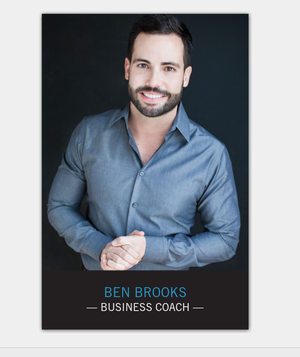
Follow Ben on LinkedIn & Instagram (& Jetson, too)