Episode 30 - Don’t Chase The Wave You Missed: Overcoming Complacency
Snorre Kjesbu, SVP & GM of Collaboration at Cisco, says the biggest threat to any organization isn't a competitor, but rather, it's the lag between when something stops working and when leaders are willing to say that out loud. Instead of chasing the wave you missed, identify the next one, and then get there before anyone else does. The window of opportunity is narrow and being early is just as costly as being late.
What do executives get wrong about staying ahead, and how do you know if your organization is falling behind?
The instinct when you feel behind is to catch up. Fix the feature gap. Match the competitor's move. Ship the five things that would close the distance.
But Snorre Kjesbu’s assessment is this: that's a losing game approach.
“If you missed the current wave, don't try to catch up with it — that's gone. [Instead,] look for the next one.”
– Snorre Kjesbu, Senior Vice President and General Manager of Collaboration, Cisco
Snorre offers four diagnostic questions leaders should be asking every quarter:
What got us here, and will it get us there?
Are we challenging our own operating model and products enough?
Do we have the right talent for the future, not just for now?
What is the next wave, and are we positioned to catch it?
According to Snorre, the third question is where most organizations stall. He is direct about what “AI-forward talent” actually means: not just people who can use the tools, but people who dare to change the way they work around them.
“I think there will be two types of companies — the ones that embrace this, and the companies that will be out of business.”
– Snorre Kjesbu
The gap between those two groups, in his view, will be more distinct than any previous technology shift.
What are the three things that every team needs to succeed/overcome complacency??
Snorre made some simple observations from his time running remote teams during the pandemic. A lot worked better than expected. Three things didn't.
Creativity and innovation were the first casualty. Not the scheduled brainstorms, but the unplanned collisions that generate ideas nobody thought to put on a calendar. Then, culture and purpose suffered: the sense that the work means something, and that the organization is going somewhere worth following. The third loss was mentorship – the osmotic development that happens when early-career employees are in proximity to senior ones, watching how decisions get made, how hard conversations are handled, how to read a room.
Each of the three has a different substitute. For creativity, it's designing venues where collisions happen. Snorre calls it “great coffee,” meaning the informal gathering point, not the caffeine. For culture, it's clarity of purpose communicated repeatedly and concretely, not assumed. And for mentorship, it's intentional proximity – bringing people together specifically for the tasks that proximity does best.
The implication for the return-to-office debates here is clear: presence for its own sake solves none of these. The question shouldn’t be around how many days people should be in the office. It should be around which activities genuinely require people in the same space, and whether you're designing for that specifically.
What got your organization here – and is it enough to get it where you're going next?
In 2002, Snorre was four years too early on mobile internet. He was pushing to build the capability before the market was ready.
“It's equally bad being early as being late. Both will be bad for you.”
– Snorre Kjesbu
He was right about the technology and wrong about the timing, and it cost him.
His fix now isn't a formula. It's a standing practice: build “are we early or are we late?” into regular leadership conversations. Make it a question that invites real disagreement without requiring anyone to be the pessimist. The answer changes, and the discipline of asking it consistently is what keeps the window visible.
For AI, his read is unambiguous: the window is open now, but it won't be open indefinitely.
What to do this week:
First, stop trying to catch the wave you missed. Ask instead what capability doesn't exist yet but will matter in 12 to 18 months.
Second, run Snorre’s four diagnostic questions in your next leadership meeting and treat any answer of “yes, we're fine” with skepticism.
Third, build “are we early or are we late?” into a standing agenda item; not as a gut call, but as a question that invites real, and effective, dissent.
Related Episodes
– Raising the Temperature on Leadership: The Power of Third Spaces With Therme’s Adam Tanaka
– Your Best Meeting Ever: Why Meetings Are Broken and How to Fix Them With Dr. Rebecca Hinds
Stay Connected with The Lift
Subscribe to The Lift on Apple or Spotify
Join our mailing list
Take our listener survey
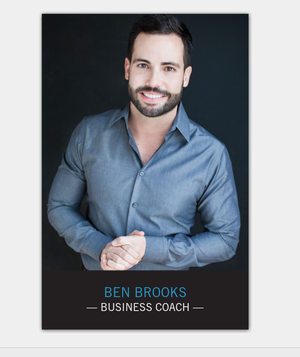
Follow Ben on LinkedIn & Instagram (& Jetson, too)