Episode 22 - Radical Engagement: Adam Kahane On Working With Generals And Guerrillas To Make Change From The Inside
Seventy percent of organizational change initiatives fail. Not because leaders lack conviction, but because they're using the wrong model. Adam Kahane, co-founder of Reos Partners and author of Everyday Habits for Transforming Systems, spent 35 years facilitating change in some of the world's most intractable conflicts, from post-apartheid South Africa to Colombia's peace process. His argument: you don't transform a system by blowing it up or waiting for perfect conditions. Instead, you find the cracks – the places where things are already shifting – and you work with what's moving from there. This practice is called "radical engagement," and it’s more effective than almost anything else on offer.
Why do organizational change efforts keep failing and what actually works?
Employees' willingness to support change has collapsed from 74% in 2016 to 43% in 2022, even as the average employee now experiences ten planned enterprise changes per year (up from two in 2016). Only 32% of business leaders globally report achieving healthy change adoption, despite the fact that organizations that do being twice as likely to hit their revenue growth targets.
Something is clearly broken. And the conventional playbook – cascading communications, running training programs, rolling out strategy decks – is not fixing it. Turns out, announcing change loudly is not the same thing as actually changing anything. Who knew?!
Adam Kahane, a co-founder of Reos Partners and one of the most experienced conflict resolution facilitators currently on the planet, offers a different diagnosis.
The problem, he says, isn't execution – it's the underlying theory of change. Most leaders approach systems as if they can be redesigned from the outside, by someone with enough authority and a good enough plan. But Adam’s 35 years of experience, from South Africa and Colombia, to Guatemala and Israel (and fifty other countries!) suggest otherwise.
Years ago, Adam sat down with Trevor Manuel, one of the key architects of post-apartheid South Africa's economic policy who served as Minister of Finance for over a decade under Nelson Mandela. Adam kept interrupting, trying to impose his own frameworks on Trevor’s answers. He blew the interview. His colleagues and his wife told him so, immediately and at length.
When he went back over the interview transcript, he found what he'd missed. Trevor’s foundational principle was almost absurdly simple: every day, he'd move between a poor community in the morning, activist students in the afternoon, the business community in the evening, and a political party meeting at night. Over and over. Engaging across every part of the system, constantly, without waiting for conditions to be right. No grand strategy. Just the daily habit of showing up, everywhere, and listening.
That’s it. That was the whole method.
What do you do when you have to work with people you completely disagree with?
Adam has spent decades with people who are genuinely trying to harm each other. Think generals and guerrillas, apartheid enforcers and ANC activists, factions in active civil wars. He's earned the right to be precise about what the word “enemy” actually means. And his observation is that most people are using it far too broadly, and far too conveniently.
“This dividing of the world into the people we can work with are friends and the people we can never work with are enemies is getting to be a real problem. Much of the world is this gray area – neither friends nor enemies – [who are] people we might need to work with.”
– Adam Kahane, Co-Founder, Reos Partners
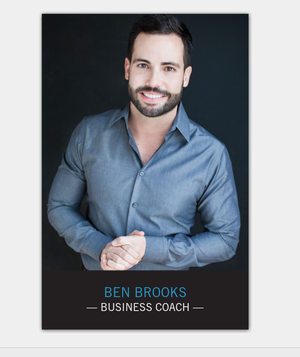
The tendency to personalize opposition can feel satisfying in the moment. But it leaves you completely stuck, because if the entire problem is them, there is nothing you can do. You're “hosed,” as Ben put it. (Adam agrees).
The diagnostic for this is the two-essay exercise. Take a situation you're stuck in and write two short paragraphs. In the first: what's going on, and what are other people doing to cause it? Then, the second: what are you doing to contribute, and what would you need to do differently for things to change? Then compare them. The first essay feels good. But the second one is where real agency actually lives.
“I've got four kids and ten grandkids and lots of colleagues and clients, and my success in getting people to do something they don't want to do is around 5%. So it's not very productive.”
– Adam Kahane
It reframes the central question: instead of how do I make them change, the more useful question is always what can I actually do from where I stand?
Start by trying to understand why the other person is doing what they're doing, rather than opening with what you don't like about them. You may not like it. In extreme cases it may even be harming you. But “you should just be different” is a terrible way to start, according to Adam. And in his experience, it is exactly how most of these conversations begin.
What are the "cracks" in a system, and how do you find them as a leader?
When a system looks immovable, the temptation is to either give up or blow it up. Adam offers a third option.
“A mountain climber doesn't climb a mountain. They climb the cracks in a mountain. From far away, these cracks are usually invisible. You find the cracks, you find the handholds and the footholds, from up close.”
– Adam Kahane
The cracks are the places in any system where things are already shifting: breakdowns, breakthroughs, tensions, and moments where the status quo is less fixed than it appears from a distance. The strategic question isn't how do I force this to change? It's where is change already trying to happen, and how do I work with that?
In organizational terms:
What's already not working that you can name out loud?
What's already working that you can amplify?
Where is the crack, and can you get through it?
This is where fellow Montreal native son Leonard Cohen enters the chat. The chorus of Cohen's Anthem – “There's a crack in everything. That's how the light gets in” – was in the back of Adam’s mind throughout the writing of the book. The line that left the biggest impression, though, was the line before it: “Ring the bells that still can ring. Forget your perfect offering.”
All of us have something immediately within our grasp that serves as our bells that still can ring. But the requirement for ringing them is forgetting the perfect offering: the idea that your idea has to be perfect, your timing has to be perfect, your partners have to be perfect, or that you yourself have to be perfect before you begin.
“It's the willingness to say, 'Let me try this and see where we can get to from here.”
– Adam Kahane
What to do this week:
Try the two-essay exercise on the situation that's currently making you the most frustrated:
Write the first essay: what's happening, and what are other people doing to cause it?
Then write the second: what are you doing to contribute, and what would you need to do for things to change?
Finally, read both. Notice which one feels better and which one gives you something to actually do.
Then, if there's someone in your professional life right now you genuinely can’t move forward with, take Adam's $10,000 piece of advice: find 30 minutes, and ask them one question. Can you explain how this looks from your perspective? Actually listen to the answer. Don't explain why they're wrong. Don't redirect. Just listen. You can go back to disagreeing at minute 31. But you might find, somewhere in that half hour, the crack you didn't know was there.
Related Episodes
– Kathryn Wylde on the Power of Building Coalitions Between Powerful Forces
– Amy Gallo on Hard Conversations and Why Being Respected Beats Being Liked at Work
– Moving from Passive Tolerance to Active Inclusion with Rev. Mark Fowler
Stay Connected with The Lift
Subscribe to The Lift on Apple or Spotify
Join our mailing list
Take our listener survey
Follow Ben on LinkedIn & Instagram (& Jetson, too)