Episode 14 - From Vendor to Trusted Partner: Marco Ziegler on Building Client Trust
Trust in business relationships isn't built through expertise alone; it's built through a specific combination of credibility, responsibility, and intimacy, divided by how self-oriented you appear. Marco Ziegler, global client leader at Accenture and former head of the Office of the CEO for Julie Sweet, has spent decades applying this trust equation across some of the world's most complex enterprise relationships. His central argument: the leaders who move from vendor to trusted partner are the ones who learn to lean in first, authentically and honestly.
What is the Trust Equation, and how do you actually use it?
Most professionals build trust the way they were trained to: show up prepared, deliver on your commitments, and know your stuff. Credibility and reliability. The rational variables. The ones you can put on a performance review.
What they underestimate – and what quietly determines whether a client relationship ever becomes something deeper – are the two emotional variables on the other side of the equation: intimacy and self-orientation.
The Trust Equation, developed by Charles Green, David Meister, and Robert Galford in The Trusted Advisor, is this:
credibility + reliability + intimacy
–––––––––––––––––––––––––
self-orientation
Marco Ziegler, global client leader at Accenture, has kept this framework at the center of his relationship-building practice for over two decades. And the research behind it backs him up: the emotional elements — intimacy and self-orientation — are the most impactful factors for building trust, yet most professionals default almost entirely to the rational ones.
"You can destroy this trust building by being very self-oriented. The more self-oriented you are, you're destroying the value of the trust."
– Marco Ziegler, global client leader at Accenture
Self-orientation is the meeting where you lead with your firm's capabilities before asking what the client actually needs. It's the pitch where you're so convinced you have the right answer that you stop listening. It's subtle, it's extremely common, and it's the reason talented, credible people with strong track records still get stuck in vendor relationships.
How do you build intimacy with clients, especially across cultures?
Intimacy is the variable most leaders underinvest in. It's also the one Marco had to work hardest to develop himself.
Growing up in Germany, where responsibility and follow-through were cultural defaults, vulnerability came less naturally. Intimacy – in the business sense – took deliberate effort over years. A career's worth of changing environments, seeking honest feedback, and repeatedly putting himself in situations where he couldn't rely on what he already knew combined to shape his operating principle: you have to go first.
"One of the ingredients is intimacy. [And] in order for somebody to open up, I'm a big believer you've gotta open up first."
– Marco Ziegler
In practice, that means sharing something personal before asking for it in return. Think: A willingness to follow a Manila colleague to a local market and try raw eggs. A yes to an impromptu surfing lesson in October Rhode Island. None of those moments were on a slide deck and all of them built something a Zoom call couldn't. Turns out that raw eggs in Manila will do more for a relationship than a perfectly formatted capabilities deck – who knew?!
That said, this also means showing up physically when and where it counts. In one year, Marco flew nearly 100,000 miles, not primarily to close deals, but just to be present. A day trip to Mexico City to start a relationship with a new client. A visit to the Philippines to spend time with a local team. The travel wasn't the point, the signal it sent was. When you get on a plane for someone, they know you're not just optimizing for your own calendar; in a world where everyone is one click away, showing up in person is basically a love language.
What does running the Office of the CEO teach you about trust?
When Marco was tapped to run the Office of the CEO for Julie Sweet, the scope of his job completely changed. He'd built deep expertise over decades in a focused set of client relationships. Now he was responsible for supporting the leader of one of the world's largest companies across every industry, geography, and stakeholder type simultaneously – including hundreds of new client engagements per year.
"I felt like going back to elementary school. There were so many industries I hadn't touched. That required a lot of the credibility that I'm actually learning stuff."
– Marco Ziegler
What that role confirmed, at the highest level of business, is something Marco had been applying for years in the field: the trust equation doesn't change based on who's in the room. CEOs, board members, government ministers; the foundational variables are identical. What changes is the stakes if you get the denominator – self-orientation – wrong.
The clearest lesson came from a failure years earlier. Ziegler and his team were mid-pitch when they were asked to leave the room. No warning, just escorted out while the client conferred internally. The post-mortem was humbling: the team had walked in so certain they had the right solution that they'd stopped listening entirely. Pure self-orientation, from the opening slide.
"I had it in my gut that this is not how we should go into this meeting. But I didn't speak up. I was more junior. I just let the big partners make the decisions."
– Marco Ziegler
Marco has been following his gut ever since; his numerous close, trusted partnerships demonstrate he’s been making the right calls.
What to do this week:
Run your most important client or colleague relationship through the Trust Equation:
Where are you genuinely strong?
Where are you quietly over-indexing on self-orientation without realizing it?
Then pick one meeting in the next two weeks where you commit to asking more than you tell. Lead with a question about what's working, what isn't, or what they're personally focused on right now. Don't pitch. Don't present. Just listen, and see what opens up.
Consider it a mirror, not a report card; the goal is awareness, not shame spiraling.
For the framework itself, Marco's recommendation is direct: pick up The Trusted Advisor, and do the free Trust Quotient self-assessment to see where you actually land across the four variables.
Related Episodes
– Clarity over Cool: Éva Goicochea on Building maude and a Category-Defining Brand
– The High Line and Beyond with Robbie Hammond
– Using Community Leadership to Grow Business with Sachin Shivaram
Stay Connected with The Lift
Subscribe to The Lift on Apple or SpotifyJoin our mailing listTake our listener surveyFollow Ben on LinkedIn & Instagram (& Jetson, too)
Full Transcript
Read the full transcript
Marco: One of the ingredients is intimacy. And intimacy in terms of being vulnerable and talk about each other, right? In terms of what are your interests and what you're doing. You find out all sort of interesting things, what people actually like to do, and in order to do this, you gotta lean in.
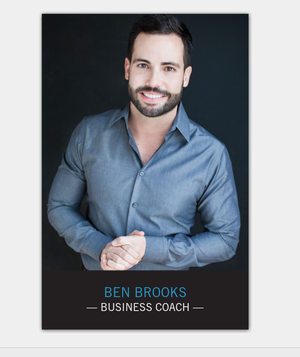
Ben: Welcome to The Lift, the show about leadership, growth, and getting what we want. I'm your host, Ben Brooks. For over a decade I've worked with CEOs, their executive teams, HR departments, and entrepreneurs to identify what drives their success and what holds them back. And now I'm excited to share those insights with you. On The Lift, we pull up to see the bigger picture from accomplished leaders who know how to get things done in a rapidly changing world. We've got all of that and a lot more coming up next on The Lift. In the business world, it's almost too easy for our customer relationships to just become transactional. You deliver a proposal, sign a contract, buy something on the website, and everyone goes on their merry way. But how do you turn those business connections into lasting partnerships? Today, we're joined by someone who knows the formula for building real trust with clients and customers. Marco Ziegler is a global client leader at Accenture, and he spent decades stewarding some of the firm's largest and most complex enterprise relationships. Recently, he ran the entire office of the CEO for Accenture's Julie Sweet. And in just one year he flew more than 150,000 kilometers just to show up for his clients. Talk about dedication. In this episode, Marco shares how to build an enduring bond and why a key ingredient is actually intimacy — meeting clients on their terms and investing in the relationship beyond the transaction. So whether you're leading global accounts, or running a small business, or simply looking to strengthen the relationships inside and outside your workplace, this conversation explores what it takes to go from being a loose connection to a close relationship, from a vendor to a partner, or from an acquaintance to a trusted advisor. So let's get into it. Marco Ziegler, welcome to The Lift.
Marco: Thank you, Ben. Thanks for having me.
Ben: I wanna paint a picture for our audience, because they don't know you like I know you. You recently completed an important sporting event. What was that?
Marco: The Athens Marathon. As an avid marathon runner, it's always been my dream to run the marathon in Athens, because that's the inaugural distance from the little town of Marathon into the old Olympic stadium in Athens, Greece. And it was just an unbelievable experience.
Ben: We'll talk today about a lot of business things and client relationships, but just in terms of, you know — you don't just work, you have a pretty big life beyond work. Can you describe, you know, what's happening outside of work for you and what your life configuration looks like?
Marco: A lot. And I'm a guy who likes to be busy, but also a little bit of a balance. You know, I'm wearing two devices — the wearables, like my big running watch, but also my Whoop, who's measuring my sleep behaviors and also the fun stuff. It's really to help me make sure that I have the balance, which is around — you know, sleep is very important. But also, in this job it is all about creating your own balance, and people coach you all sorts of things. What is the balance in the end? You need to find it. You can tell from the accent — I was not born in this country. I was born in Germany, came — I've been living half my life in the US now. I have a family — my husband, two kids. The kids are 15 now, they're in ninth grade, so just our high school. So dad is certainly busy, and I wouldn't be very engaged. And as a German speaking person, the kids go also to a Saturday school and learn a German language. And I said, how do I incentivize the kids to actually wanting to get up on Saturday mornings and go to another school to learn the language? I said, let me engage myself. So I joined the board of that little school, go with them every Saturday, and it has worked magically that the kids all of a sudden don't complain anymore when Papa goes to German school with them on the weekend. You talked about the marathons — that's the balance. But I also try to — what are the friendships? You know, and have some personal time for myself. So I do lots of yoga — only hot yoga, because it's meditative for me and it creates that — that follows that discipline. I like the structure in my life around it. So those are a few things that I'm doing just to balance — balance the crazy work schedule.
Ben: You know, you and I bonded over aviation when we first met. You know, Marco, you're one of the first people that's gotten to the 4 million miler mark that I know of on United or preferred carrier. How much have you traveled this year?
Marco: Too much.
Ben: Too much? Okay.
Marco: I have probably flown — if you think about it in flying miles — probably 150,000 miles.
Ben: And you know, part of why I wanted to have you on The Lift was to talk about client relationships. And is part of the travel about relationships, or is it about executing work? What does the travel unlock?
Marco: To see people, to connect with people, which is relationships. And in some cases it is a relationship because you have met somebody. Sometimes the relationship, because you haven't seen that person in a while — you have had Zoom and Teams meetings. Sometimes it's about an escalation. And you gotta be there. You know, I just started a new role, and there was a certain client — we have a very complex program going on. This person owns a significant program with Accenture, and I made it a point to just get on a flight and fly to Mexico for a day. I did not realize — or I had forgotten, with all my travel — that Mexico City is at eight and a half thousand feet. Guess what? I got altitude sickness. So I experienced that part of my — maybe — of my getting older. But the point is, I flew there to meet that client, to start building a relationship and hearing the person out about what works, what doesn't work, and, you know, flew back. And it is about, you know, to be with the clients. And then obviously also when it's an internal travel with our colleagues and teams. And when I go into a city, particularly around the globe, I look where there's a team that I can connect with from an Accenture perspective as well, because they all know that you're there. And you need to make an effort. You know, to combine, you know, a business meeting, a client meeting, but also then meet with our internal team — but always clients first.
Ben: And you have a memory of an internal team that was really fun or interesting to meet with around the world?
Marco: The one that comes immediately to my mind is Manila. Accenture's a large employer in the Philippines, and we're doing lots of technology and operations work, and it was actually going to a training, to be part of faculty of the training. So I went, and went well, but one of the, you know, colleagues — she said, well, I grew up in Manila. Let's go to the market. So we went to the market, and I always liked to experience what the locals do. You know, we had raw eggs and all sorts of interesting things that weren't really what I used to for my palate. But it was just experience the unknown. It wasn't prepared. I hadn't read about it. I just follow along with her. I went to the market and experienced all sorts of things. That opened up a whole bunch of other discussions and, you know, relationships. So that — that was a lot of fun. You know, there was another one which is totally unplanned, but I was working with a client in Rhode Island, and it was in October and we had a little offsite, and one of my colleagues was a surfer. And at dinner he showed up and said, who's going surfing tomorrow morning? I found an instructor, and whoever wants to go have a surfing lesson. And we were like 10 of us, and eight of the 10 went the next morning. Eight o'clock, October 28th or whatever it was, we showed up on the ocean. That was my first surfing lesson.
Ben: And you know, it sounds like the, you know, the Manila trip is an example, you know, or the Mexico City trip, where when you're traveling, you're not just showing up in a conference room for a 45 minute "here's the slides" or shake hands and business card that's maybe transactional in nature. It sounds like you're making time while you're there to invest in a personal connection. And oftentimes it sounds like what I'm hearing from that is on their terms — that's how they like to connect and how they like to be. And that maybe raw eggs isn't what you would order next weekend on the menu, but you are willing to try it. And what's the response when you lean into the surfing or the raw eggs? Like what kind of resonance do you get from clients and your internal teams around the world?
Marco: One of the ingredients is intimacy. And intimacy in terms of being vulnerable and talk about each other, right? In terms of what are your interests and what you're doing. You find out all sort of interesting things, what people actually like to do. And in order to do this, you gotta lean in. Just like I'm a big believer when you have client relationships, you invest, you lean in first, and then you have a return — and not waiting until something. So I'm sharing right away, right? And you know, I have talked about my running, my marathons. I talk about — you know, when I talk to a client somewhere the other day, and I was talking to somebody who found out who owns a condo in Athens. So that connect us right away on the story you asked me about earlier, about the marathon. But it is trying to understand and trying to meet somebody, and meet people where they are in terms of, you know, personal first. And the trust building and the intimacy of trust building is super, super important. Yeah. So investing time into understanding people, asking other people what are their interests. You know, in business it's super important — this is something basic stuff. What boards are they on? Where do they engage in? But in order for somebody open up, I'm a big believer you gotta open up first, because not everybody opens up.
Ben: There's a lot of people that shy away from the more personal side. They'll wanna open up around how your business or operations or things are going, or how the team or the culture. So how do you think about, you know, your journey to just be open? 'Cause there's an openness that's required for that intimacy. Is this what you've had since you grew up, or is this something that you cultivated?
Marco: No — I mean, growing up in a more Germanic culture wasn't — my parents are very open people. It wasn't that open and conducive in the environment. There was a confidence level of — and confidence determined itself not just by success and that others endorsing you, but some things I found out at piece, your passion. You gotta find that opening point where it gives you the opportunity to be yourself and talk about the passion, and people listen to it. And then the second point — it comes with maturity, right? Or with growth. I don't wanna use the word age, but I'm using it because, you know, we are all getting old and wiser. You know, it can be a proxy for — proxies have been around forever, but not just a working, because you know it's worked for you in the past. Mentors that endorse you, right? That's saying, this is amazing, you should talk about this more. And so you gotta find people who are stimulating and supporting and encouragement. So there is this — you can't solve it alone. And then the travel has helped me a lot too. Trying something new that you haven't done before, and seeing new people, new cultures and stuff — that is inspiring.
Ben: So how do you kind of make sense — 'cause you work with one of the most global companies in the world. You're from Germany, you've got this modern family here in the United States. You travel all over the world. How does the culture tie into the intimacy? Are there cultures that are more or less drawn towards that intimacy?
Marco: Yeah, in the essence, it's about building trust. Trust is the foundational element of a relationship building, in my mind, and I don't know when it was, but probably 20 years ago, somebody showed up with a thing called the trust formula, and it's been around since like 2000. It's always in the back of my head when I build a relationship, because the intimacy is just one part of that trust equation — how you build trust. But there is a big part around two other components — is credibility, responsibility, intimacy, and then I denominate as a self-orientation. I was raised with a — credibility and responsibility are very important. Well, they're obviously important, but credibility is in the bucket of: do you actually know what you're talking about? So you have the functional knowledge, the technical knowledge — that's, you know, credibility. And then the responsibility — you know, and the culture you just mentioned — just in my culture, you just do what you say you do. And as you — if you look at my social style, you know, all the Gallup StrengthsFinder — responsibility is one. Top five. Now, in order to bring this trust higher, you gotta open up. That's the intimacy side of it. So I learned that as well. So friends — friends and colleagues and others, you know, I watch them, I say, well, they talk a lot, but this and that. It really works. But then you can destroy this trust building by being very self — the more self-oriented you are in a denominator, right? That self-orientation goes up, meaning it's all about me. It's all about Accenture. It's all about him or her or them. It is all about — well, they're really putting Accenture first. Many people do this, so I'm always thinking about this balance. Because if you — if you're optimizing, you know, the credibility, responsibility, and intimacy, but you are coming across as self-oriented, self inflicted — like, you're destroying that value of the trust. And with everything I do, and how do I manage my day-to-day dealings and build — that trust formula, still there. And there's a funny thing — I Googled it this morning, and it was just revamped in the book, and it says it's adjusted to the modern age of, you know, digital economy and everything. So, super interesting. But the formula works.
Ben: If you were to think about — you mentioned the credibility, the responsibility, the intimacy, and then the self-orientation. Of those variables, which one were you born just the strongest? Like it was kinda your — your natural, that you just are really good at that.
Marco: Responsibility.
Ben: Responsibility.
Marco: By far. Yes.
Ben: And then which one did you have the most to grow in?
Marco: Intimacy.
Ben: Tell us more.
Marco: Vulnerability is a word that comes to mind if I think about intimacy. I mean, if we can define intimacy in many ways — acknowledging that I'm wrong, making mistakes. And just talked to a client this morning, and it was all around — it's okay to make mistakes. We learn from it, we move on. Making mistakes was, for me, something that came with a bad grade. And I had to learn how to be vulnerable to, first of all, to admit that you made a mistake, but also learn from it. This is also in my roles as client account leadership — you don't know everything, can't know everything. You need to know enough to ask, but you can't know everything. But you can say, I know Ben Brooks. He knows the answer. Lemme call him. Either bring him along or bring him the answer. So I think that's the vulnerability I had to learn. And then the other point, and intimacy — I think empathy is in there as well. And maybe I had good coaches. I remember also, you know, I had a performance review, and it was exactly how we're just talking about — you're doing good work, but you're not listening enough to others. Self-reflect, feed it back — because I was too impatient. It needed to be done. I had to learn very much to be patient. Folks that know me for many years, they probably would saying, "This guy was never this patient when he was growing up." So I learned a lot. But remember I said earlier about — you grow with time and the right surrounding network, the coaches around you and mentors. And you can call them mentors, or not mentors, but people that just talk to you and listen to you. So I would say the intimacy, empathy, self-reflection, vulnerability — it's okay not to be okay. And it's okay to be, you know, saying, I don't know it, I'll come back. It's perfectly acceptable. So — so I would say, without thinking about it more, were the ones that I had to work on the most.
Ben: And as you grew in that intimacy part, how did you do that? 'Cause it sounds good, but your wiring is not that.
Marco: Yeah, so the big pivot was when I came to the US, 'cause I threw myself, pulled myself out of, you know, the environment that I was comfortable with. And I lived and studied in France before, so it's not like I came from Germany just to the US. But it felt like this was an environment where I could be, you know, where I could be myself. And put myself into a situations or environment where people were experienced, all these things. So they guide me. So for some reason I had this — this is 25, 26, 27 years ago — I had this feeling that that was the right place to put myself in this environment, which was still — you know, I had the security of a work. So I didn't come here to say, let me immigrate and then figure things out, which many people do — and inspire them, totally. I never had that courage.
Ben: You changed the context entirely. Yeah, literally changed. You went across continents and countries to be in an environment that you knew was different and would sort of force you. And I think that is one way that people wanna — you can self-study, or you can get a coach, but you can also sort of — if you wanna be around the people that are, you know, really strong, you might go to the gym, and then you're just around strong people.
Marco: Yeah. Or whatever the environment is that you seek to be. But changing environments and having a courage, and then the support network, right? For me, the important thing was that I had went with a job, with a role. That was my support network. And I always knew that my family would be there if I go back. And then given the fact I love traveling, it was clear to me that I go back and visit. You know, and be there. And right now, as you know, I live both cultures and both languages. But it was the — put myself into a different environment. You know, even my career — every five years, I disrupted myself into a new role. And in many cases, I raised my hand because I said, I'd like to do something very different. Complacency and being comfortable is one thing, but I said every five years. So if I look back — I just told this one of my counselors the other day — and the question I got back a few times: why would you do this? Weren't you afraid to lose your — lose your job? What is your role? I said, no. Why? Because I was intelligently curious to do something different, but also have a support network. This hunting together, this being together, right? Asking for help is an important one that we live in the core values of Accenture as well. So you're never alone. The worst you can do is to just try to figure all this stuff out alone, because then you don't have the support network to catch you if you need to be caught. So back to our conversation earlier — I made this with a conscious choice that there is a support network that can catch you, or catch me, in these cases, if I made a — if I made a mistake.
Ben: Well, you know, your most recent disruption opportunity was to run the office of the CEO for Julie Sweet. And Accenture is one of the largest companies in the world. And you know, to run that office, no matter who's in it — but in particular, given Julie's, you know, intensity and drive, there's a lot there. What was the discomfort there? And just thinking on the credibility, the respect, the intimacy, and the self-orientation — did any of those variables have to change for you to succeed in that role and to run that office?
Marco: Yes. I mean, it was an amazing, you know, opportunity. Also, to our conversation earlier, it didn't happen — it wasn't planned up. The phone call — can you come stop by? And we thought, oh my God, what's — what's going on now? Our chief leadership officer, she came into my office and said, I just thought of you. Let's have a chat. I said, oh my God, what I do wrong?
Ben: I'm the same way. I'm like, when people wanna have a chat or come to the office, I'm back to school and thinking I'm in trouble.
Marco: Yeah. So, I mean, I knew some about the role and things, but it was this curiosity of the unexpected. I love the idea right away — yeah, of course. I said I need to go home and check with home, and you know — but that's what I want to do. And all of the reset of the trust relationship, you know — I had to reset everything. Because, you know, running Accenture — like truly across industries, across markets, meaning geographies, truly global, to your point — is a complete reset. I felt like going back to school, actually. Elementary school. Grammar school. Middle school, high school, you know, college, if you think through it. And a master somehow. Why? Because there's so many industries that hadn't touched — resources, mining, other environments. I hadn't been in board meetings, like running — being part of the earnings process. So that required a lot of the credibility that I'm actually learning stuff.
Ben: Okay, so you had to be a student again.
Marco: Right. Gotta be a student, right. And luckily, Accenture is a learning organization that respects — particular Julie believes in, you will, learners. She loves learning — learning agendas. Everybody, we need to have our learning agenda. So it was okay to learn, to say, I don't know it, right, I need to. But it was also — it taught me, confirmed with me, that, you know, people who know it — it's more than half the win. You gotta know the person who you ask. So that is how — half the, I don't even call it a battle — half the win. The second one is the responsibility. Now, the volume of work. Preparing Julie for the engagements with clients, with, you know, technology partners, governments, with our own people — these people moments, checking in with our own folks — is a diversity of work, but also responsibility to get it right. Because as CEO, we all show up. And this is, again, my responsibility — I think how I grew up — you gotta make it work. You can't just — you pivot, but you commit to something that has to be done, particularly in a public leader. Like Julie — we saying we're gonna be in X, Y, and Z on this day, at that time. Media needs to be planned all around it. Now, did I do all this myself? No. But I had to architect — I had to, you know, stitch it all together to activate this. And we talked about Gallup StrengthsFinder earlier — I remember I talked about responsibility. Yeah, activation is also up there. Then I thought about how do I bring Gen AI and data AI into this equation to automate some of these things. So we brought that in as well — what we're doing with our clients — and the old preparation process. So I had to reset my learning agenda. I also had to learn I can't be ahead of it all the time. But again, that's when my intimacy kicked in, and I talked to some people and said, is that actually okay? I said, absolutely, it's okay — you can't — welcome to the world of reality, because you can. The other one is to kind of re-level setting that. In that role, I had the unique opportunity to meet many, many other CEOs. And the principles of, you know, this relationship building doesn't change just because there are board members and CEOs and, you know, presidents and ministers and — you know, you pick any type of leadership note across. It's all about humans. And the intimacy, right? And the responsibility. And credibility. All of these things, it come through — was an amazing opportunity. You level setting at the same ground — we all humans. We interact with each other. The foundational things don't go — don't go away. Huge endorsement of how I'm thinking. I haven't even thought about this before this discussion that much, but it's really put into perspective — a level setting, setting it into normalcy.
Ben: When you think about — in prior roles, you know, you've always been close to clients and close to revenue, and you had your own clients — a handful of clients, a major massive client, one of the biggest clients, et cetera. But when you ran the office of the CEO, your one client was Julie, but you were helping her with the many clients, 'cause she's an executive sponsor for a variety of clients around the world. Is that right?
Marco: Yeah. So even as a CEO and a chair — Julie, CEO and chair of Accenture — the best ones meet with the clients all the time. Because not only the clients want to see also the person who's running the company, but also the people who run the company wanna be with the clients to see what our clients are saying. What works, what doesn't work? What are their needs? What's changing? Can they help? Right. And as a CEO — unique opportunity — you oversee everything. You can connect the dots between every corner of the organization.
Ben: Yep. How many clients does she see in a year?
Marco: It's in a multi hundreds.
Ben: Multi hundred.
Marco: Yeah.
Ben: And I think unlike if you're Netflix, people might come to you, but when you're in professional services in general, clients probably want y'all to come to them.
Marco: Yes. And a lot of clients also love coming to the Accenture office. Why? Because they have a environment — they're more and more constrained around real estate space. So they love coming to see the facilities. Have access to innovation and talent. But most of the meetings are, you know — the majority are at the client side, right? Because that's where they are, and that's where we go. So it's all around them. A prep for a meeting — Julie, said earlier, learning organization — she loves to learn and read and be educated. So of course there's a process to pull the material together. I think as a — as a chief of staff, by the way, I've trying to find literature — there's not a lot out. There's not a lot from the politician, from, you know, the government side. There's — there's books, but in terms of a — a chief of staff and running the CEO's office. And I built my own little network of chief of staff, and it's brilliant — amazing to see the different backgrounds, first of all, of people, but also there's no real playbook —
Ben: Template or — yeah.
Marco: Because there's a cultural aspect of it. But the point I wanted to make is — yes, you make the principal, you know, the CEO, successful, as you may inclined. But the CEO relies on her, his, or leadership. And I have approached it within — with the mentality, with the approach — yes, Megan and Julie get her ready for the meetings and prep, but we were relying on the team. So I spent a lot of times with the respective client teams before, to tease out the topics, to coach them. And then we bring, you know, Julie into the prep, into the meeting. And I always say, you know, they need Julie — Julie needs the leadership team. So I spend an equal amount of time with actually her direct leadership team, just to help them be successful. Now they have the chief of staffs and their teams. Because in the end, you get them ready, Julie is ready. Yeah. Is better ready? More ready? Yeah. Try to balance this out while we're optimizing — you know, obviously maximizing her experience and impact as the chair and the CEO. But it was a two year role, and I just rotated out of the role as per schedule. And I said to a few folks the other day, you know, I feel like coming outta school, because I've learned so much. I'm ready for anything. But I'm a client guy, so as you know, I'm back with the clients, and, you know, I love being with the clients.
Ben: I do think, you know, so many people, they talk about not being able to do relationships 'cause they just don't have time. And I think what you're describing is, you know, ways that you can leverage staff and mechanize that. But also, you show up. And I remember once, someone had a charity gala that you were gonna go to, and I think you landed at five o'clock and the gala started at six, and you took a 6:00 AM flight home the next morning. Retirement party for a long time client, or things like that. I think that showing up just makes a big difference. And you helped Julie show up on every — every continent, probably, except Antarctica —
Marco: I know. And Antarctica —
Ben: Not yet.
Marco: That's for me is on the bucket list.
Ben: Same.
Marco: But yeah. You gotta make it work. You gotta — you gotta show up. We are client business — we're client, with services business. Our products are people, so we are people as well. We're not just, you know, leaders — we're people. So we need to be there with the client. And you know, we're just balancing the post pandemic time right now, you know, in terms of working from home versus going to the clients, but it is important to be with the client. This was the biggest thing I missed, like many of us, during the pandemic — right at that time where we — we met in little towns that nobody knew where they were, and we had an outdoor dinner with a mask and stuff. Yes. But we still tried to make it work somehow.
Ben: Well, and I think the last point I wanted to make is that also you might need to show up not for a client, but for your internal teams. We have cross-functional things that might be misaligned, or someone that's — it doesn't wanna prioritize the thing you needed in it to get done, et cetera. So I think part of it, especially in a matrix firm like this — there's also just showing up for your fellow colleague, to show them that respect and that credibility. 'Cause there's something pretty serious when you're across the table from them, or shaking their hand, or having a meal. I do think that they feel respected.
Marco: Oh yeah. Yeah. So I'm trying to be, you know — living close to New York office, being part of the New York office — I love being here in the office just to see the teams as well. And, you know, you gotta be visible. And you know, even more senior you get, you — you won't believe — sometimes you don't think you're visible, but people know — know where you're gonna open your door. You gotta walk the corridor. So basic things that go so far in terms of having an impact on our people. Just be there. You know, checking in — you know, all the things that you do. Yeah. I just wish I had more time for my friend.
Ben: Yes. Well, we'll work on that in your new — in your new role. Well, last question, Marco — if people are listening to this and they say, gosh, I relate — I'm Mr. or Mrs. Responsibility, or maybe I'm a little too self-oriented, or I'm heavy on the technical and the credible, maybe I'm so good on the intimacy part, but the others — you know, if they were gonna pay a $10,000 for some advice, what's your final words? You know, your $10,000 advice of upping their game with client trust and relationships.
Marco: If I may offer two —
Ben: As many as you want — it's 10,000 bucks. Give 'em their money —
Marco: Worth. Well, we don't maybe need 10,000 bucks. You pay 20 bucks to go on Amazon, or anywhere where you buy the Trust Equation book.
Ben: Okay, we'll put that in the show notes — Trust Equation book. Okay.
Marco: It's really — it's really — or study about, or Google it and research it. There's tons out there that explains this. And then — dunno if people need to pay for it or not, but find a person who gives you actionable, honest feedback. Who knows you. So those would be the two, if — whatever people wanna pay for it. Those are the two I would say they're leading to me.
Ben: Go out, be curious, be a student and learn. And also get the truth. Well, our last segment, Marco — we like to talk about a sort of a Ground Floor moment. And so we think about, you know, a time that might be humbling. Is there a — a moment that stood out, that really was a — whether it was a wake up call — that really sticks out as, it may have been painful, but you learned a great deal?
Marco: Many. There was one client situation. We had what we call now business oral — so we — we submit proposals, and then when you down select it, that means the client likes your proposal. They usually invite a few of us —
Ben: To pitch and explain your proposal.
Marco: And come in, which we call oral. So — present. So there was this one client, and it was in a space — we holistically, the whole Accenture team, got basically excused — in simple words, got thrown out of the room.
Ben: Really?
Marco: From the presentation.
Ben: Like, you presented and then they said, get out? Or — or they let you present, or what happened?
Marco: No, no, no. And during — in the middle of the meeting — it was — they had what the industry called, you know, an advisor. They helped send some external help to guide them through the process, and they interrupted us and they said, well, Accenture team, you're excused. So we continued talking. I said, no — you're excused. Would you please just go outside? We have our internal little call. Number one experience — this had never happened to me, and I think nobody in that room. It was a pretty big team. The number two — we were self-oriented in this discussion. We were listening because we were so convinced about — because some people coached us that this was Aly, the right thing the client needed to do — and we're so convinced we went in there. So two learnings. Why am I using this as an example? Because one, this was a learning again, but the more important one — I had in my gut that this is not how we should go into this meeting. Before —
Ben: You went in the meeting —
Marco: You had —
Ben: A sense?
Marco: That before — no, I was a more junior guy. I didn't speak up, you know — I just let the big partners make decisions, and we showed up, and I — I don't know what I presented. And this brought me to the next level of that — you gotta follow your gut. And I have made more decisions on — I just used it twice today, and actually told the client that's how I'm making decisions. It's a new client I'm just working with now. I told the client today, I'm studying, but in the end I might not get it all right, but I'm making a decision how it feels. And I fall — this was about 15 years ago, that example, for quite some time ago. And I learned a lot. So while it was super uncomfortable — it was — I mean, it's literally, we're done —
Ben: Kind of humiliating, to get —
Marco: Out without feedback. Yeah, we got feedback in there —
Ben: Eventually, but yeah.
Marco: And nobody knew — oh my God, what's going on, right? And people were afraid about their jobs and blah. You know, all these ramifications. We thought it was something ethic. It had nothing to do with that. We were just, you know, too —
Ben: Self-oriented.
Marco: Yeah.
Ben: Yeah. Well, Marco, thank you for coming to The Lift.
Marco: It's fun. It's already over?
Ben: It's over. Cheers.
Marco: Great to be here.
Ben: All right everyone, let's turn this episode into action. To build trust with your clients, we've gotta remember that equation: credibility plus responsibility plus intimacy, divided by self-orientation, equals the degree of trust. So make a note of which of those variables you're strongest in, and where do you need to grow. That self-orientation — the denominator — is a big part of it too. If you're too focused on yourself, you will deteriorate the trust you have with your clients. Also, lean into building intimacy with your clients. We want them to open up so we can learn about them and better serve them, but oftentimes you've gotta share something personal, something vulnerable, to create the space for them to trust you and open up as well. And lastly, show up in person. Join them on their terms, where they like to be. Those moments signal respect. They build loyalty and great memories, and they help elevate you from being a vendor into a true partner.
Ben: Thanks for joining me this week on The Lift. For more info on what you heard in today's episode, visit our show notes. You can find out more about the show at theliftpod.com. If listening to The Lift today was a good use of your time, please share it with a colleague, a friend — I don't know, your ex, your mother, anyone. Don't let good advice die with you. And for those of you who like to earn a little bit of extra credit, leave a comment on Spotify. We'd love to hear from you. The Lift is produced and edited by the team at editaudio. This episode was produced and edited by Ali Sirois, with additional production support from Victoria Marin. Our production manager is Kathleen Speckert. Our executive producer is Steph Colbourn. A special thanks to Korey Rich and Beth Gatsik. There's only one way to go: upward.