Episode 11 - Clarity over cool: Éva Goicochea on building maude and a category-defining brand
Most brands don’t have a positioning problem; they have a clarity problem. Éva Goicochea argues that if your team and your customers can’t explain what you are and why you exist, then you don’t actually have a brand. The brands that do last are those that pair a clear mission with ruthless discipline – and know exactly who and what to say no to.
How do you know if your brand is actually working?
Okay we’re going to ask you to gird your loins for a moment. Take a deep breath, then do the following: ask five people what your company does. If you get five different answers, your brand isn’t working.
It doesn’t matter how good your logo is, or how much you’re spending on marketing. If people can’t seamlessly explain what you are, you don’t exist in a meaningful way.
Most companies chase awareness instead of understanding. They launch campaigns, partnerships, and content, all before they’ve nailed the one thing that matters:
What do we stand for?
What separates creating a real brand from just selling a product?
“It’s not about a brand being cool or not cool. It’s about a brand being clear.”
– Éva Goicochea, founder and CEO of maude
Clarity isn’t a marketing exercise. It’s operational. It shows up in:
What you build
What you say yes (and more importantly, no) to
How every part of the company behaves
The thing is, plenty of products sell (we’ve all been effectively “Instagrammed” for better or worse). But very few brands actually stick.
The difference? Whether the company has a reason to exist beyond the thing it’s selling.
“If maude’s product went away tomorrow, [our] mission is still critical. If the product is the vehicle, but the mission supersedes product – that’s a brand. Without a heart in either one of those things, you’re not a brand, you’re a commodity.”
– Éva Goicochea
This is where a lot of direct-to-consumer (DTC) brands go sideways. Some are built purely to sell; optimized for margins, distribution, and then exit. Others had strong mission energy but couldn’t make the economics work.
Both fail. Just in different ways.
The brands that last sit comfortably in the tension:
They believe in something real
They can actually sustain it commercially
maude’s bet was on its belief that sexual wellness wasn’t just a product category; it was a human one. Not gendered. Not hidden. Not embarrassing.
That framing changed everything.
Because when you change how people see a category, you don’t just sell into it, you redefine it. And with the global sexual wellness market currently valued at approximately $43 billion and projected to reach $74 billion by 2032, there was a huge untapped opportunity for Éva and her team to establish themselves as both a category leader and as an unmistakably defined brand, even as the company grew.
Why do some brands lose their way as they scale?
Scaling doesn’t kill brands, drifting away from a North Star does.
As companies grow, different teams start optimizing for different goals – from revenue and product to partnerships and performance marketing. Without a shared anchor, things start to fragment.
Marketing says one thing. Product delivers another. The customer feels the gap.
“We have to agree on why we exist in order to figure out how to go forward.”
– Éva Goicochea
That alignment is the whole game, because when teams don’t share the same answer, and for Éva, that’s when “it goes sideways.”
Especially when only about one in five employees globally reports being engaged at work, cohesion isn’t just a nice-to-have – it’s a performance driver. Cohesion begets engagement, and engagement reinforces cohesion.
And for Éva, alignment also requires something most companies aren’t great at: restraint. She’s often referred to as the queen of no – not because she’s difficult, but because she’s disciplined (and like our lady and savior Jane Fonda often says, “no is a complete sentence.”).
Éva knows that every yes adds complexity, and every no protects the system. And what that means is that most teams don’t have a creativity problem; they have a filtering problem.
Ultimately, the brands that win aren’t the ones that do the most. They’re the ones that maintain coherence as they grow.
What to do this week
Okay so back to what we braced ourselves for at the beginning of our exercise. Let’s try it again – this time with the wind of Éva’s wisdom at our backs.
Run an audit; ask your team:
What do we do?
Who is it for?
Why do we exist?
Then ask your customers the same thing. Now compare. If the answers don’t line up, don’t touch your marketing. Tighten the story.
Then pick one thing you’re currently doing – be it a campaign, a partnership, or a product – that doesn’t clearly support that story. And cut it.
Again: Clarity isn’t built by adding more. It’s built by removing what doesn’t belong.
Happy branding!
Related Episodes
– Robbie Hammond on Building The Impossible with Tenacity, Timing, and Vision
– From Fear of Uncertainty to Strategic Advantage with Kut Akdogan
– Judgment at Work with Sir Andrew Likierman
Stay Connected with The Lift
Subscribe to The Lift on Apple or Spotify
Take our listener survey
Full Transcript
Read the full transcript
Éva: The North Star was, why do we exist? We have to agree on why we exist in order to figure out how to go forward. And that's exactly what I think people miss. They don't stop and say, why do we even exist? What are we doing here? How are we different?
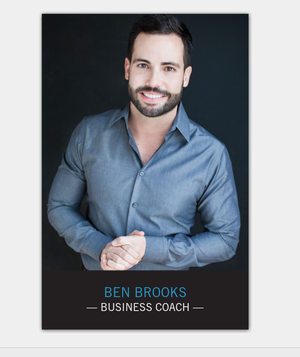
Ben: Welcome to The Lift, the show about leadership, growth, and getting what we want. I'm your host, Ben Brooks. For over a decade I've worked with CEOs, their executive teams, HR departments, and entrepreneurs to identify what drives their success and what holds them back. And now I'm excited to share those insights with you. On The Lift, we pull up to see the bigger picture from accomplished leaders who know how to get things done in a rapidly changing world. We've got all of that and a lot more coming up next on The Lift. So today's episode features a guest from a slightly spicier industry than we usually cover here on The Lift. Éva Goicochea is the founder and CEO of Maude. It's a modern intimacy company that helped pull sexual wellness out of the shadows and into the mainstream. Éva built the brand on simplicity, trust, and thoughtful design. That approach has paid off. Maude became one of the first sexual wellness brands ever carried by Sephora, and recently was in the Louvre in Paris. Her brand also attracted a very well-known celebrity to be its co-creative director — none other than Dakota Johnson. And here's what makes Éva different. She doesn't treat brand like a decoration or a hood ornament or a project. She treats it like a strategy. For her, it's about choices. It's about discipline. And it's about knowing exactly who you serve, and maybe more importantly, why. I've known Éva for over a decade, long before Maude was a household name. I've watched her build this company with real rigor, sharp thinking, and conviction. Today we break down what it actually takes to build a brand that cuts through the noise, earns trust, and scales without losing itself. So let's get into it. Éva, welcome to The Lift.
Éva: Hi, Ben. It's been too long.
Ben: Way too long. I found the picture of the day we met with our friend Tori last night on my phone randomly.
Éva: No way.
Ben: It was 2016 when we first met.
Éva: 10 years later.
Ben: Wonderful to see your rise and continued success, and I'm so glad to have you here. I wanted to start with nothing around sexual wellness or brand or beauty, but the Land of Enchantment, your home state of New Mexico.
Éva: Great.
Ben: Tell us a little bit about your upbringing in New Mexico and what that was like.
Éva: My parents were split up before I was one. I didn't go to dinner with them together until I was like 18, and it was the weirdest experience.
Ben: I didn't know this. Okay.
Éva: No, it might have been even later, like 22. Alone — so the three of us? Yeah. And it was one of those moments where I was like, do you know each other? Anyway, so I was really primarily raised by my mom. My mom is a vibrant, social woman. So she was an arts graduate student when I was very young, and I would actually go to class with her. She exposed me to a lot of art and culture. She always had parties. She had a ton of LGBTQIA friends. She loved music. When she had parties, it was multi-generational — bring your kids, bring your parents. So my mom is just a really inclusive person. She also basically handed me Our Bodies, Ourselves when I was very young, like five or six, because she was dating, and so she was like, "You're smart. You can figure it out."
Ben: Tell our listeners what Our Bodies, Ourselves is if they don't know.
Éva: So Our Bodies, Ourselves is this incredible, basically, tome of women's empowerment and liberation, specifically around reproductive rights and our bodies. So my mom was basically just an advocate for all things. And she taught me really not to be afraid of sort of learning about anything and being curious about everything. And I think that really shaped me. But I also learned a lot of resilience, and I have this picture on my Instagram that's basically like, this is a story of an arts graduate student and her little shadow making something from nothing. Because she really did — I didn't even know that we were poor students. So really, really formative. And then I was nine and we moved to Sacramento, and we had the most — we call it "Muppie," but I had the most Mexican yuppie upbringing there afterwards.
Ben: That's a new one. Muppie. Okay. All right.
Éva: Yeah, so I've had two very different chapters to my childhood.
Ben: And when you think, whether it was when you're in New Mexico or California, do you remember what you wanted to be when you grew up, in terms of a profession, as a little girl?
Éva: I wanted to be an architect. So when I was seven, I asked my mom if we could take the train from Albuquerque to Chicago to see the Sears Tower. So I spent my seventh birthday on the train with random kids on the train. Later in life, I just was like, oh, this is a lot of math. I don't think I'm good at math. I hate it, so I don't wanna do this. But I always wanted to be in design.
Ben: When you think about the early days of Maude, were there sort of clear lines in the sand you were thinking about — what the brand would or wouldn't be — or did those evolve over time?
Éva: In the beginning, it was very much about the product, so it was like, these are modernized essentials for sexual wellness. We launched with a vibe, condoms, and lubes, which is the core product to this day, but there wasn't a lot of depth around intimacy per se. The Maudern, which is our blog, existed then, but it was more like a Tumblr sort of — throwing up pretty pictures, whatever. The brand has evolved to represent so much more. And in fact, our content is more consumed and has more traffic than the e-comm side, because I think it's a category that still needs a lot of education. And, you know, there's a lot of curiosity. I think there's a ton of history anyway, so it has evolved in the depth, but I think the core product offering has been quite the same. And so from the product perspective, I'm like, we knew what we wanted to be, we knew what we weren't gonna be. But I think from the depth of brand, we've definitely grown a lot.
Ben: And when you say a sexual wellness company — I know about your products, but describe that category for folks that are listening. What are the kinds of things that you provide and design?
Éva: Historically, and even eight years ago when we launched, it was very much like, you have condoms, you have lube, and you have devices. Devices are typically found — it could be a sex shop, it could be online. And weirdly, people don't know this, but the big box stores actually introduced devices a decade plus ago. So they were available, because the big brands like Trojan, they were making those things. It was not their primary business, but they were there. And then you have condoms and lube. And when you look at those two categories, they very much have sat side by side, but they're not necessarily coming from the same place. You wouldn't think of Trojan lube, even if they offer it. It was this very fractured assortment. But you have these behemoth players per category, and so when you think of sexual wellness, you're like, oh, I have to cherry pick from different brands across the products I need. We wanted to say, those things should be offered together with the same sensibility, with the same accessibility. And let's broaden that to mean more than just sexual wellness. It's also the mood setting, grooming, taking care of your body, et cetera. So we've expanded, and that's how I think of sexual wellness and intimacy. I would argue, historically, it's kind of been like, here's your condoms.
Ben: You've told me a little bit about the history of the category, but there's a couple dominant players, and when I think about their offerings or their brand, they seem quite similar — not a lot of differentiation. What did you see through the eyes, you know, of being a woman even in this category, and what were some of the unmet needs based on the incumbent players?
Éva: So it monopolized quite early in this space. There've always been really big players, and they've kind of been around for decades and decades, and through social — sort of what were social norms and cultural changes — you've seen the category. So women were included in the fifties and sixties and seventies, but it was always about family planning. It was like, condoms to decide if you want your next child. And so women were not included on matters of pleasure. And then when you sort of got into the nineties and two thousands, it was very much like gender. So, okay, now women need their products. I just noticed that it was not really approached as a human thing. It's the most human thing. People are having sex with others. This shouldn't be gendered — these are just useful products. And so that's what I saw a need for, and it was to empower women by including them in a way that didn't make them feel like they had to be ashamed. If you come home, in a heterosexual relationship, with your girly products, how are you supposed to broach that subject? So it was very much just about leveling the playing field and being inclusive of all genders and all preferences, and also all adult ages. There's a lot of ageism in this category.
Ben: Hmm. Tell us more.
Éva: I mean, we know this, and this is a broader conversation for a different day, but sexuality and what makes people attractive have often been intertwined with youth and being in your twenties and your thirties, and suddenly you age out and you don't feel attractive anymore. And for women, that's still very much part of the cultural conversation. So it's like, you have sex for the rest of your life, and frankly, you probably have better sex in your forties, fifties, and beyond, because by then you know yourself. You know what you want, and you're not trying to necessarily be something for somebody else. So, sure, it was saying, you know what? We wanna empower you to have sex forever.
Ben: So Dakota Johnson is your co-creative director. What had you bring her on? Because this is your company that you founded, but you saw an opportunity or a need to work with her.
Éva: No, it was actually quite organic. I definitely was not interested in a celebrity face — for sure, not a face. And I wasn't necessarily interested in a celebrity getting involved. I think a lot of public figures can be big liabilities. And this is a very sensitive subject. But one of our investors knew the team at William Morris Endeavor. They have a venture fund, and they, especially around 2019 and then really going into 2020, they were trying to get their roster more diversified business opportunities, because obviously Hollywood was shut down in 2020. We had that conversation in 2019, but it was something along the lines of, there's somebody that wants to be part of Maude — would you be open to a conversation? And I was like, no. I'm like, not interested. And then weirdly, I was like, but if it was Dakota Johnson, that would be a good one. She has a great sensibility. She has a great style. She's smart. Obviously she's taken on this topic. She's not afraid of anything, but she's also really not super active on social media, so she's not shilling a bunch of product. She's a good candidate. And they were like, it's actually Dakota.
Ben: Of all the thousands of celebrities on their roster, you had this idea that she might be a fit for the things you knew about her, and it happened to be her.
Éva: Totally. So when they were like, okay, look, here's who we represent, but this is the person interested, I'm like, okay. And then weirdly — which I think you've heard this story before — so back in New Mexico when I was five, I was in a movie with Melanie Griffith. Dakota was not alive. So I thought that was a funny full circle moment. Full circle. We got on FaceTime. Of course the comment was like, you have bangs, I have bangs. And I was like, I've had bangs since I was little. And we just got along, and we started going through this conversation. I was like, why do you wanna be a part of Maude? What's interesting to you? And what's really fascinating about Dakota is that she's such an advocate for equity behind the scenes, because women's films don't get made. There's not a lot of female producers. You know, we're outnumbered when it comes to directors. So she's like, girl, I know what it looks like to me in an industry that is really unfavorable to women. And that's how it started.
Ben: I think a lot of people know her from her sort of iconic interview with Ellen and others. She can have a communication style or way about her that can be quite reserved, and I think she can, you know, really regulate herself, but it can cause reactions in others. What's it like to work with her?
Éva: She is just no BS. I think the thing is, her and I got along pretty — no pun — famously, from day one. And then ever since then, it's been interesting, 'cause when these celebrity deals happen, normally you're dealing with their people. There's the managers, there's the publicists, all of this. And she was like, no, you can know them — you can have their names — but I will be the one in charge of this endeavor. And so that's really unique. She takes a lot of ownership. She's in a million places at once, so it's not like we're talking every single day, but she definitely — it's a direct line to Dakota. It's not like I have to comb through a million people to get to her. And she really believes in this company, and if she didn't, I would've told her it wasn't gonna work, if I saw that that was the case. So she's been a great partner. The other thing is that I considered it after meeting her because we are also so regulated on advertising. She has a very large platform and she can talk about this, and if she rings up, you know, a publication, they answer. So she definitely has been like a soldier behind the scenes to make sure that Maude is known.
Ben: What are the restrictions in terms of regulation on advertising that, you know, have a sort of constraint that this opens up new possibility?
Éva: You're not allowed to advertise devices. You certainly can't say the word pleasure. I mean, they make a lot of effort to make sure that it's not female pleasure that you can talk about. If I wanna talk about condoms, I could talk about them all day. So there's definitely these rules of engagement to certain platforms, and they're not always fair. They're not always clear. It's kind of a black box, so you just have to really be careful, and you have to advertise the business in a really sort of straightforward, health-focused way.
Ben: Those restrictions — is that based upon the advertisers, the Metas of the world and things like that, or the social platforms? Or is that like Federal Trade Commission or other regulatory bodies?
Éva: No, it's not federal. It's the platforms. Now, on one hand, while it is frustrating, 'cause I think they give more leniency to some brands over others, I would also say that if they said you can advertise devices, who is the person that's gonna say, this valid thing is totally fine, this thing is not? It would turn into kind of a mess to determine what is tasteful and what is okay, and what is PC. And I think that is tricky. So they've kind of bucketed it — no devices, no sex toys, et cetera. Now, arguably, we've all seen some weird things on Instagram and we've been served some weird things on Facebook. So, you know, look, I don't think it's very black and white.
Ben: For folks that are thinking about perhaps getting someone of reach or influence, be it a celebrity or a scientist or anyone else, how would you think about vetting them, or the considerations for who they choose, as well as defining the clarity of their role?
Éva: I think you have to remember, if it's trying to bring some scientific medical industry authority, that's one thing that's super helpful. I think it's always worth having somebody in your corner that can speak to those things. But I think if we're talking about a celebrity or an influencer, again, it's very precarious. They say one wrong thing and, you know, it can go very south. I think there's also some level of, again, if you have five layers of people to get through to get them to do something — that's true, that that happens. That's how, you know, I've seen a lot of people pair off with celebrities and they can't get anything done. So you just have to make sure that there is a very strong working relationship between you and that person, that there's a direct line of communication, and also that there are very clear rules of engagement, because if there aren't, and you're not really letting the contract do the talking, it can get very ugly.
Ben: I think there's a lot of people that are confusing producing assets with building a brand. And so how would you, you know, distinguish a real brand from something that just has a bunch of creative assets?
Éva: Well, what's interesting in the brand world is — especially consumer — there's a lot of brands that you could see are engineered to sell product. They're not engineered to have a story. You could see that someone found an opportunity or a niche and they're just like, we're gonna go for it. And sometimes that works, sometimes it doesn't. And then you see brands — you kind of see the opposite — where they're completely homegrown. They're the passion project of the founder. They really were started because they believe in this thing, and they can't commercially sort of find a way to work or, you know, a way to really communicate. And I think both sides of those things can be — I don't mean to keep using the word precarious, but they can be. Because it's like, a consumer can sniff your BS from a mile away, and there's some level of trust that you need to have to kind of look like you are a real brand. Like, it is nice, I think, to find a real story and say that this person really began the brand because they believed in it so wholeheartedly. But with the amount of choice we have in consumer goods, you also want things that are tested, that are real.
Ben: Define a brand, because I think a lot of people who are not in kind of brand and marketing space have a very reductive or narrow sense of what a brand is or isn't. So what are the bounds of a brand?
Éva: I think, to me, it's about, does it need to exist? And are they doing what they say? Are they existing because there are people who really believe in what they're building and believe it needs to be in the world? Or are there people who are looking to sell the thing and move on? I just read this entire article sort of about — there was an article about Everlane in Puck — which, I was one of the first employees at Everlane. And then they were talking about sort of the growth of Quince, which, if your listeners don't know, Quince is a direct to consumer, take out the middleman, work directly with the factory for all items, like sheets and bedding and clothing and luggage and all of that stuff. And Quince proposition was really, we're gonna give you good products at good prices, but clearly we're just here to make a lot of money. We're not gonna tell you some story about why we exist and why we need to exist. It is just more consumerism and we're just giving you better products. Everlane had a heart at one point. Should have commercially pivoted to be a Quince, but they were like, we really believe in this — showing you behind the scenes of the factory and taking out the middleman and yada yada. And they started with the right heart, but they commercially derailed themselves by not really figuring out how to scale that thing. And so when I think of brand, I think about finding the intersection of commercial viability and reason to exist and mission, and doing that job very, very well. Because you can sacrifice one for the other, just by holding, you know, the line.
Ben: That's a sort of CEO perspective — is you have to consider both, because you're a capitalist. You raised over $10 million, one of the first Latinas to raise over $10 million of venture capital. You're not an NGO or nonprofit. You are there to commercially sell, because you can get good products to good people, to have better experiences and enjoy themselves and their lives, right? So you can't do that without sales.
Éva: I also think what's interesting is that, for me, Maude is a mission beyond product. Let's say our product was not great and we had to pivot, or we had to find new products, or we had to innovate — which, the innovation pipeline of a startup — there are many startups who really build innovation as the step one, and that's what they're selling, which is really tricky and difficult. But I think if you have a long view of innovation, and we can make better products over time — the bigger we get, the more that we have sort of some buying power with factories, et cetera. That's where my head's at around product. If Maude's product went away tomorrow, Maude's mission is still critical, and it is still interesting to me, and I still believe wholeheartedly in it. So there's some level of understanding that if the product is the vehicle — 'cause you're like, I learned how to make a better nut butter, 'cause my grandma told me how to do peanut butter better, and I believe in this product — that's one thing. But if you are just — the mission is core, it exists, it supersedes product in many ways — that's also a brand. Well, some might not understand that, because they're like, but what are you selling? What's the point? Like, that is a brand too. And without a heart in either one of those things, that's when I think you're not a brand, you're a commodity.
Ben: And when you think about this sort of CEO perspective, if you were to look at the consumer, what is the bounds of their experience of a brand? You know, what are the kind of inputs that say, I like that brand, I don't like that brand? What are those things?
Éva: So again, I almost bifurcate often when I'm thinking about this, because I'm like, there are brands with an ethos and a mission, and I'll give you a very clear example. So Ian and I have leased Minis the entire duration of our 18-year relationship. And about two years ago, Mini redesigned — Mini Cooper redesigned everything. The interior looked like it was a DJ booth. It was wild. And we were like, I think we're out. I think we're gonna graduate. I think we're gonna go get a different car. We liked it because it had history. It's compact, it's sensible, it's fun. It has a lot of personality. It's built with great engineering. It's a safe car. All of these things. We were like, we are Mini people. We believe in this. The product was what derailed us, because they lost their way on product. Their history was left behind, which I think is a tragedy. If they had kept their history, I'd be like, I'll give you like five years. I'll come back. When you decided to go back to your roots and you make a car that looks like you, I'll come back, because I believe in this. It's a clear example of, know who you are, create something you believe in, and understand that, to your point, a brand can be more than just the product — and should be more than just the product — to retain the customer, because the customer needs to believe in the mission and the broader vision of what you're doing.
Ben: And I think that the interconnected pieces inside of an organization don't always get woven into one cohesive thing. I had an experience with a large financial services institution that we do a lot of work — they're a big vendor of ours that we move a lot of money through — and one part of the business promises one thing, and then the service or the credit group is entirely different. And so when organizations get larger and they scale, how have you seen in other brands working out those conflicts? 'Cause obviously it can go astray, but there is also the opportunity to kind of align these things in a way and really create something differentiated for the customer.
Éva: I mean, okay, not to sound like I'm indoctrinated into the Delta community, but — if you fly Delta, there is the Delta documentary that's like 45 minutes. And it talks about — I watched the beginning. They commercially went through some really tough times. And I think the North Star was, why do we exist? We have to agree on why we exist in order to figure out how to go forward. And that's exactly what I think people miss. They don't stop and say, why do we even exist? What are we doing here? How are we different? That's the thing is, why do we exist? And if you get a different answer from every person in the organization, and even, you know, worse, at the top — that's when it goes sideways. Even if you're making money.
Ben: I watched the Delta — the film — as well. One of the areas that that airline gets some critiques is their technology is not good at all. They're having operational problems, and yet the brand — they have the best brand and they're the most profitable airline in the world, and they actually lose money on flying, and they make money on brand. And that's been a huge shift. But that's a part of, can they deliver on the promise beyond just the hype? And I think that's where they are a bit at risk right now, because the operational part is sort of starting to decay.
Éva: Well, so I sort of say, again, Maude's a tiny team. There's six people who work here full time, and then there's about 50 people who work on the brand. But the point is, I'm like, there are days when we're gonna be top down, and there are days when we're gonna be bottoms up. And the idea is, we can't allow this revenue goal or this top-down perspective to determine everything, because you'll make a lot of mistakes and you'll cut corners and you'll try to cobble together. To get there, you have to have a bottoms-up mentality. So if you have a North Star and we can all agree on it — let's say it's a revenue North Star, but it's also a reason to exist — now let's look bottoms up and say, do we even have the tools, the people, the systems, the technology to get there? And I think hopefully Delta will do that. But I think it's always examining them from both angles. And to take this story of the original D2C players further — they started to talk about, in this other article, 'cause I went down this rabbit hole of, what has happened to all these brands, like Everlane, you know, Allbirds — what a fall, right? But part of that was resting on the one shoe and the core shoe, and we will forever wear these shoes. It's like, but you won't forever wear these shoes. What do you stand for beyond the shoe? Meanwhile, On Running has built a behemoth. And so it's really always cross checking. Is what we're doing underneath laddering up, and is what we're doing at the top — does it make any sense to the time that we're in, the industry that we're in, the world that we're in? And so again, I don't have any advice for large CEOs of large organizations — I've never been one — but I do think it's pretty fundamental, whether you're small, big business, to look at things in both directions.
Ben: How would organizations get the bottom up perspective? Because, you know, when I log into the Delta app, I'm getting popups for credit cards, which is so trashy from a brand perspective, when I'm just trying to check in or get flight status. They make it very difficult to do the core thing for me. It's like, oh, this isn't about me. This is about you. But yet, I'm sure that someone's incented on credit card signups, right? But they're making that the core job of the app, rather than customers getting their needs met.
Éva: Well, I'm not really sure how very, very large organizations communicate.
Ben: They don't —
Éva: But I can even tell you at Maude — I can, I —
Ben: — can tell you, I was gonna say, being inside them all the time — they don't. But yes.
Éva: They don't. And I was gonna say, even at Maude, there are days when I'm like, oh, I forgot to tell so-and-so about the thing we're doing in this corner and these things. And when you're a small business, especially in product, it's a relay. It's a relay and it's a team effort at once, but it's like, oh shoot, we forgot to tell so-and-so that this is what's happening, and here's the new deadline, whatever. So I can imagine it really can go off the rails in very large organizations. But I think of it as like a university — I think a large organization should operate as a university, with systems and graduation through, you know, how you move through the organization, and how — what you're doing, why you're there, what is it that you're getting graded on, and what do you stand for. And, you know, it might be a bad analogy — you have a bazillion years of leadership experience — but I think of it like that, where it's like, we know why we're here and we know what success looks like.
Ben: As a leader of your own business, you've taken risks. You say, hey, let's do Wuthering Heights — you're doing a collaboration with a film, the Come Undone kit — or you're in the Louvre, and that is a brand move more than a direct sales move. What kind of leadership traits are required to be able to sort of make those decisions? 'Cause some of those things on the surface might not fit a spreadsheet model of immediate payback for sales.
Éva: So we as consumers — and this is sort of 101 ad school, 101 marketing — borrowed audience. And industries borrow audience all the time. So if they're like, the person who drinks our whiskey is a blah, blah, blah, blah, blah, and suddenly a partnership makes sense with, I don't know, whatever, the Yellowstone Club, because the guys that drink whiskey wanna be at whatever — it's borrowed audience. So for us as a small brand — and this is what I would encourage other small brands to do, if they have something that's of interest to other brands — borrowing cultural capital and audience and borrowing context, to say Maude is also about design, and it's also about history, and Maude wants to be a part of the pantheon of people that have created this industry. It's about borrowing audience and storytelling. And to be honest, like Wuthering Heights — we didn't pay a licensing fee. It didn't cost us a bunch of money. They came to us. Obviously they have a lot of partners on products, but they loved Maude, and they were like, it gives us credibility, because this story is — at least the way that it was told in this version — highly erotic, and so you also give us some level of cool by having this partnership. It was shared interest and shared, borrowed audience, and that was interesting to them. And so I think of it less as transactional, dollar for dollar — even though there were behind the scenes definitely KPIs to this partnership — but it was like amplification, context, storytelling, mood setting, all of it.
Ben: Now, on the other side of this leadership part, you were sort of known sometimes as the queen of no. You're very good at being rigorous at saying no. And no is a complete sentence. No is a love word. No — you know, nothing wrong with that. But there's a discipline behind that, and is there a courage — I mean, are you worried about alienating people, or Dakota pitches something, or your employees? 'Cause I think part of the discipline of your brand has come from a lot of the nos. Would you agree?
Éva: Yeah. But I think that has been learned by so many yeses in the beginning. I can think of how much product we've gifted over time and what the ROI was. I can think of random little giveaways we did, and it did nothing. And the time spent with a team of six, a team of 10, whatever — it just didn't make any sense. So simplifying what we're doing — and to be honest with you, I would argue this needs to be applied in really large organizations too. Simplify, simplify, simplify. So for Wuthering Heights, it cost us time, but there was a payback that was bigger than that time. So it's just saying, did all of the yeses pay off? And to be honest, I would end this podcast on — personally speaking, saying no now has been more valuable than saying yes in life to every single restaurant that looks cute on Instagram. Totally — you know, totally. I don't miss it. It was nice to see the interior one time, but I don't need to go every day to every single new restaurant. Saying no has meant that I just have more freedom to have quality time in my life.
Ben: And you know, you're in a very cool, vibe industry, and your brand is gorgeous. What about people listening to this show that might work in less sexy industries? They could be doing something that is not a consumer product, or that's not super trendy or cool, or they're never gonna be a collaboration with a movie. What's your thought around sort of making maybe less sexy industries interesting?
Éva: So if you confuse taste and coolness with money, and you confuse it with amplification, I think you missed the point. And what my mom — again, we'll actually really go full circle on this podcast — what my mom taught me was that you cannot buy your way to having taste and, really, curiosity. So I believe anybody can be cool if they know and care about the things that they like. Our fractional VP of ops is really into magic, and he's always like, I'm so embarrassed. I'm like, that's amazing. Cool. That's so cool. I love magic. It's niche. It's very specific. But he knows who he is. So it's not about being everything to everyone and comparing yourself. It's just about knowing who you are and leaning into that. So if you sell insurance, own that. That's amazing.
Ben: Hang out with a bunch of rich people and you will see that money and taste have nothing to do with one another. Quick rapid round for people listening. So where do you see founders and executives wasting time and money when it comes to brand?
Éva: I think it's definitely just maybe thinking you have to do a lot of things to make it work. I don't think you should cobble together that top line. So it's overcomplicating things.
Ben: If leaders heard this and they said, damn, I wonder if our brand is good or not, how would they sort of audit that? Or what would be some of the key questions that they would wanna look at if they wanted to assess the health and efficacy of their own brand?
Éva: I think you ask your customers what you are and see how many different kinds of answers you get, and you ask your team what you are. If you're getting varied answers across the board, I think your brand needs some help. It's not about a brand being cool or not cool. It's about a brand being clear. So clarity is the most critical thing.
Ben: Last kind of rapid question is just, with AI and all these content tools and everything out there, you can do a lot of things. But how do you stay disciplined when there are so many more accessible possibilities around brand and marketing?
Éva: I think it's mostly about, don't solve for problems you don't have. If you're chasing all of these AI tools — I mean, I thought about this for us too. I'm like, oh, I signed up for this AI tool to do X, and I was like, you know what, we don't even need that. We don't really need that right now. My philosophy with AI is it should amplify your job if you become a specialist and it's a language to you. So if our designer learns AI tools to multiply what she can do in a day, and she owns the critical lens to control what AI is doing, she's still a designer. She's just using it as a tool. So for me, it's more, solve for the problems you really have. Don't make up new ones, and use those tools like they are tools, not like they're replacements, 'cause they're not gonna be replacements. I don't think they're ever gonna be replacements, even if they were replacing jobs. Right now, I think that is going to go sideways.
Ben: We're ending today's episode with the heat check — our guest's hottest take on how the way we work and lead will change in the next five years. So Éva, what's your hot take for the future of branding? You know, are there trends, topics, or technologies you see changing, or things gonna go out of style? Where do you see branding going?
Éva: I think that it's really easy — especially, I'll just speak from the consumer lens — I've seen so many brands come and go, and a lot of them are built to scale and sell right away, and I think we're in a different time. You can't just raise money and sell off. And the big guys who've bought the brands that, you know, were the hottest thing — those brands have died, or they have not worked out. So I think it's about, even if you raise money, having a much longer view of where your brand sits in the universe. I think about Maude and I'm like, if Maude's small forever, I hope it's here till I'm long gone, because I think it needs to exist. And so with that lens, I'm always like, okay, what do we do? Because if this is a 50-year brand, a hundred-year brand, a 300-year brand — make certain decisions. So that's what I think needs to change. And what will change with people is realizing flash in the pan, lightning in a bottle usually doesn't work.
Ben: Any final words of advice for our listeners?
Éva: There is no such thing as cool.
Ben: Needs to be said. Well, Éva, thanks for joining The Lift.
Éva: Thank you. So good to see you.
Ben: Alright everyone, let's turn today's episode into action. Here's what we learned from our conversation with Éva. First, think about that intersection between your broader mission and the service or product that you're offering. Having an ethos and creating something that you really believe in is so important in building a brand. Second, think about borrowed audiences. What are larger brands that you can partner with that might have similar demographics or people concerned with similar things that you could tap into, and what's the value that you could give to them? Third, think about that brand clarity. Asking your team and your customers the same question around who you're serving and why will give you an incredible amount of data very quickly. And finally, if you're looking to partner with someone like a celebrity or spokesperson, go slow. Make sure the roles and expectations are clear and everything is documented in a contract that you can look back to. And a former First Lady of the United States once said, just say no. Thanks for joining me this week on The Lift. For more info on what you heard in today's episode, visit our show notes. You can find out more about the show at theliftpod.com. If listening to The Lift today was a good use of your time, please share it with a colleague, a friend — I don't know, your ex, your mother, anyone. Don't let good advice die with you. And for those of you who like to earn a little bit of extra credit, leave a comment on Spotify. We'd love to hear from you. The Lift is produced and edited by the team at editaudio. This episode was produced and edited by Ali Sirois, with additional production support from Victoria Marin. Our production manager is Kathleen Speckert. Our executive producer is Steph Colbourn. A special thanks to Korey Rich and Beth Gatsik.
Éva: So groovy.
Ben: Alright.