Episode 09 - The High Line and Beyond: Robbie Hammond on Building The Impossible with Tenacity, Timing, and Vision
In this episode of The Lift, Ben is joined by Robbie Hammond – Co-Founder of The High Line, a beloved elevated park and greenway in NYC – and the global president of Therme Group, a company centered on urban wellbeing.
Key takeaways:
Break big, long-term visions into small, self-contained projects that show progress and keep you motivated
Tenacity matters more than perfect conditions, especially when politics and timing are outside your control
Knowing your own strengths (and limits) makes it easier to find partners who complement your skills
External success doesn’t automatically create internal well-being; therapy, meditation, and sometimes medication can be part of the leadership toolkit
Philanthropy and nonprofit structures can “hold the vision” while you wait for the right political and economic climate
This week on The Lift, Ben chats with Robbie about what it really takes to stick with a big idea for decades and actually make it happen.
Robbie never set out to be “the High Line Guy.” In fact, he describes himself as someone with a short attention span who came from dot-com startups, not urban planning. He was working in tech when he read a 1999 article about an old elevated freight rail line that the city planned to demolish. Curious, he went to a community board meeting, sat down next to a stranger (who turned out to be his future High Line Co-Founder, Joshua David), and realized they were the only two people in the room who didn’t want the structure torn down.
Neither of them had money, power, or relevant credentials. The mayor wanted it gone. Nearby property owners wanted it gone. Most neighbors wanted it gone. Robbie estimates the odds of success at the time were maybe one in a hundred. So why bother?
Robbie’s answer: It was a passion project. He still had a day job, but the High Line gave him a chance to work with architects, designers, and community members he never would’ve met otherwise. Even if the park never got built, he felt like the smaller projects along the way – a design competition, an education program, a street fair, early branding – were all meaningful in their own right.
That’s the core concept behind Robbie’s approach is “micro-dosing the vision.” When a project might take 10–20 years, you can’t wait for the grand opening to feel like you’re making progress. Instead, he advises, you break the journey into bite-sized, shippable milestones: a brochure here, a website there, a new partnership, a public event, a feasibility study. Each micro-project becomes proof that the idea is moving, even if the finish line is far away.
Ben and Robbie also explore the invisible emotional cost behind high-profile success. Robbie shares candidly that, even as the High Line became one of the most famous parks in the world and helped dramatically reshape Manhattan’s West Side and neighboring Hudson Yards, he didn’t actually enjoy his life for a long time. Like many founders, he was driven by fear of failure and chronic self-doubt.
What finally shifted? A mix of therapy, years of experimenting with different kinds of meditation, and eventually medication in his mid-40s. Those tools helped him regulate anxiety, sustain a healthy relationship, and build a family. They also gave him the internal stability to appreciate what he had already created instead of immediately chasing the next big thing.
On the strategy side, Robbie talks about the value of selling different versions of the same vision to very different audiences. For city government, the pitch was an economic-development story: invest public dollars to generate future tax revenue through higher property values and new development. For neighbors, it was about public space and quality of life. For partners and donors, it was about civic legacy and design innovation.
He describes how he and Joshua deliberately hired the kinds of experts developers usually use against community groups, like seasoned land-use lawyers, consultants, and lobbyists,so they could meet powerful stakeholders on equal footing.
Robbie also reflects on his work with Little Island and its founder, media executive Barry Diller. Initially, he was skeptical of the project and worried about yet another billionaire-backed park in an already amenity-rich neighborhood. But he’s come to respect Barry’s sheer tenacity and willingness to keep funding both its construction and ongoing maintenance, which is something many wealthy patrons don’t stick around for.
Today, Robbie is channeling his long-game muscles into Therme Group, which builds massive, urban wellbeing campuses inspired by ancient Roman baths. For him, Therme is a way to democratize wellness: not luxury spas for the few, but a social infrastructure for the many.
Because those projects move slowly, he’s still micro-dosing the vision through smaller, related creative experiments: hosting pop-up sauna villages, writing his “Culture of Bathe-ing” Substack, and collaborating with a Japanese creator who built a traveling onsen in the back of a truck. These side projects may not directly build a future Therme campus, but they keep the idea culturally alive and keep Robbie energized to keep going.
Ben and Robbie return to a few core leadership lessons throughout their conversation:
You don’t need perfect credentials to start; you can learn in public and hire for the skills you don’t have.
Long-term civic projects almost always require waiting out multiple political cycles. Nonprofits and philanthropy can act as the “memory” that holds the vision until the timing is right.
Success is not a substitute for well-being. Tools like therapy, meditation, and medication aren’t weaknesses; they’re often what make brave, sustained work possible.
Ultimately, this episode serves as a necessary reminder that while trends come and go, the real work is figuring out what keeps you going over the long haul.
Links:
Stay Connected with The Lift
Subscribe to The Lift on Apple or Spotify
Take our listener survey
Full Transcript
Read the full transcript
Robbie: It probably wasn't until my mid forties that I started enjoying my life. So even though I created something that was very successful beyond, you know, my wildest dreams, I wasn't really enjoying it for a long time. It took a lot of different — trying a lot of different things for me to be able to enjoy — enjoy the success.
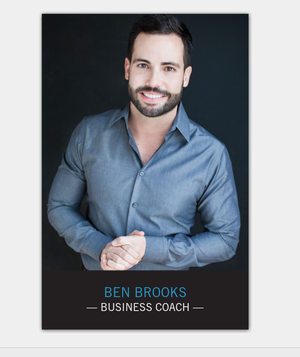
Ben: Welcome to The Lift, the show about leadership, growth, and getting what we want. I'm your host, Ben Brooks. For over a decade I've worked with CEOs, their executive teams, HR departments, and entrepreneurs to identify what drives their success and what holds them back. And now I'm excited to share those insights with you on The Lift. We pull up to see the bigger picture from accomplished leaders who know how to get things done in a rapidly changing world. We've got all of that and a lot more coming up next on The Lift.
So I live in Manhattan, and at the end of my block is the High Line, a park that's actually built on a former rail line, elevated in the air. Every time I look at it, walk on it, or walk underneath it with my dog, I think about what must it have taken to turn something like a decrepit old rail line into one of the most famous parks in the world. I've always been fascinated by leaders who dedicate themselves to taking on big bets, big vision, and big projects. But the part that always makes me curious is, how do you stick to something for such a long period of time? Well, today I'm excited to introduce you to Robbie Hammond, the co-founder of the High Line. Robbie's someone who's great at thinking big and staying committed. It took almost 20 years to bring the High Line to what it is now, and he's currently at Therme, where he's focused on building huge wellness spaces designed to serve cities for generations to come — think Roman baths, but for the 21st century. In this episode, we're talking about what it takes to stick with a project over decades. Turns out the secret is microdosing. No, no, no — not that kind of microdosing, but microdosing the vision. So we're excited to hear from Robbie about how he stayed committed to big projects over the long term. Robbie Hammond, welcome to The Lift.
Robbie: Thanks. Good to be here.
Ben: Well, Robbie, I'm excited to have you here because a lot of our listeners are in executive positions and leadership positions, and sometimes that's on the quarterly earnings cycle, or it's a lot of short term things. But how did you become a person that thinks long, bold, consistent?
Robbie: Well, I have a very short attention span, so it's not — I don't think they correlate, necessarily. And I mean, I was a history major, which is sort of long term, but you know, before I started the High Line, I was doing dot-com startups, so quicker things. So I sort of stumbled into the High Line. So I wasn't part of a grand plan, but I was just having breakfast with someone who does venture funding for startups, and she was talking about how there's nothing to touch, and the company — even if they're successful, they often sort of disappear after several years. Sort of the opposite of something like the High Line, or these physical things.
Ben: Have you been attracted to physical things in general?
Robbie: Yeah. Yeah. I like tactile things. I always liked architecture.
Ben: And how do you balance the short attention span with big, bold vision? Because conservation or urban planning or parks and these development things takes so long. And if you're a person who, you know, described yourself as having a short attention span, how do you reconcile those two?
Robbie: Just lots of little projects, many of them going on simultaneously. So when we're starting the High Line — it took us 10 years to open, and the first few years we were just trying to raise awareness. I mean, I would do a design competition, I'd do an education program, we would do a street fair manned by artists. So just all these little pieces that you could accomplish in a relatively short term. And it also helps, when you have a really long project, show progress. So if you say, look, I'm gonna do this brochure — you do the brochure. I'm gonna do a website — you do the website. I'm gonna do a design competition — you do the design competition. And so it's these tiny steps, even though you're so far from actually reaching the end goal. And for me, I'm definitely a dreamer, but a realist. So I thought the chances of actually saving the High Line and building something spectacular were one in a hundred. And so my personal calculus was, like, all those little steps had to be worthwhile and interesting for me and for others, even if the final thing didn't happen.
Ben: Many people have heard some of the origin story of the High Line, but folks outside of the New York area may not have. And just in particular, I loved when I first heard from you about you and Josh going to a community board meeting and meeting one another. So could you just bring that part in for folks?
Robbie: So I lived in the West Village of New York, which was then very inexpensive, and I read an article in the New York Times in 1999 that they were gonna demolish this elevated railroad that ran for a mile and a half, and they had a little map of it. I never knew how long it was, and I assumed someone was working to preserve it. And so I called around — no one was doing anything. And then I heard it was on the agenda of a community board meeting, which I'd never been to. And I went, and I sat next to this guy, and everybody either didn't care or wanted to tear it down, except the guy next to me. And so I said, I'm really busy — why don't you start something and I'll help? And he's, I'm busy — you do it. And we exchanged business cards, which again is so old school, and decided to do something together. Neither of us had any experience. I was a history major that was working in dot-com internet marketing startups, and he was a travel writer, which turned out to be sort of one of the keys to the success — is that neither of us had that expertise. But that's how we started. And again, I mean, neither of us really thought this thing would happen. Now it seems so obvious, but at the time, you know, I was a 29-year-old, and the mayor of New York City wanted to tear it down. All the property owners wanted to tear it down. Most of the people in the community wanted to tear it down. And we had no vision for what we wanted it to become, and no money to get any of it done, and no expertise.
Ben: Given your thoughts of such a low likelihood of success, why did you dedicate your time to it?
Robbie: 'Cause it was like a hobby. You know, I had a full-time job. I had my own office where I could close my door and do other things, and that's how I thought of it for a long time — as a hobby. And then — company I was working for — I got bought out, I made a little money. I was gonna move to Bali. I was 30, and instead I stayed in New York and kept working on the High Line. When my money ran out, I got some consulting jobs to pay my bills, and it was just interesting for me. Like, I love doing the design competition. I love working with graphic designers. I like working with architects. So it wasn't very lucrative, but it was fascinating. I was getting to meet all these interesting people I would not have otherwise come into contact with. So that was the personal calculus — that, like, okay, this is gonna be good for my career even if it doesn't happen.
Ben: And you gave a TED Talk where you talked about sort of the economic thesis or case around the High Line. For the numbers-oriented audience here, just kinda give a high level of the economic case for the High Line.
Robbie: Yeah. And then now it seems so obvious, 'cause it's been so economically successful. But at the time, we said, look, it's gonna create value for the city in tax revenues, 'cause if you increase the property values, the city gets more tax revenues. We thought it would create a hundred million dollars in incremental tax revenues over 20 years. It's created $1.7 billion in tax revenues just for the city. It's cost about 300 million to build, but the city only put in about 150 of that money. So it was a good investment for the city.
Ben: And what have you seen it do to Manhattan and the West Side in particular?
Robbie: I mean, you know, it turbocharged — I mean, now, you know, West Chelsea is a very expensive neighborhood. Hudson Yards is a 10 million square foot development that I think probably maybe would've happened — it definitely wouldn't have happened as quickly or been as successful without the High Line. And there were good and bad consequences. You know, the people that live in the neighborhood are in public housing, so they weren't pushed out, but they definitely lost the stores they shopped in. And you know, it radically changed an industrial neighborhood very fast — faster than anyone, you know, expected — and that has upsides and downsides.
Ben: I think people don't understand when they hear about the Meatpacking District — there used to literally be meat packed there.
Robbie: And our office was there. I mean, in the morning the sidewalks were slippery with blood.
Ben: Geez. It sounds romantic.
Robbie: It actually wasn't that romantic, and there was a lot of flies. And I loved it, and it was great, but it was, you know, vastly different than it is now.
Ben: And along this journey — I mean, you've spoken publicly about some self-doubt and some anxiety and things. What did you do to take care of yourself on such a low odds journey?
Robbie: Well, I used to drink a lot to deal with it, and I stopped doing that about when I started the High Line. And then I just — I read a ton of self-help books. You know, I listened to self-help cassettes back then — I mean, this is how old this is. Feel the Fear and Do It Anyway — I don't know if you remember that one. Louise Hay affirmation — I mean, you know, I did that in my twenties. And I — I don't know if I would've started the High — I did seminars, you know? I don't think I would've been able to think I could do something so crazy if I hadn't done all that stuff, even though I didn't — wasn't sure it was gonna happen. I did feel confident enough, having no experience, that I could at least start something like this. So that was really helpful. I mean, therapy, meditation — I tried a lot of different kinds of meditation. I didn't find one that clicked until I was 40. Probably wasn't until my mid forties that I started enjoying my life. So even though I created something that was very successful beyond, you know, my wildest dreams, I wasn't really enjoying it for a long time. It took a lot of different — trying a lot of different things for me to be able to enjoy — enjoy the success.
Ben: A lot of people might be surprised by that. What do you think was getting in the way of you enjoying your life?
Robbie: Yeah, and I think — I think this is true of a lot of founders that are successful. Like, if you ask them if they enjoy their life, the answer is almost always no. And if they feel proud of what they've accomplished, the answer is almost always no. And I think that's true of successful people in general. I think part of it is, what drives people to do these things is that fear of failure, that insecurity. And so I think it's not unusual. And I don't think there's one secret to happiness, no. And it's a long, long road.
Ben: What shifted in your mid forties that started to open up some of this enjoyment? Because you're still playing a big game, going after big things — there may still be some of that doubt and fear of failure.
Robbie: Yeah — meditation was one of the most helpful things. And then medication. I didn't go on medication until my mid forties. And then I had a lot of relationships that didn't work out, and I think a combination of the meditation and medication enabled me to have a relationship, then had a family — I have two kids now — that probably contributed a lot to it. And the good news about doing something that sort of, you know, leaves a mark on the city is, I didn't feel like I had to do another one. I wanted to — I didn't want to stop, but I didn't feel that compelled, because I knew it would be hard to do something again like this, you know? But I knew nothing that I accomplished was gonna bring any more happiness, 'cause I'd accomplished something really great. Whether it's, like, wealth or career success — does not bring, you know, happiness. Often the opposite.
Ben: Yeah. And so it sounds like the external conditions weren't necessarily shifting in your mid forties — it was the internal infrastructure that you were managing and manipulating. Your board of the Friends of the High Line became one of the more prominent boards of directors of community organizations and nonprofits in the city, and you started to meet the Barry Dillers of the world and major real estate developers, et cetera. What did you learn from them? 'Cause that wasn't necessarily your background or pedigree, coming from San Antonio, Texas and working in dot-coms, et cetera.
Robbie: What did I learn from them? And you know, I used to think when I would meet these really smart people that I wanted to be more like them, 'cause I could see how smart — there was a guy, John Alschuler, who had a real estate consulting firm called HR&A. He ultimately became a board chair, mentor — now, we work together now. But I remember when I first met with him really early on, and we were explaining the High Line — it was so complicated, and he was able to take this complicated process and then talk about it in a simple way and discuss, like, concrete steps to getting it done. And I was like, wow, I want to be that kind of communicator. I want to be able to take really complex things and be able to simplify them and then communicate them. And I hired him — partly the reason I hired him, again, like, in this selfish way, was, like, I wanna learn from this guy. I think it'll help the High Line, but I wanna learn from him. And you know, that happened a lot in the process. But you know, I realize I'm never gonna be like that. That's not my skillset. And I'm still nothing like him. And part of the reason we keep working together is we are so different. You know, he's incredibly eloquent. We're both great communicators, but in totally different ways. Like, I communicate through enthusiasm, not through necessarily well thought out ideas. I've never come up with, like, an urban planning theory of the High Line. That's not how I sold it. I sold it with enthusiasm and getting other people excited about things. So that's one of the things I learned, is, like, I just have different skills than these people, and they can help me with their skills. You know, so I — I learned to love watching them. Like, I've gotten to work closely with Barry Diller — I'm the vice chair of Little Island; it was sort of project he started after his funding of the High Line — and I love watching him, you know, and how — but I'm never gonna be anything like him. The skill that I learned was really helpful with just sales. Because then — I always tell people, you know, everything mostly — unless you're, like, a coder — almost all jobs, especially if you're a founder or an executive, they're sales. You're selling to your board, you're selling to your customers, you're selling to your employees — selling your vision to them. And so I always urge people to do some, like — it used to be called, like, retail sale, but, like, just literally selling a simple product, so they sort of learn their sales technique. And again, we all sort of have different sales techniques, so —
Ben: And you had to sell a lot of different people on the High Line. I remember — I think CSX railways owned the tracks, the Federal Railroad Administration, we got the mayor and the parks department and the state. How did you sell to very different profiles with different motivations?
Robbie: Yes. And that's where I would bring in different people to help me. Like, John helped us craft the messaging for the Bloomberg administration. I worked with these rail lawyers to help us figure out with CSX — they didn't care about my enthusiasm, you know; they were running a rail business and wanted to get rid of this thing. Worked with lobbyists to help me on the politics. I used to think, oh, developers must be so smart to do these really complex projects. Developers hire really smart lawyers and really smart consultants and really smart lobbyists. And so we sort of did the same. Which is — normally community groups are fighting these people against them, and they're outmatched with expensive lawyers, expensive lobbyists. We hired those people, so we were, you know, able to fight firepower to firepower.
Ben: And Robbie, you mentioned Barry Diller and Little Island. And from what I know about that story, the project was sort of given up on once or twice. And it took — there was some feuding amongst some of the ruling class and billionaires, and I think the former governor at the time got involved. How did Barry stick to that vision? Because at a certain point, if people don't want it, when do you know to give up or to keep going?
Robbie: Well, I mean, my role in it was — I always thought it was a bad idea.
Ben: Really?
Robbie: Well, partly I wanted him to keep giving money to us. But really, it was more — I just felt like our neighborhood had so much. We were getting the Whitney, Hudson Yards. Like, I was like, why don't you do this somewhere else? And I was skeptical of the design. I was skeptical — does the neighborhood really want a present from a billionaire? You know, I just — and I'd seen a lot of wealthy people try to do fun projects like the High Line, and they never really worked. They often failed, or the projects weren't successful. So I would always complain to him about it. I wasn't really involved when it failed the first — and it failed. I mean, it is a fascinating story, 'cause you had one billionaire that was pissed at Bloomberg's girlfriend for not letting him put a Costco on Pier 40. So he wanted to take it out on — and he did it by hiring, I mean, by paying for a nonprofit that was fighting about the fish under — I mean, it was a real sort of real funny New York power story. So I was happy when it died, and then the governor got involved and sort of revived it. Thing I do share with Barry is just tenacity, of not letting go. And, you know, he put an incredible amount of money — I mean, I think it cost 200 million to build it. It was all personal money, and he now privately pays for the maintenance, which is another 10 million, and pays for the programming, which is also not cheap. And so that's why he had me join the board, is 'cause I was complaining to him. He was like, well, you have to join the board. And he was my biggest donor at the High Line, so I couldn't say no. And it's been really successful. You know, I have to say I was wrong. People love it, and it's very different than the High Line, and the programming is really incredible there. And so it's been really nice to see how much — it's just on the cover of the New Yorker. And I'm sort of jealous, 'cause I always wanted the High Line on the cover. And then when the High Line was on the cover, it was like this sort of foreboding dark scene. It wasn't — I mean, it was cool, but this one is, like, really happy, and it was sort of what I wanted for the New Yorker cover. So maybe I'll live long enough, you know — if magazines still have covers — that they'll do another cover on the New Yorker.
Ben: You mentioned the tenacity of Barry, and you sharing that. One of the things I've learned, being in New York almost 20 years now and meeting a lot of people, and coming from middle class Colorado background, is how little money can do sometimes. Because Barry had the 200 million, the operating expense, and it wasn't a matter of the money making it happen. Because some people think that with an idea, a nonprofit or a business, I just need money. But what was the difference that made the difference?
Robbie: You know, it's a really good question. 'Cause I've seen hundreds of these kind of projects, and literally the ones that most often fail are — one, rich people lose interest. That's often, you know — I think there's an interesting case of the Powerhouse Arts building. It was an old powerhouse in Gowanus that a very wealthy person paid to renovate, but then didn't have a program, and then now is sort of walking away from it. And I saw that happen a lot. The building thing is really fun, and then people don't want to do the maintenance, and they think someone else will do it. Whereas it's a lot easier to raise the money to build it than to maintain it — now something Barry has continued to do. I — again, I think it's just sticking with it and not walking away. I mean, all of these projects, that they share is, you have to just wait around for your lucky break. You have to wait for the — and it's often for the politics to change and there to be some break, someone to come along and really shepherd it. The QueensWay — that idea of turning a railroad into this park in Queens has been around before the High Line, and they just got a lucky break. They got a hundred million in transportation funds, and then Trump just took it away. But the city's putting some of it back. I mean, so you just have to stick with it. I think it's just a mindset that's very different from most startups or most companies, 'cause most companies — it's very hard to survive for 10 years without a successful product. You know, to either come and go — and that's where philanthropy comes in. You know, people and government funding things that are long term — you know, they're gonna have a long term benefit. And that's why — what philanthropy does is — politics is too short term. Often these projects can't happen in one term or two terms, and so that's where a nonprofit can provide that consistency, and wait out for the politics to change.
Ben: There's some similarities between the High Line and Therme. There may be some waiting for the right time, or the long-term thinking.
Robbie: Yeah. Is basically what I think of — I lived in Rome for a little bit, and I love the Roman baths. I mean, they're not — the ruins of the Roman baths and the pictures of what they look like — and I couldn't understand, 2000 years later, why couldn't we do that? We basically recreated the Colosseum and giant stadiums. We recreated the aqueducts and the sewer systems and the theaters and all of that. But we never created the Roman bath. And when I saw a Therme in Europe, I was like, okay, this is a modern day Roman bath. And John — that guy that was my board chair, that I thought was so smart — had sold his company to go work for them. And I was obsessed with it, and he said, why don't you come join me? And so I quit the High Line to do this, and it's been about three and a half years, and we probably have five more years — four more years — till we open one. And you know, they're 500,000 square feet, so they're huge. They're half a billion dollars to build. But there's a lot of similarities with the High Line, besides the timeline, is it's really — these aren't luxury products. They're mass market products. You know, we'll have 2 million people a year. So I always thought of the High Line as social infrastructure — it's the things cities need besides hospitals and roads. And that's what this is — it's wellbeing infrastructure, and helping democratize wellbeing. Because so much — I go to and speak at these wellness conferences, and most of what — when people are talking about wellness companies, it's all luxury products or luxury travel or luxury treatments. And that's what appealed to me. It was a for-profit way to help democratize wellbeing.
Ben: You had done a documentary on Jane Jacobs, who had a perspective on kind of building community through infrastructure, et cetera. And when I got to see it — really changed my view of how I looked at the city and what I valued. How did her history and legacy influence some of your thinking about these projects, be it the High Line or what you're doing now?
Robbie: That was the thing — I'd never read, I didn't know who she was when I started the High Line, and then I didn't read her until this guy came to me. I was doing a Rome Prize, and this guy that had done a documentary called The Last Emperor, about Valentino — and it had been an incredibly popular documentary about Valentino, which is this, you know, fashion — and he came and met with me, and he was like, I want to do a documentary about Jane Jacobs. And so I just love that he wanted to go from — he could have done any topic; like, I know all these people wanted him to do documentaries about them, and he wanted to do about this woman who was dead, who was sort of very niche, you know, urban planning hero. And so then I read it — yeah, that's what got me in. But really what got me involved was really this idea of how would he treat her and these issues through this unique lens. That's what he did. I just helped produce it. It wasn't, you know, my movie.
Ben: And for folks that are listening that may be contemplating or taking on something that has a one in a hundred odds, or that is like your current projects that may be four or five years out before you open them and require a half billion to construct — what's the cassette you wanna play to them?
Robbie: I dunno — it's just, everybody has their own thing that's gonna drive them. But I think the small projects that you can do, that are passion projects, that are smaller — like, right now I've started a Substack called The Culture of Bathing. We did a pop-up two day sauna village in DC. I want to do one in New York in February for a month. So it's these smaller things that you can do that help the bigger project, but that can stand on their own. And that's why I just love getting involved in these small — you know, like, I found this guy on Instagram who is Japanese and built an onsen — basically a hot tub and a sauna — in the back of a truck, and drove it across the US, and just arrived in New York with nothing. And he needed a place to stay, and he needed to find a building where he could run out a hose to fill up the hot tub. It's wood powered. It's crazy. So I spent my weekend trying to find him a place to stay. Where can he, you know — where can we get him to go? Where — how can we film it? And it took over part of my weekend, you know, to the frustration of my husband. But that was so fun for me, you know. Is it gonna really help us build a half a million square feet facility in Dallas? No. Will it keep me excited? And will it sort of slowly build interest in these things? Maybe.
Ben: What's coming to me is microdosing the vision. You're getting a little bit of it at a time.
Robbie: Yeah, exactly. And it brings different people involved, in a way, to get them involved. And so asking for people for favors and help helps them get invested. And that's how we met. I mean, we met through mutual friends, but then I asked you to help me — the time I left the High Line the first time — to help me come up envisioning this job I didn't end up taking. But that's really what created our friendship.
Ben: Robbie, as we wrap up today, we like to ask folks sort of what's sticky from this conversation. Because there'll be things that, just by you sharing about yourself, sometimes things pop and things. So what's sticky for you today?
Robbie: I — these are just things I hadn't thought of, you know — that I have a very short at — I mean, I'm just known among my friends — and I mean, even as a kid, I was hyperactive and had a short, you know — I probably — they didn't have the diagnosis of H-D-A-D-H... ADHD. I can't even spell it because I can't spell, whatever that is. But then I'm really good at long-term projects. Because I often don't know what my skills are — I don't have, like, specific skills — but that is a skill, is that I am willing to invest 10 or 20 years in a project.
Ben: Now it's time for our Lift It or Ditch It segment. We'll present our guest with a list of hot topics and find out if they choose to lift them and support them, or ditch them and say goodbye. Well, one last thing we like to do, Robbie, is — we call it Lift It or Ditch It.
Robbie: Okay.
Ben: Different wellness trends. So, okay — cold plunge?
Robbie: Lift.
Ben: Supplements?
Robbie: I go through — I try them and then I quit them.
Ben: Putting protein in everything?
Robbie: I try that and then I stop.
Ben: Oxygen chambers?
Robbie: Yeah, I think you gotta go — I'm looking at someone in my office that moved to Dubai and did it for, like, a month and a half, and he said it was revolutionary. But then the — and if it's — and I'm not gonna move to Dubai and do it every day.
Ben: And how about wellness rings, like an Oura Ring?
Robbie: Again, I've had, like, three of them, and I liked doing 'em for a little while, but then I quit.
Ben: Well, Robbie, thank you for joining The Lift today and sharing about your tenacity.
Robbie: Great. I'm excited to hear more of your podcast.
Ben: Cheers. Thanks for joining me this week on The Lift. For more info on what you heard in today's episode, visit our show notes. You can find bonus resources at https://www.theliftpod.com/. If listening to The Lift today was a good use of your time, please share it with a colleague, a friend — I don't know, your ex, your mother, anyone. Don't let good advice die with you. And for those of you who like to earn a little bit of extra credit, leave a comment on Spotify. We'd love to hear from you. The Lift is produced and edited by the team at editaudio. This episode was produced and edited by Ali Sirois. Our production manager is Kathleen Speckert. Our executive producer is Steph Colbourn. A special thanks to Korey Rich and Beth Gatsik. There's only one way to go — upward.