Episode 18 - From the Playroom to the Boardroom: What Leaders Can Learn From Children's Play With tonies’ CXO Ginny McCormick
The principles that make great children's products – clarity over complexity, freedom within frameworks, unfiltered feedback, and permission to fail – are the same principles that drive high-performing adult teams. Ginny McCormick, Chief Experience Officer at tonies, argues these aren't separate ideas for separate audiences. They're universal truths that most organizations, unfortunately, quietly abandon somewhere between the playground and the conference room.
What can children's play teach us about leading adults?
Children are, by most measures, the most honest feedback mechanism available to any product team. They don't have a social contract. They don't soften a verdict to protect the feelings of the person who spent six months building the thing. If it doesn't work for them, they put it down and walk away, immediately, without apology, and without looking back.
Ginny McCormick, the Chief Experience Officer at tonies, has spent decades in rooms with children doing exactly that (she has also worked for Disney, Mattel, and Hasbro). What she's learned from watching kids engage and disengage with products has shaped how she thinks about leading adults just as much as it's shaped the products themselves.
“Children do not give feedback. They give truth bombs. They don't need to censor. They don't think about switching costs. If something doesn't work for them, they will let you know immediately.”
– Ginny McCormick, CXO, tonies
Most organizations claim to want that kind of honesty. But very few have built the conditions that make it possible. The gap between saying "we celebrate failure" and actually creating a culture where people feel safe enough to fail out loud is, in most workplaces, enormous. Kids close that gap by default, not because they're brave, but because they haven't yet learned to do otherwise. Somewhere between kindergarten and the quarterly business review, we tend to lose our sense of honesty. Children haven't gotten there yet. Lucky them.
The question for leaders is how to rebuild what most organizations have quietly trained out of their people. The answer starts with how you think about play itself. Not the gamified, badge-earning, leaderboard version that gets rolled out in well-intentioned culture initiatives. Real play produces creativity, resilience, and bold thinking. It is unstructured, voluntary, and free. After all, how many people do you know who have had breakthroughs during a mandatory “fun” event?
“When you see children playing at their best, it is freedom. The more you try to structure play, the more it feels inauthentic.”
– Ginny McCormick
Why does clarity always win over complexity?
After decades of testing ideas with children, Ginny asserts that the pattern is unambiguous: complexity loses, every time. Not because kids aren't sophisticated; children can recognize and ask for specific brands as early as age three, and their feedback consistently pushes products toward more nuance, not less. Complexity loses because it usually signals that the hard work hasn't been done.
“Complexity can masquerade as more sophisticated. It sounds smarter. But when you're really clear and you've narrowed in on what's essential – why you've said no to things – that is always the winning formula with kids. And I would argue, even as adults.”
– Ginny McCormick
The implication for leaders is direct: if you can't explain your product, strategy, or direction simply enough for someone outside your context to understand it, the problem probably isn't the audience. Complexity is often what you're left with when you've tried to say yes to too many things at once. Clarity is what you get when you've done the harder work of making choices.
Ginny's test: can you explain it to your grandmother? Because if grandma's confused, then the market is probably confused, too. The brands that endure for children and adults alike are the ones that have done the discipline of subtraction, not just the work of addition.
What is the "first pancake" approach to celebrating failure, and does it actually work?
Most organizations have some version of “we celebrate failures here.” Few have rituals that make that ethos real.
Ginny's is called “first pancake”. The premise is simple: if you've ever made pancakes, you know the first one is always the worst. It doesn't matter how experienced you are or how carefully you follow the recipe. The first pancake is the sacrifice (let’s pour one out for every first pancake that ever hit the pan with too much batter, not enough heat, and entirely too much confidence). But there is no perfect golden pancake number four without pancake number one.
“We as a team would all share first pancakes – things that didn't execute the way we thought, where we felt there was a kernel of something, but it went wrong in all these different ways. And the focus of the team was: this is amazing. Because as soon as you share one of those ideas in a larger group, everyone can build on it.”
– Ginny McCormick
The ritual does two things simultaneously. It normalizes the experience of being wrong in front of colleagues, which is the prerequisite for psychological safety, not a byproduct of it. And it redirects the team's energy from judgment to iteration, from “this failed” to “yes, and.” The same instinct that makes children relentless experimenters – an absence of ego investment in any single attempt – is what First Pancake tries to reintroduce into adult teams that have learned, through years of performance reviews and organizational politics, to protect their ideas rather than expose them.
Only 20% of employees worldwide reported feeling engaged at work in 2025. Ginny’s argument is that engagement and experimentation are causally linked – and that you can't have one without the other. The organizations that figure out how to make failure not just survivable but genuinely celebrated are the ones that get the creative output everyone else is trying to manufacture through strategy decks.
What to do this week:
Run a First Pancake session with your team. Ask everyone (including yourself) to bring one idea or initiative that had real potential but didn't work the way you hoped. Not a post-mortem. Not a lessons-learned exercise. Just the story, told honestly, with the kernel of what was interesting still visible inside the failure.
Then have the group build on it: what would you do differently, what could it become, where does the good idea actually live? Do this once and see what it unlocks. Do it regularly and watch what it does to the quality of the ideas people are willing to put on the table.
Related Episodes
– Your Best Meeting Ever with Dr. Rebecca Hinds
– Clarity Over Cool with Éva Goicochea
– The High Line and Beyond with Robbie Hammond
Stay Connected with The Lift
Subscribe to The Lift on Apple or Spotify
Join our mailing list
Take our listener survey
Follow Ben on LinkedIn & Instagram (& Jetson, too)
Full Transcript
Read the full transcript
Ginny: Inherently for play, I bring a lens that when you see children playing at their best, it is freedom. It's not prescriptive, it's open-ended. The more you try to structure play, the more it feels inauthentic to me.
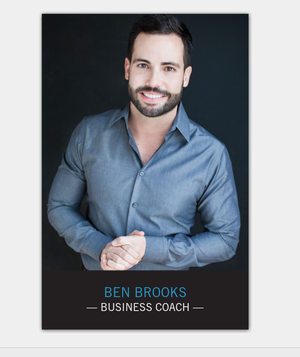
Ben: Welcome to The Lift, the show about leadership, growth, and getting what we want. I'm your host, Ben Brooks. For over a decade, I've worked with CEOs, their executive teams, HR departments, and entrepreneurs to identify what drives their success and what holds them back. And now I'm excited to share those insights with you. On The Lift, we pull up to see the bigger picture from accomplished leaders who know how to get things done in a rapidly changing world. We've got all of that and a lot more coming up next on The Lift. One thing I keep noticing in leadership is how often we default to tactics that, intentionally or otherwise, overwhelm our teams — pressure, control, urgency — and how rarely we stop to ask what helps people actually learn, grow, do their best work, and enjoy it in the process. I had a conversation with a parenting coach that completely floored me, because the parallels between adult coaching and development and parenting coaching were so similar. Today's episode is all about those parallels — specifically, what children's toys, play, and parenting strategies can teach us about leading and developing adults. Our guest is an expert in this realm. Ginny McCormick is the Chief Experience Officer at tonies, a powerhouse children's learning brand that all of the parents on my team report their kids are absolutely obsessed with. She spent her career designing experiences for kids at some of the most iconic brands in the world, including Disney, Mattel, and Hasbro. Ginny is known for building emotional connection at scale, by creating experiences that make people feel safe, curious, and motivated. And today she's gonna help us unpack how some of those same principles that work in the playroom can also work in the boardroom. So let's get into it. Ginny McCormick, welcome to The Lift.
Ginny: Ben, thanks so much for having me. Excited for our discussion.
Ben: Ginny, we were fascinated just by your career being related to the business of entertaining and engaging and educating kids. You mentioned you like Connect Four. Is that your favorite game, or do you have other favorite games or toys?
Ginny: I have many, but that is, I think, my go-to. I feel very victorious when I get all those four in a row, and just think it's much more about my skill than potentially the luck. So yes, definitely a favorite.
Ben: I first looked at your LinkedIn — it says CXO, board member, and mom. What has you put mom in your headline?
Ginny: I think one, because of the industry I'm in, I'm always cognizant and bring that perspective of the end family who's using. And it has absolutely shaped, you know, how I work, different approaches I bring to different roles and organizations. And I think for anyone who's lucky enough to be a parent, it's absolutely defining, right? So it's something I'm proud of. And despite the other titles, it's probably the one that means the most to me at the end of the day.
Ben: Well, the title that I wanted to make sure our audience knew is CXO. People know a COO or a CEO, or a CFO, maybe a CMO. But what's the X, and what sort of functional departments map up to the X?
Ginny: Amazing question. So it stands for Chief Experience Officer, which can mean many things at many organizations. At tonies, it really is about this vision for unifying the customer experience. And so with that, within my organization, we have the product teams. We have our content and licensing, which creates the product experience, as well as go-to-market, and then the technologies that enable it. So with that purview, it gives you really the ability to think about that consumer experience from awareness all the way through advocacy.
Ben: And if it wasn't organized that way, maybe at another company, what might be the likely pain points for one of your consumers or prospective consumers?
Ginny: I think, obviously in my career I've been in different organizations where you had those silos, right? So marketing and product were very separate by design. You also had different experiences in terms of how you looked at consumer acquisition or retention that were siloed. So for me, there's always this experience of, sometimes you can see an organization's org chart at the shelf, right? Those themes where the messaging doesn't match up to the packaging, which doesn't match up to the social ad or the creator message you just heard. And I think that fragmentation is always hard for the consumer. You want it to be seamless, but in large, global organizations, is something that sounds much easier to do than the reality. And for me, if it starts at the organizational design level, where you're very intentional about how those things come together and looking at holistic metrics, it's much easier.
Ben: Your consumers, the ones that are buying, are not necessarily the child that's using it. So they've got an extra challenge, 'cause they need to buy it, set it up, figure it out, supply it, et cetera, and get their kids. So is it extra important, when you have that sort of, you know, consumer-to-child relationship, that those things are all integrated? 'Cause it could put a lot of pressure on the parent if those things aren't aligned.
Ginny: Yes, that duality is something very rare. There's, you know — I can think of one other industry that has that dynamic. We think a lot about how do we make this something that wins for both the child and the parent, and they're both equal stakeholders in the total value exchange, from my perspective. But you're absolutely right. Parents will talk endlessly about their fears buying products for their children, especially as they age. There can be a lot of emotional baggage with choosing the wrong toy: "You didn't understand me. You think I'm a little kid — I'm big." Right? Or also just a lot of concerns, especially about waste. Is this something that's gonna be a fad my child will use for a few moments and then move away from? And so the path to purchase for adults — and if you think of that as not only the parents, but grandparents are big gift givers, extended family, et cetera — it's hard. And so we think a lot about how to optimize that and hopefully remove the friction for both audiences, especially in our offering at tonies.
Ben: The duality between that adult buyer and the child user — you seek a 50-50 sort of, if you will. What's the industry default?
Ginny: There's a lot of research that shows as children progress, they become kind of the key decision maker, right? They have an ability to ask for brands, know brands, as early as ages three. They fall in love with characters, right? And so they're kind of asking for things and driving some of that decision. But also you have families where that's a joint decision, right? Where a child is advocating, a parent is — can't be the gatekeeper, the veto, in a household. And very rarely do you have this win: it's something that a child would ask for, wants to play with — it's not being prescribed to them or forced — and yet a parent feels incredibly proud of that choice and feels like it supports their values. And luckily, that's what we have at tonies.
Ben: I worked in a supermarket when I was in high school. The cereal aisle would be a battleground. The sugary cereals and the characters on them. And I was a kid — I remember I love my Lucky Charms or my Cinnamon Toast Crunch or whatever the things might be. And so they were sort of in this battle between what was put on the shelf and where it was put on the shelf, versus what they were trying to have. And I would see parents actively avoid that dry goods and cereals line, to not have that battle.
Ginny: A hundred percent then — and that still happens, I would say, in the cereal aisle — as well as now, if you think about that battle happening over technology and screens: how much of your family time you're actually negotiating those limits and boundaries, right? Because I think many parents want their child to have agency, right? You want to see them discover and be independent and have choice. Yet at the same time, the risk for parents, of a child having content that they feel like is inappropriate, developmentally off, damaging to them, are much higher. So you have this constant trade-off going on in families around not just the cereal aisle or entertainment experiences, but literally every day, in terms of negotiating some of these boundaries.
Ben: And I know that probably one of the most fraught battles for parents these days is screens. And I'd like you to explain a little bit about the tonies product and category that it's in, because part of your design is to spark creativity and engagement, rather than just sort of passive content saturation or consumption, but without using a screen. So can you explain a little bit about the tonies, you know, product ecosystem?
Ginny: So tonies is an audio platform that's designed for children so they can play, learn, and grow. It starts as early as one-year-olds and goes all the way up to 10, 12 plus, and allows children to experience all different types of contents — from stories that you as a parent grew up with, to some of their own favorite entertainment like Paw Patrol, Moana, Frozen, as well as gives them access to all different types of educational content as they age up. So whether that's STEM learning, geography, all of those great sciences as well. And really, to your point, what's unique about the product is children can operate it a hundred percent independently. They make the choices. It's intuitive. There's no directions — they immediately open the box and understand how to use it. And at the same time, parents can give them the freedom, knowing that everything on the platform is curated. So it's very much developed with a lot of care, understanding of child development, what they can learn at different stages. And all of it's audio. So there's no screens, there's no microphones, there's no ads.
Ben: Yeah. The analogy I'm thinking in my mind is almost a backyard or a sandbox, where there's freedom within the framework. And if you were to hand a child a phone or a tablet and, let's say, YouTube, they could go down a lot of dark corners for the kid, relative to the developmental stage they're at, or the parenting rules or values. Whereas it sounds like there's a lot in the play that, if the parent can be relaxed, the child can be relaxed, and then they get that agency and autonomy to explore what they want without the parent being a helicopter or a wreck or overly controlling — am I getting that right?
Ginny: You're a hundred percent spot on. We know all the issues — the research is growing, becoming even more and more compelling — what screens do to fully formed adult brains. Now you magnify that as to thinking about what it's doing to a child's brain that is growing more in those first five years than any time in your life. Their ability — where screens are having delays in your language abilities, your ability to problem solve, of course, your ability to focus. And I think, to your point, there's so many options you can give a child that potentially have more risk. And at the same time, I think all parents are struggling with this. They don't want no technology, right? That feels maybe unrealistic for the lives they're living, their family needs. But they need a choice. And really what tonies is doing is giving a choice that the child is thrilled with, they engage with, they spend time, sessions over and over, doing this. It's not something that a parent is prescribing to you. I don't know — like your childhood, I got a lot of workbooks or things to do that were not necessarily a fun choice. But where the magic is, because the children who play with tonies have this choice and independence, of thousands of different characters to bring to life stories, it really becomes something that they choose time and time again. I think families are really being intentional now with how they use screens and where it fits into their daily lives. And having something like tonies, which gives them an option at all different points in the day — whether it's in the morning routines, or families using it throughout the day, or, of course, bedtime is another amazing opportunity for audio to help with family transitions.
Ben: We had a guest on the podcast, a friend of mine, Robbie Hammond. He was the co-founder of the High Line here in New York, the elevated park on the west side, and they built a playground on part of the section three of the High Line. I remember that they had hired consultants to do focus groups with kids about what they wanted in this elevated playground. And I thought, how fascinating to, you know, get their opinion. Essentially the insight was, don't patronize us. And this was from, like, three and five year olds. That wasn't their language, but that was sort of the adult insight from it. And they said, don't make it all about play and all these bright colors. And, you know, I thought of the pine cones — as a kid, that often the most interesting thing wasn't something that was obviously a toy or that had these strict rules. And so when you said that tonies doesn't have instructions, is that part of the fun, that it is this sort of thing that they have to figure out? Because I think I get turned off by a lot of games as an adult because of the strictness of the rules.
Ginny: No, that's your inner child, probably speaking out very loudly. But absolutely, I think that idea of discovery and being able to intuitively find out — oh, if I press the ear, the big ear, the volume goes up, that makes complete sense to me. So that's a fit, right? Having spent decades listening to children and designing for children, especially in some of these research environments — I mean, they are extraordinary. And they are ruthless, right? I think from a collaboration standpoint, I mean, they are endless creators. They are always "yes, and." Because they know no limitations, they are not grounded in any kind of practicality or norms for a category or those pieces. So I have time and time again brought something that the adults were in awe of, and the children were like, "Yes, but it needs to also do da, da da da, da," right? Which makes it amazing. And then the same time, I often say children do not give feedback — they give truth bombs. Oh, and they do not need to censor. Yeah, they don't need to filter. They don't have the social contract. They don't think about switching costs, right? So if something doesn't work for them — either it's patronizing, it feels beneath them, it doesn't really engage them at the right level — they will let you know immediately. And then obviously in the product, if it doesn't serve them, they walk away without any regrets either.
Ben: So could you give us a bird's eye view into some of these research environments, of a truth bomb example or a ruthless example of what you're seeing the kid do? 'Cause I just wanna make this very vivid for our listeners.
Ginny: Yeah. So I think in a lot of our research, we'll be excited to kind of share a new content or a new approach to tonies. So for example, we have a Today with tonies podcast that we have two creators make, with daily content, everything else, and kids loved it. They were like, "This is speaking to me. It has all this diversity. It has games that you can play," right? Creative angle, content angle. And they're like, "Yes — and I want them to recognize my own story. I wanna be able to write in, have Q&A with them." So they will just build on ideas. And really, I think one of the trends you're seeing: co-creation, right? These kids not only want a product, but they wanna help shape it, and they wanna engage with the creators and have that authentic experience and kind of direct where it evolves and grows. And at the same token, we'll bring ideas in and kids will be like, "No. It's not for me." Right? It's that basic, and that's kind of the joy of what we do. We do a lot of testing. We are obsessively listening to feedback from children, from parents in the community — what is working for them, what is not — and it helps shape a lot of our direction.
Ben: In your career, I'm sure you've been on teams that have worked very hard around offerings for kids that the kids flipped over, walked away from, dismissed. How do you manage not taking that personally or being overly defeated? 'Cause it's a great consumer insight if we use just sort of the left brain, but as product people put a lot of their life force into this, and they really care, and there's a bit of pride in creation and authorship. How do you manage that, when working with a segment that is so unfiltered?
Ginny: I would say it is an art form. So, to your point, I think they'll be just kind of put it out as, "Here — absolutely not. I don't need that. Why would I use that?" That kind of thing. And with good moderation, you're able to get to the underlying why of what is missing. Why doesn't it add value? Why wouldn't you choose this over your favorite toy that you're clinging to? So you can get to the layers. I think another piece about it is, time and time again, especially with kids, you understand that clarity over complexity wins.
Ben: You say that again, just so everyone hears that, because I think that's a truth bomb too.
Ginny: Clarity always wins over complexity.
Ben: And why is that?
Ginny: Because I think often, when as adults you're designing, to your point, you're taking all this research, you're taking data points — there can be a bias for complexity, right? It can masquerade as more sophisticated. It sounds smarter. It's answered all the questions, right? I've done all the homework, and therefore I have a really thoughtful approach. But when I say it masquerades — it's often that complexity is because you haven't done the hard work in making trade-offs and intentional choices, and that complexity shows that. Because when you're really clear and you've really narrowed in on what's essential, why you have said no to things, right? That is always the winning formula with kids. And I would argue even as adults, the brands and products that have that clarity are the ones that are iconic, that we come to time and time again. So that discipline is there. And I think that's often some of the conversation we have internally after hearing something didn't work: well, what was it that didn't work? And it can get to that uncertainty of choices — we are trying to hedge and do "yes, and" to things that really didn't need it. They needed the clear intention.
Ben: I was thinking last night about the interactivity of your product, and I think there's this general umbrella of, like, how do we entertain kids — and games and play is sort of a subcategory of that, but there's certainly media and content in that. Developmentally, what is it doing for the kid to continue to futz and experiment and try things, versus, let's say, just watch a cartoon on a screen?
Ginny: Yeah, I think there's more and more research on this, right? Active engagement versus passive engagement. And to your point, the screens, the lean-back factor — now with the algorithms, you know, constantly serving the endless dopamine hit, it's even more passive — versus having a product in tonies, which is audio based, where you're really actively participating, right? It's not overwhelming your senses. It's actually — you're hearing something, you're thinking about it, you're imagining it, you're visualizing, you're saying what if, et cetera. So all of that kind of active engagement — which changes for a one-year-old versus a three-year-old versus a 7-year-old — is so important to those developmental skills, right? It gets into their ability to focus, their ability to communicate, problem solve, and then it gets into all the emotional benefits. I love to look and see parents sharing these magical moments around a Toniebox where their child goes, "I did it," or "I figured it out," or "Mom, did you know how many teeth are in a shark?" Right? There's this whole sense of building confidence, of building resilience when they can't get something on the first time and they try again and try again. And these are the skills that every parent wants for their child, right? They're constantly thinking about, how do I develop a child holistically, where they have the emotional intelligence, the skills, to be able to develop and really have their best lives.
Ben: So I'd like to take the insights around children to adults, because I think there's a lot of parallels. I met some parenting coaches about a decade ago, and I'm like, wow, you do very similar things to what executive coaches do. We're all humans at different stages in life. My friend's grandma said, you're once an adult and twice a child, you know — beginning and end of life. And when you think about engaging consumers as adults, or employees — you know, a lot of our work with my company helps organizations, you know, define and activate their culture, their leadership, and their talent to accelerate the strategy. But so many of the sort of methods to do that wouldn't incorporate any of the distinctions that you're talking about. And so, what do you think we can learn from in how we engage children and develop children, in how we do that with adults inside or outside of organizations?
Ginny: There's so much. I think that we are getting smarter about thinking about holistic development and how that is important, whether you are one and trying to deal with emotional regulation in that phase, or an adult in the workplace. So I think it's a lot of embracing that holistic approach and really thinking about, to your point, how as leaders are we enabling culture? How are we giving tools and processes that think about the what and the how equally, and really enabling that across the organization? I'm a mother of three. I think a lot about how parenting has changed how I lead in the organization. And, you know, some of the skills that I think you bring as a parent, as a child who's experienced those, into it a hundred percent translate into work environments. They're very seamless. And then maybe I have a little bit of a skewed view because of what I do, but I see parallels all the time.
Ben: And this idea of play, right? This sort of self-expression, the silliness, a lightness, adventure, or curiosity. I find that we have very little play in the workplace, and I think when we do see it, there's these very lame gamification efforts. And I think it's the inverse of diluting an adult thing for a kid — it's sometimes taking a kid thing and expanding it for adults. So we're gonna get these tokens or these merit badge, and maybe that works. But I think for a senior director who's 49 years old, I don't know if getting badges on their CRM screen is really play, right?
Ginny: Yes. I think this idea of, like, gamification of an organization and culture can be completely inauthentic, because I think inherently for play, I bring a lens that when you see children playing at their best, it is freedom. It's not prescriptive. It's open-ended. It is the ability to try something, play it for 10 minutes, and then they move on seamlessly, right? It's not, to your point, I think, in this very structured way. I think the more you try to structure play, the more it feels inauthentic to me.
Ben: I just worked with an executive group yesterday that we had them do a little improv warmup, and I said, how many of you ever done improv? Zero hands. How many of you ever been to an improv? Zero. And yet they leaned right into it once they let go of the rules. I said, there's only two rules — it's very simple. And all of a sudden they had a lot of fun. At first, the senior executive was like, "What are we doing?" And at the end, he's like, "That was so great." And we were standing, we were in a circle. But I think so often at work, it is about the rules. It is about the process. It is about control. It's sort of antithetical to this idea of play. But play is so important. And I think when you're talking about kids, you're really leaning into the fact that kids can be irrational, emotional, have feelings, be in different places, you know, based on if they've eaten lunch or not. How do you see us doing a better job with adults of taking in sort of the right brain, rather than just the left brain of structure, process, and logic?
Ginny: I think first it comes from intentionality — that it matters, that it's not a nice-to-have, it's not a fluffy HR moment. But it really fuels an organization, especially if it's an organization that needs to innovate, needs to grow beyond what has typically been there, right? These are tools that a hundred percent translate to problem solving, out-of-the-box thinking, right? Pivots that others may not make, a confidence — I think a boldness of ideas — when you have that value to the work and to the time and the piece. And then the other, I think, comes from — it is, you know — I don't think I've been part of an organization that didn't say, "Oh no, we celebrate failures." But living that in a way that the teams have the psychological safety — not even just the safety, the imperative to fail — to actually do that and to celebrate the fails and really understand from them, is something I think is, again, easier said than done, but also requires that element. Because I think when you have that combination, then you are fueling things that immediately impact the bottom line. I can pull a thread all the way through why this, you know, bold, crazy idea of two fathers now is a business that is serving families in over a hundred markets, right? It's amazing.
Ben: I'm just thinking, if I were a camera in an organization that's celebrated failure for adults, what might we see if they actually did that, versus saying it?
Ginny: It's a good exercise. I will tell you, in the past I had a ritual, which was called First Pancake. So if you have made pancakes — I'm just — the first —
Ben: One often sucks, right?
Ginny: Always the worst one. But there is no golden, perfect pancake number four without number one. So we as a team would all share first pancakes — things that didn't execute the way we thought. We felt like there's a kernel of something there, but it just went wrong in all these different ways. And the focus of the team was saying, this is amazing, because as soon as you share one of those ideas in a larger group, everyone can build on it. They can say "yes, and" — and, oh, if we had done this and this and this. And so I think it's, you know, in many ways testing with different groups what resonates with them. In some cultures that worked really well, and others I can see it not being successful, and finding out ways just to build that into almost the operating day to day, right? How do we think about that as much as our leading KPIs around different global metrics?
Ben: Naming those things and framing those things is a very, very powerful thing that organizations can do. And you've got it in two words: first pancake. And so I think often we get in this thing that it has to always be a very high batting average. And I think that's, you know, the key can very much get in the way of play and creativity.
Ginny: Absolutely. It's very much a numbers game, right? You just have to have volume. It's a muscle that we have to train across the teams.
Ben: So Ginny, as we're wrapping up this segment, I'm curious — what could we learn or port over? What could people walk away with in terms of what we can learn from kids to reach adults?
Ginny: I guess I frame it then as, they are not different for me, right? Like, these truths are universal no matter who your audience is, whether it's, what is the unique way you are adding value to their lives. And if you can't say it — and I always say, say it in a way that you could explain it to your grandma — I can tell you it's not gonna translate. Definitely not at a global scale in today's marketplaces, because of the loud noise, competition, the shortness of attention, et cetera. So I think it gets back to those basics of, what is the value you add to families and lives, whether that's an adult to child, et cetera, and how do you execute it just with such clarity around intent. One of the things most parents would tell you — I think it's probably, my children would definitely tell you — is that as a parent, you get good at saying no to things real fast. You have a discipline, because there is not endless time, energy, resources. And I think that is something that, if we take that same approach of really being disciplined in our nos — or not yet — that is something that I see. Maybe in the kids environment, family space, we have a stronger muscle. And then when I look at some of the brands that are thinking about adults, and again, thinking that complexity will shadow or maybe hide some of the tough choices they should have made.
Ben: Now it's time for our Lift It or Ditch It segment. We'll present our guest with a list of hot topics and find out if they choose to lift them and support them, or ditch them and say goodbye. So first thing: kids playing video games.
Ginny: I'm so conflicted. It depends on the age and the game. So again, I think it has a place, but I am conflicted. Younger kids, ditch. Depending on the age of the content, lift.
Ben: How about Employee of the Week awards?
Ginny: Ditch.
Ben: Adult playrooms or game rooms in the office?
Ginny: Lift — but not with, you know, old-school pinball machines or pool. Be more creative than that. We can do better.
Ben: What do you think about drawing in the office — using drawing and art and markers and supplies?
Ginny: Lift. Huge fan of multisensory projects, and especially in group settings.
Ben: How about bringing music into meetings or events?
Ginny: Lift — mandatory. It should be mandatory for some.
Ben: Why is that?
Ginny: To set a tone, to communicate something immediately in a universal way that primes everyone, maybe, before you start.
Ben: Last but not least: loud toys.
Ginny: Mm. Ditch.
Ben: Well, Ginny, thank you so much for coming on the show. We will have links to some of your favorite tonies products in the show notes to make sure, if people are shopping for, you know, nieces or nephews or grandkids. Ginny, you get the last word. Anything you want our guests to take away from today, or go out into the world to have more childlike fun and play?
Ginny: Ooh. I would say take some time to remember what that younger self loved, and see if it still rings true. And if so, lean into it.
Ben: Pine cones and magnifying glasses and Lincoln Logs for me. Ginny, thanks for coming to The Lift.
Ginny: Great to be with you, Ben.
Ben: All right, everyone, let's turn today's episode into action. Here's some key takeaways from Ginny. Share some of those first pancake moments with your team. Sharing these normalizes experimentation, imperfection, and — who knows — it might help someone on your team reframe a perceived failure into the start of creating something great and learning along the way. Next, think about how you can reduce complexity. Like Ginny said, clarity always wins over complexity. Are there trade-offs or intentional choices, perhaps tough ones, that you should be making that could streamline your products, processes, or procedures? Michelangelo said simplicity is the ultimate sophistication. And finally, think about how you can incorporate play into your workplace. Play fuels curiosity and bold thinking, but only if it's unstructured and voluntary — not forced fun or gamification. Alright, I gotta go eat some pancakes. Thanks for joining me this week on The Lift. For more info on what you heard in today's episode, visit our show notes. You can find out more about the show at theliftpod.com. If listening to The Lift today was a good use of your time, please share it with a colleague, a friend — I don't know — your ex, your mother, anyone. Don't let good advice die with you. And for those of you who like to earn a little bit of extra credit, leave a comment on Spotify. We'd love to hear from you. The Lift is produced and edited by the team at editaudio. This episode was produced and edited by Ali Sirois, with additional production support from Victoria Marin. Our production manager is Kathleen Speckert. Our executive producer is Steph Colbourn. A special thanks to Korey Rich and Beth Gatsik. There's only one way to go — upward.