There are over 50 million meetings per day in the U.S. alone — and as many as 50% of these meetings are a waste of time, accounting for at least $70 billion per year in wasted money. Managers lose nearly a full working day each week to meetings that deliver nothing.
Dr. Rebecca Hinds, organizational psychologist and author of Your Best Meeting Ever, argues that meetings aren't just a scheduling problem. They're a systems failure. Her fix starts with one clarifying question most organizations have never actually answered: what does a meeting exist to do?
How much do unproductive meetings actually cost your organization?
Get this: according to research done by Dr. Rebecca Hinds, meetings in the United States alone account for more than $1.4 trillion in annual costs (about 5% of GDP!), and managers spend an average of six hours per week wasting time on unproductive meetings. Knowledge workers spend 55 to 60% of their time on what Rebecca calls "work about work" – coordination, status updates, and meetings – rather than the skilled, strategic work they were hired for.
These aren't soft costs. They show up in morale, retention, and output. And yet, as Rebecca points out, meetings remain almost entirely unexamined in most organizations.
"For every other business practice, we measure things down to the decimal point. For some reason, we close our eyes, cross our fingers, and surrender to bad meetings."
– Dr. Rebecca Hinds, organizational psychologist and author of Your Best Meeting Ever
The reason meetings persist in their broken state isn't that leaders don't care. It's that most organizations have never made meeting norms explicit. Ambiguity is where dysfunction lives – and that’s where the fix has to start.
The history here is…grimly funny. Rebecca opens her book with the story of the “Simple Sabotage Field Manual,” a declassified WWII document that taught ordinary citizens how to undermine the enemy from within. One of the recommended tactics: hold unproductive meetings. Make them meander. Invite too many people. The irony that this is now standard business practice is, as Rebecca diplomatically puts it, "unfortunate."
What is the 4D CEO test and how do you use it?
The 4D CEO test is the practical center of Rebecca's framework, and it's immediately applicable.
The first filter is the 4D test: a meeting should only exist if its purpose is to
Decide,
Debate,
Discuss, or
Develop (people)
That's it. Status updates don't pass. Boss briefings don't pass. Even brainstorming in its typical form usually doesn't pass, because the evidence consistently shows that independent ideation before a live session generates more and better ideas than the classic round-the-table version where extroverts tend to thrive. But you're not just catering to introverts when you brainstorm separately, you're getting better output from everyone.
Once a meeting clears the 4D filter, it then has to pass the CEO test. That means the content should be
Complex enough to warrant synchronous discussion,
Emotionally intense enough to require human presence, or a
One-way door decision, meaning once the call is made, reversing it would be costly or impossible
If none of those conditions apply, the meeting probably doesn't need to happen.
"If you ask four employees what deserves to be a meeting, you'll get four different answers. There should be that clarity."
– Dr. Rebecca Hinds
The 4D CEO test gives teams a shared vocabulary for that conversation, and a way to decline meeting invites without it feeling like a personal slight. It's not that you don't want to meet. It's that the meeting doesn't pass the test.
One more thing: Parkinson's Law, which dictates that work expands to fill the time allotted. If nearly every meeting on your calendar defaults to 30 or 60 minutes, that's not intentional design, that's your calendar app making decisions for you. Intentionally designed meetings have intentional lengths, and they often end early.
Is AI making meetings worse instead of better?
The intuition is that AI should help meetings: automatic notes, summaries, action items, transcripts. And in the right conditions, it does. But Rebecca argues that most organizations are deploying meeting AI in exactly the wrong way: as a tool for individual cognitive offloading rather than collective improvement.
"I'm convinced we're seeing more evidence of AI making meetings worse than better. If you're using AI to cognitively offload work that you should be doing as a human, it's going to make things worse."
– Dr. Rebecca Hinds
The clearest symptom: multiple note-taking bots in a single meeting. When every attendee sends their own AI to take notes, you end up with competing versions of reality, reduced human-to-human engagement, and a meeting that no one was really present for. The fix is simple: one AI note-taker per meeting, shared with all attendees. That requires a team norm, not just a tool.
The deeper issue is what Rebecca calls the “tragedy of the commons”: using AI to boost individual performance without regard for team outcomes. A packed calendar of AI-summarized meetings signals busyness, not effectiveness. And effectiveness – not just physical presence – is the thing worth measuring.
What to do this week:
Try a meeting doomsday. Cancel every recurring meeting on your calendar – all of them – and only add back the ones that pass the 4D CEO test.
Don't do this as a top-down mandate. Do it as a team exercise: let people identify which meetings they want to resurrect and make the case for why. The meetings that come back will be better designed, more purposeful, and attended by people who actually want to be there. The ones that don't come back? You already have your answer about whether they needed to exist at all.
Related Episodes
– The Great Debate: Chief of Staff vs. EA vs. COO with Keziah Wonstolen
– Send More Emails and Still Sign Off at 5 P.M. with Justin Kerrn
– Neurodiversity at work: What leaders get wrong with Understood.org's Nathan Friedman
Stay Connected with The Lift
Subscribe to The Lift on Apple or SpotifyJoin our mailing listTake our listener surveyFollow Ben on LinkedIn & Instagram (& Jetson, too)
Full Transcript
Read the full transcript
Rebecca: It's such a massive cost in our organization. There's no other activity we spend more time on than meetings. And yet they're so poorly optimized.
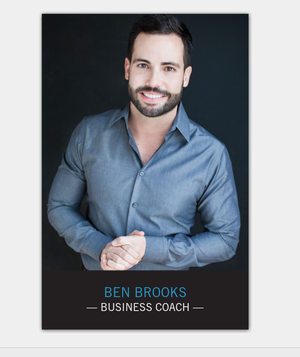
Ben: Welcome to The Lift, the show about leadership, growth, and getting what we want. I'm your host, Ben Brooks. For over a decade, I've worked with CEOs, their executive teams, HR departments, and entrepreneurs to identify what drives their success and what holds them back. And now I'm excited to share those insights with you. On The Lift, we pull up to see the bigger picture from accomplished leaders who know how to get things done in a rapidly changing world. We've got all of that and a lot more coming up next on The Lift.
Ben: I got to tell you, I am surprisingly passionate about meetings. In my company, PILOT, we have some pretty strict rules about when meetings happen, and we always have a co-pilot, we call them, to help the meeting leader stay on track. We started this practice because I knew from my HR background how bad meetings are, both for employee morale, but also productivity. That probably is true at your organization too. So today we're bringing in a bit of a meetings doctor. Dr. Rebecca Hinds is an organizational psychologist and an expert on how to lead productive and impactful meetings. She's the author of a new book called *Your Best Meeting Ever: Seven Principles for Designing Meetings That Get Things Done*. She spent years researching why meetings fail and what high-performing teams do differently when they gather. She also founded the Work Innovation Lab at Asana. And just last year, she launched the Work AI Institute at Glean, where she partners with leading experts to help organizations transform their work using artificial intelligence. And fun fact, she was also a semi-finalist at the Canadian Olympic trials for swimming. Surprisingly, her experience on the Stanford swimming team has more to do with meetings than you might think. Today, Rebecca is gonna help us rethink when meetings are actually necessary, how to design them with intention, and how leaders can best leverage them or lose them without sacrificing connection or results. So let's dive in. Y'all, I am so excited to have Rebecca on the podcast today, not only because we are Asana power users at our company and have been for a decade, but also I am so passionate about meetings and actually making them work, because they are a massive dissatisfier of people's time at work and wellbeing and everything else. And most importantly, she is Canadian. So Rebecca, welcome to The Lift.
Rebecca: Thank you so much, Ben, for having me.
Ben: Rebecca, I was excited because I've quoted Asana research that came from the workplace research that you helped found there. And I remember reading something, and you'll have to correct me if I get this wrong, but, you know, knowledge workers spend about 60% of their time on work about work versus the work itself. And meetings can be a big part of work about work. And I've quoted that stat and study probably hundreds of times. And so was that from your work?
Rebecca: It was from work that my team and I led over the years, and it was something that we found so powerful that we ended up measuring it year after year. I think dating back to definitely the pandemic era, and we all feel it, this coordination tax associated with work — the time you spend in meetings, the time you spend drafting status updates, this time you spend on everything other than the work that you were often hired to do, that skilled and strategic work. Not only is it a time drain, but it's also a massive drainer of morale and employee engagement. It's often work that people dread doing. So because of that, it also has these lingering impacts where you can look at the 55 percent-ish time we spend on work about work, but there's so much else outside of that that we need to understand in terms of understanding the true nature of the problem and just how pervasive it is.
Ben: And you mentioned, you know, in your research, this idea of weapons of mass dysfunction and the historical precedent as a part of a playbook against adversaries. Tell us a little bit about this weapons of mass dysfunction, what you mean by that and how it shows up in the workplace and meetings today.
Rebecca: It was inspired by how I start the book, and that is with the story of what's called the Simple Sabotage Field Manual. This is a manual from World War II. It was recently declassified. It was essentially a guide for ordinary citizens living in enemy territory to sabotage the enemy from within. One of the tactics that was outlined in this guidebook in various forms was meetings, right? Hold unproductive meetings, hold meetings that meander and detour and go off topic, because that's a very reliable way to sabotage the enemy and get them to do less and be less productive so that the other side will have an advantage. It's unfortunate that we use this business practice that was once deployed as a weapon of sabotage or mass, you know, destruction for meetings now, and it's become so dysfunctional and yet it still is business as usual within our organizations. And I think the irony of that, the unfortunate-ness of that, is something that I think helps to ground people in just how important it is to fix this problem and to set our organizations up for success in different ways.
Ben: If you wanted to cast a spell, you'd wish poor meeting culture on a competitor, because that would really slow down their productivity or efficiency or ability to execute.
Rebecca: 100%. We live and breathe by the strength of our communication system in our organizations. And so often meetings are the tip of the iceberg. And we think about knowledge workers, we're spending 85 to 90% of our time collaborating. So much of that is in meetings. And we know it, we can feel an unproductive meeting, we know that meetings are dysfunctional. And yet for every other business practice, we measure things down to the decimal point. For some reason, and there are many reasons, we close our eyes, cross our fingers, and surrender to these bad meetings in a way that's devastating for so many organizations. And often, there's not that realization. Often, the sentiment is, "I know my meetings are bad, but they're not any worse than anyone else's." And there's this inertia to change where we need to get out of it — just because very few organizations do design meetings intentionally and well doesn't mean it's not possible for every organization. And we shouldn't succumb to the status quo as an excuse for not changing things, because there's no higher leverage thing that we could do in our organizations than create a healthier communication culture and in particular, meeting culture.
Ben: What do your meetings look like right now? You've been in a recent job for less than a year and you're founding a new workplace institute. Just so we have a sense of your reality.
Rebecca: Definitely not perfect, and I wrote the book in many ways for me as a constant guide, but I do try to keep my meeting schedule very lean. I have very few recurring meetings on my calendar. I have a recurring meeting with my manager, which we know is super important. We're in an era right now where there's a narrative around, "Do we really need those one-on-one meetings with managers?" Yes, absolutely, there are some exceptions, but that's important. Beyond that, I have very few recurring meetings. And when I do schedule a meeting, in particular, I am very thoughtful, I think, about how I design it and recognizing that attendees' time is more valuable than my time in the meeting. And I need to do all the legwork up front to prepare the meeting for success and make sure it's a valuable investment of people's time. Whenever I can sync things, I try to do that. So if I can have certain meetings that align or on a similar theme, I try to reduce the amount of cognitive switching I'm doing through the week. And I definitely try to have those meeting blocks in my calendar. And increasingly, you know, what's funny, and I'm sure I'm not alone in this, I do use AI as a big component of my day to day, especially when I am doing research and analyzing data. And knowing that I'll hit certain limits at certain points of the day, I'm more likely to say, "Okay, I want that block, 8 a.m. to 11 a.m. I know at 11 a.m. I'll probably hit the limit. Why don't I schedule some meetings if I have flexibility and the attendees do as well?" And so thinking about the synchronicity of work and how that also aligns with the other aspects of my work outside of meetings is something that I try to do.
Ben: I live in New York City and we have regional trains that will have peak and off-peak rates. Peak is when there's more demand, the opportunity cost is higher. And so I often advise a lot of executives to think about when is your peak time. But I think people don't think about the cost of that hour being higher or lower depending on which hour it is, and being intentional about which ones they give away to meetings. And it sounds like — are you giving time in maybe off-peak hours, and you're using that block for when you really need that sort of task saturation and focus?
Rebecca: Increasingly, I'm finding, and I think this is a reflection of the research and what's in the book is, if a meeting is done right and scheduled with purpose, it should be very cognitively taxing. So I'm finding more and more I am scheduling those meetings when I know I'll have focus or I'll be ready for a different mode of thinking — doing research for three hours, knowing that I'll need social interaction and brainstorming together with someone, for example, sharing ideas, discussing ideas, debating ideas is something I try. But what's fascinating is it's different, not surprisingly, for every person. And one of the key dimensions that matters is how creative you are, as well as whether you're a night owl or an early bird. All of these things influence our rhythms at work. There's a whole chapter in *Your Best Meeting Ever* on rhythm and how important it is to align your meetings to various rhythms, including the very natural human rhythms associated with waking up and sleeping.
Ben: How would someone understand how creative they are? I can see a lot of business people thinking they're not creative unless they're in media or art or branding, something like that. But how do people understand if they're creative and how does that affect their rhythms?
Rebecca: And a better way to put it is how creative they ought to be, how much of their work requires creativity as a core output. Anything that's more visual tends to be more creative. But also strategic work involves a lot of creativity. And we know that meetings in particular can inject energy that's helpful for creativity, or in more cases, it can drain that creative energy. And so also thinking about whether meetings are scheduled at certain parts of the day matters, because we know there's something called the contracting time effect where if we see a meeting on a calendar, even if it's hours away, we start a mental countdown and we're cognitively anchored to that meeting, so that if you're in creative work especially, it can destroy some of those muscles and rhythms that you need to be fully creative if you're having these meetings hours away. And so also thinking about no-meeting blocks, no-meeting days for some people, some organizations, especially in those more creative pursuits, can also be beneficial.
Ben: I think sometimes we talk about boundaries. We think of it in this very emotional way, but sometimes it can just be quite logistical to say if it's a no-meeting day, that means no meetings. And you were a Canadian Olympic swimming trials, a semi-finalist. Tell me about being a swimmer, and how did that go from swimming to, you know, fixing bad meetings and having a PhD from Stanford?
Rebecca: I mean, swimming is a lifelong sport. It's taught me so many lessons — you know, the standard ones: time management, discipline. And I think that's why I've been able to have these counterintuitive sort of winding careers in many ways, because I can balance things in ways that I definitely attribute to my swimming career. But I think the shift for me was growing up swimming in a very individualistic swimming culture in Canada. It was, you know, I swam as part of a team, but it was individual first, and it was your performance that mattered as an individual above all else. Coming to Stanford in particular, you know, it was at the time the best swimming school — being injected into this team-first environment where you could be a world record holder, and we had multiple on the team. And if you didn't show up on deck with a team-first mindset, cheering other people alongside you, lifting people up, you know, not dreading the practice, not lingering after a bad practice you've had — that was way more important than swimming fast individually. And I think I saw this fundamental shift in the environment, and I started to become really fascinated by the science of teamwork. How is it that you create these environments where the whole is greater than the sum of the individual parts? And as I became closer and closer to my career in industry, I became fascinated by understanding, can we replicate this great team environment in an organizational setting? What does it take from a research perspective to lead a team, to design an organization that people thrive, to design an organization where collaboration and coordination is effective? And that was the transition that I became very fascinated about understanding and devoting a lot of my career to.
Ben: You know, how do you think about those lessons from the pool at Stanford and everyone having an active contribution, not just the coach demanding the expectations and you all complying?
Rebecca: It was very explicit. You know, from the first day I walked on that Stanford pool deck, it was very explicit: "This is how things are done here." Incentives were aligned as such. You know, you would get called out for being a great team player. And likewise, you would get called out for not being a great team player very quickly. And I think that's what we're missing in so many organizations is a lot of this is human nature. We are individualistic beings. And if we're not explicitly incentivized and if it's not made explicit what the expectations are in terms of showing up for a team, you default to your individualistic tendencies. And that's why we see in these great organizations consistently, they're doing something. Sometimes it's very formal. Sometimes it's very informal. They're doing something to incentivize team collaboration. Sometimes they're measuring folks, you know, on how well they collaborate with other people. Sometimes they're measuring how well you run a good meeting, but they're making it explicit in a way that consistently I don't see from lower performing organizations or lower performing teams.
Ben: I have seen inside hundreds of companies all around the world and very much aligned with what you're saying. There isn't explicit expectations about almost anything beyond legal policies, employee handbook. But beyond that, this idea of coming in — and I think in a diverse workforce and a global workforce and multigenerational workforce, that sense of what are the norms to gather. How does diversity in all aspects affect meeting culture or the need to make those things more standardized?
Rebecca: It definitely impacts it considerably. And this is a big reason why I think we see remote-first organizations in particular do this very well, because typically with a remote-first company, you have more geographic diversity, you have more complexity, more time zones to manage, and you absolutely need to make that communication system explicit. And we consistently see that from remote-first companies — they're making it explicit, recognizing that these can always be living, breathing documents. And in many ways, I was inspired to devote many years to meetings in particular, because it's such a massive cost in our organization. There's no other activity we spend more time on than meetings. And yet, they're so poorly optimized. And we know that something as simple as having norms — now, it's not enough to just say, "Have a meeting agenda." That's not how we fix meetings. But having norms, especially in terms of what is the purpose of a meeting — that is something that every organization should have day one through the end of time, in terms of employees knowing what deserves to be a meeting in my organization. And if you ask four employees, you should not get more than one different answer. There should be that clarity. In so many organizations, the vast majority, ask four people what deserves to be a meeting, you'll get four different answers.
Ben: Some organizations, if it isn't a meeting, they don't really know how to cooperate or collaborate. That seems to be the only mechanism to actually work, despite having maybe great collaboration tools, pedigreed, very smart people — that they've never figured out another way other than that. So that looks like lots of travel, lots of times in conference rooms, lots of that. But again, often in a low performance way, because I find organizations that are the most reliant on meetings often have the worst meetings, which almost doesn't make sense.
Rebecca: Totally. And I talk a lot about systems thinking, and often what we see is meetings are blamed for everything that's wrong with work. Usually they're a symptom of a bigger problem, and that is a broken communication system. And we saw this so clearly during the pandemic where we had more digital tools than ever before, tools that should have allowed us to spend less time in meetings. We saw the time we spend in unproductive meetings across all levels of the organization increase and increase. And that was because employees didn't have clarity. You can have Slack, you can have Asana, you can have Figma. If you don't understand how to use them and if work is living in five different places, meetings become that very reliable fallback where you're doing information rescue missions in the meeting, you're using the meeting for aspects of work that don't require that synchronous real-time communication.
Ben: You know, in your book and research, you've got some pretty staggering stats about the time and the money that meetings are taking up. How do you size this? If we put on that sort of CFO or head of HR or head of ops hat, you know, what are these meetings really costing us?
Rebecca: So it's huge. My colleague, Elise Keith, has done some fascinating, important work in terms of the cost of meetings in particular. Now, this is, again, just based on raw salary costs. But she's estimated that meetings in the US alone account for more than $1.4 trillion, more than 5% of GDP. And so it's enormous cost within organizations. We know that it differs organization to organization. But on average, we have managers alone spending about six hours per week in unproductive meetings. So that's the better part of a full day that is not just meeting time, it's unproductive meeting time. And it's, again, an enormous opportunity to rethink things, and imagine if you could give your employees six hours of valuable time back. That's a massive time savings and morale boost that has a whole bunch of different trickle-down effects associated with what we know is a driver of strong performance for your organization.
Ben: When you think about meetings that are not a good use of time, what are some of the worst types of meetings?
Rebecca: So the worst types of meetings — often status updates are very high on the list, boss briefings. In the book, I outline a rule that I call the 4D CEO test, which is essentially a two-part test to decide whether you need a meeting. And the first part of the test is a meeting should only happen if the purpose is to decide, debate, discuss, develop yourself or your team. So those 4Ds. What doesn't pass the 4D test: status updates, boss briefings, even something like brainstorming. And this is often what I'll see in organizations that are well-intentioned but have broken communication systems. They'll over-index on inviting everyone to the brainstorm session with often no prep work. You're thrown in, it's kumbaya, everyone speaks and bounces ideas off of each other. Overwhelmingly, the evidence points to the fact that brainstorming independently before you come together in a live meeting is much more effective. You generate more ideas, you generate better ideas, because you're not subject to groupthink. When we talk about diverse modes of thinking and working, you're catering to those different modes of thinking, the introverts especially. And so again, often it's not that an entire meeting doesn't deserve to exist, it's that a large portion of the meeting doesn't deserve to exist in a meeting form. And the more we can be strategic about, within this brainstorm session, what actually needs to be synchronous. Once you've done the brainstorm independently and you're ready to discuss or debate the ideas, now you've crossed into the 4D territory and it deserves to be a meeting. But before that, it's going to be much more effective, much more efficient to do some of that brainstorming asynchronously and independently.
Ben: Back to thinking and learning differences. I had recently on the podcast the CEO of Understood.org, which focuses on learning and thinking differences in the workplace, talk about meetings being something that's really for fast external processors, who are often extroverted, who can read a lot of social cues, et cetera — sometimes, you know, kind of a male dominance aspect stereotypically in all of that. And I've just thought about it a lot. And it was so effective when you, one, let people know in advance, you know, 'cause I think that just like, this is what's going to be expected, or here's what to come with, and let them have that eureka moment in the shower because their subconscious worked on it all night. And also even in the meeting, if they don't do that, I still typically facilitate to say, "We're going to work in silence." And it's so uncomfortable for people to sit in a room together without speaking. And I often find I'll even just put a little music on — instrumental, not vocals — so people can think. But it's amazing how quickly and how many more ideas we get, because the productivity of that versus someone tells one idea and then they lobby and they sell it and then someone debates that idea — versus if we're not in the vetting or prioritization or selection, it is just about volume is virtuous.
Rebecca: You're exactly right. This is research from my good colleague, Steven Rogelberg, as well as other folks. But consistently, meetings are designed for two people. They're designed for the organizer of the meeting, who got to design it often, however they chose, and the person who talks the most, because they got to hog the airtime, share their opinions. Often, it's the most powerful person, but not always. We also know that as humans, we associate airtime and speaking in the meeting with leadership. There's fascinating research — it's sometimes called the babble hypothesis — where the more people speak in the meeting, the more we perceive them to be a leader, regardless of what they're saying. Right. And the more we can design around that, it is very possible to design a meeting that levels some of those status dynamics and power dynamics in a way that makes it much more effective for the other people in the room.
Ben: And there's a lot of theater I find in meetings. There's a lot of work — if you think of little kids in a Fisher-Price, you know, they're cooking or they're building or they're doing a thing. It doesn't look that different from five-year-olds in a pre-K playroom versus 45-year-olds in a conference room. How do you see those kind of theater dynamics show up?
Rebecca: Pervasively, and from the moment we schedule the meeting. And we know that we associate visibility with value within the organization, and part of the theater, part of the problem with meetings at large, is we associate them with busyness and importance within the organization, and that's why you see a packed calendar. The association is that person is very important within the organization. And there's nothing that shows you're busier than a packed calendar. And because of that, we over-index on scheduling in particular. Being double booked is such a symbol of status and importance within the organization. And then we see it. We see it in the jargon. I've seen everything. I've seen buzzword bingo being played in meetings where jargon is used as status signaling within the organization in a way that's very detrimental. And often it's because we don't understand the purpose of the meeting. We don't have clear norms around what actually is a good agenda. What is the marker of success within the meeting? And that's why, again, some of these measurements — measurements that are now newly enabled by AI in a way they weren't two or three years ago — are very exciting, not from the perspective of policing or surveillance. But often the problem is awareness. And it's these baked-in biases in US cultures. And I forget who I heard this from recently, but the attendance grade in primary school through college incentivizes us to all feel like we need to participate in meetings — that has had a lingering impact as well, where we need to be clear about what is success and how do we start to measure real contributions in a meeting, not just repetition and not just fluff and filler, but real ways that we as attendees of the meeting are moving things forward.
Ben: And you mentioned the four Ds. We talked about a decision, a debate, dial — or discussion, rather — and develop. The CEO part — tell us about that CEO.
Rebecca: So even if a meeting does pass that 4D test, it should still pass the second test, which is the CEO test. The content should either be complex, right? There should be enough complexity, enough ambiguity, enough unknown unknowns where it's going to be much more efficient to get together live in a meeting and hash that out than it is to try to do it asynchronously. E — is it emotionally intense? So if we're needing to read emotions, manage emotions, interpret emotions, we're trying to persuade someone, we're delivering hard feedback, we're receiving hard feedback — all of these things, we should be showing up as full humans, reading the body language, developing the trust. Or is it a one-way door decision? Once you walk through the door, it's very difficult, if not impossible, to go back the other way. In those cases, often, the risk of misalignment is too high not to schedule that 15-minute meeting and make sure everyone's fully aligned. And so, so many things won't pass the 4D test, and that's often the biggest, you know, unlock for organizations is that first test. But as organizations become more sophisticated, having that CEO test as well and understanding, okay, even if we're deciding something, it doesn't necessarily mandate or necessitate a meeting if it's not a complex decision, right? Because we can work through that complexity. If there are a lot of independent aspects of the decision versus interdependent aspects of the decision — less complexity, probably we don't need a meeting to decide, unless it's a high-risk one-way door decision. In that case, probably a meeting is warranted.
Ben: And you mentioned AI tools enabling a lot of potential possibility if they're configured in the right way and adopted. I read that the most common use case for AI in the Fortune 1000 is meeting notes. I'm finding with meetings, AI can let people loaf even more. And it looks like an even more productive meeting, because if you have someone in there as a scribe and you have meeting notes afterwards, it seems like a higher status meeting. And now the machine does it. And then there's the recording in case I miss something. What's your take on that?
Rebecca: I'm convinced we're seeing more evidence of AI making meetings worse than making meetings better. And there are many reasons for this. But one is, just as we see outside of meetings, AI is not a deterministic technology. It's not going to magically make you more productive. What we're seeing is it's all about the intent that you're approaching the technology with. And if you're using the technology for the purpose of cognitively offloading work that you should be doing as a human, it's going to make things worse — meetings and things outside of meetings as well. If you're approaching it knowing this is the key role AI is going to play in our meetings, you're approaching it from that collective spirit. So if you're not incentivizing that in the meeting, you're gonna get into a situation very quickly where each attendee is individually sending their meeting bot to a meeting without regard for the friction that dumps on other people. And you get — it's often called the tragedy of the commons, right? We're using AI as a mechanism to boost our individual performance without regard for the team and organizational outcomes. And so if you have more than two note-taker bots in a meeting, it's a sign you haven't designed the meeting. You should only have one attendee as an AI taking the notes. You'll leave with one source of truth. You won't leave with conflicting versions of reality. And you'll be focused on the human-to-human conversation. Often, we're using the technology because we can use the technology. We're not thinking strategically and intentionally about when should we be bringing this technology into our meeting? What is the role it can play? And ensuring that it's in service of the team and organization, not the individual who it's more convenient to deploy.
Ben: Rebecca, as we wrap up this session — you've got a doctorate, you're the meetings doctor here. If you were to sort of give a prescription to some of our listeners, what do people do both about kind of the mechanics, but I think also you mentioned a lot around the sort of cultural norms that aren't just about agenda structure or meeting length that I think often get missed. So what's your prescription on both of those?
Rebecca: So my prescription is to read the book, because it really is comprehensive in terms of each chapter of the book walks through a different principle, and they're principles that have come and been derived from product development — what we know about great products, applied to meetings. And so the first principle in the book I think is arguably the most important, around how do you clear your meeting debt? We have so much meeting debt within our organizations — legacy meetings that no longer serve a purpose. We show up, we go through the motions. They don't deserve to exist. And so one of the strategies that I've been known for in my career and I advise in the book is around a meeting doomsday. How do you thoughtfully clear the slate, start from scratch — not as a top-down effort done to employees, which is often the case, but an intervention led by employees — and the science behind why that works and why that's more powerful than a meeting audit, for example, is often the first step I'll recommend. And when we're thinking about the aspects of meetings, I often think about the length, the attendees, the agenda items, and the cadence as four key pillars that we need to be taking into account, and the science behind why those things become dysfunctional components of our meeting. Length in particular is one where we know that meetings and work suffer from what's called Parkinson's Law, meaning work expands to fill the time allotted. So if you look at your calendar and most of your meetings are 30 to 60 minutes, it's probably a signal that you haven't intentionally designed your meetings, because if we're scheduling meetings intentionally, they should all have intentional lengths — we shouldn't default to what our calendar tells us should be a meeting. Again, systems thinking is really important, thinking about your broader communication system. There's a chapter on metrics, there's a chapter on technology — how do you think about the role AI plays in our meetings? How do we know when AI is probably going to make things worse versus better? And thinking about the cadence of meetings, not just scheduling them because there's an open time slot in the calendar, but very intentionally. Projects as well — thinking about what are those key moments of projects. We know that the midpoint is one of the most important moments in a project. Often, we don't schedule meetings to take advantage of that important inflection point. It's the moment abundance turns to scarcity, right? In the project, there's a jolt of energy — very powerful when you can capitalize on that jolt of energy in a meeting form.
Ben: Now it's time for our Lift It or Ditch It segment. We'll present our guests with a list of hot topics and find out if they choose to lift them and support them or ditch them and say goodbye. So I'm gonna talk about some meeting-related habits and you can just tell me if it's something we should lift or ditch. How about 8 a.m. meetings on a Monday?
Rebecca: I think all my answers to this are gonna be context dependent. But meetings 8 a.m. on Monday can be very healthy depending on the organization, but they shouldn't be all about digesting your weekend activities.
Ben: Depends.
Ben: How about scheduling links and letting people book — just book time on your calendar?
Rebecca: If you've been intentional about setting up those scheduling links, yes.
Ben: Cameras on, required for virtual meetings.
Rebecca: Never required, but encouraged.
Ben: How about timers or leveraging timers in meetings?
Rebecca: If you're in a meeting rut and trying to jolt people out of inertia and you're having meeting length difficulties in terms of staying on track, yes, they can be temporarily good solutions.
Ben: Allowing people to move during meetings, be it on a stationary walk pad or be off camera and take a walk.
Rebecca: Absolutely, I love the research behind this. It's fascinating. We also become more collaborative when we do so. Typically, this is better for more creative types of meetings — more divergent thinking than convergent thinking.
Ben: How about using Slack or other tools in real time with the meeting attendees to collaborate while you're also speaking?
Rebecca: In general, no, but there are exceptions where that can be effective.
Ben: How about meetings with a vague title like "check-in" or "touch base," "circle back"?
Rebecca: No, we've seen it time and time again. You can get a good sense of how effective a meeting is by the specificity of the title.
Ben: And the last one is when we end a meeting potentially early based on — we didn't fill the Parkinson's Law — saying we're giving time back. What's your thought on that?
Rebecca: Ideally, you're not doing so consistently, because that would indicate that the meeting length isn't the correct one to begin with. Absolutely, that gift of time is something that the research points to can be very effective.
Ben: Well, check out the show notes for Rebecca's book, and Rebecca, thank you for coming today. Thank you for sharing your wisdom and hopefully inspiring people to up-level their meetings in the year to come.
Rebecca: Thanks so much for having me, Ben. This was fun. Cheers.
Ben: All right, everybody, let's turn today's episode into action. First off, try implementing that meetings doomsday in your organization to clear off that meeting debt. You delete the recurring meetings that are taking up all of your time and only add back the ones that are absolutely critical. Meetings can be very costly, and recognizing and quantifying these costs can shift organizational habits and save everyone some time. Next, be super explicit about your meetings. Agree on the purpose, everyone's role, and what success looks like when you end that meeting. Without that clarity, meetings just become a drain on everyone. Lastly, be wary of overusing AI in meetings. It can be super helpful as a tool, but in some cases, as Rebecca mentioned, it can be used for individual gain or have people not pay attention or be engaged. So leverage one AI note-taker for the entire group so you can focus on that human-to-human connection.
Ben: Thanks for joining me this week on The Lift. For more info on what you heard in today's episode, visit our show notes. You can find out more about the show at theliftpod.com. If listening to The Lift today was a good use of your time, please share it with a colleague, a friend, I don't know, your ex, your mother, anyone. Don't let good advice die with you. And for those of you who like to earn a little bit of extra credit, leave a comment on Spotify. We'd love to hear from you. The Lift is produced and edited by the team at editaudio. This episode was produced and edited by Ali Sirois with additional production support from Victoria Marin. Our production manager is Kathleen Speckert. Our executive producer is Steph Colbourn. A special thanks to Korey Rich and Beth Gatsik. There's only one way to go.
Rebecca: Word.