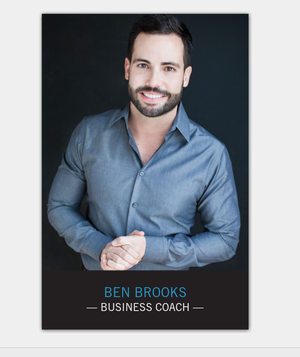
In this episode of The Lift, Ben is joined by Keziah Wonstolen, founder and CEO of Vannin Chief of Staff. A former management consultant and Chief of Staff (CoS) herself, Keziah is passionate about transforming how modern leaders work through optimizing the role of the CoS
Key takeaways:
Why so many CEOs feel like they’re “drowning” and how a Chief of Staff can give them back hours each week
The real difference between a Chief of Staff, Executive Assistant, and COO (and when you actually need each role)
Vannin’s three-part Chief of Staff framework: Align, Execute, Amplify — and how it works inside high-growth companies
The three chief of staff archetypes (Operator, Strategist, Proxy) and how to match them to your stage and funding model
How Chiefs of Staff can quantify their impact and avoid becoming a “catch-all” role
The #1 skills gap Keziah sees in Chiefs of Staff and why financial and business acumen are non-negotiable for the role
When you’re a CEO or founder, “drowning” can start to feel like a permanent state of being. You’re responsible for strategy, culture, fundraising, customers, the board, and your team (and you’re still the person everyone pings when something goes sideways).
In today’s episode, Keziah Wonstolen draws on her own experience as a management consultant and Chief of Staff at a global firm to break down what a great Chief of Staff actually does – and just as importantly, what they don’t do. She explains why the role has exploded in demand over the last five years, especially in a world of post-pandemic hybrid work, constant change, and AI reshaping every function.
Vannin uses a simple but powerful framework for the Chief of Staff role: Align, Execute, Amplify. According to the framework, the best Chiefs of Staff start by aligning tightly to the CEO’s vision, then building the operating cadence and cross-functional projects that actually deliver on that strategy, and finally amplifying the CEO’s impact through sharper communication, stakeholder management, and better use of time.
Ben and Keziah also get into one of the most common points of confusion: what’s the difference between a Chief of Staff, an Executive Assistant, and a Chief Operating Officer? Keziah lays it out clearly:
Executive Assistants handle repeatable, transactional work (calendars, travel, logistics) and are essential leverage for any executive
Chiefs of Staff own cross-functional, non-transactional projects, planning cycles, and change initiatives where no single function “owns” the work
COOs sit in the C-suite, own operational metrics and teams, and are often the next step for seasoned Chiefs of Staff in larger organizations.
She also shares the three archetypes she sees most often:
The Operator: a junior COO who builds operating cadences, OKR systems, and drives accountability
The Strategist: a thought partner who can translate board or investor expectations into messaging, plans, and decisions
The Proxy: a highly trusted stand-in who can represent the CEO in key meetings and contexts
Ben and Keziah talk about why role clarity is the make-or-break factor and why vague job descriptions with phrases like “ninja,” “rockstar,” or “24/7 support” are red flags. Instead, Keziah walks through how she helps CEOs start with a brutally honest time audit: What should you be doing at this stage as CEO? What are you actually doing? And which gaps call for an EA, a Chief of Staff, a CFO…or even a therapist?
For leaders who already have a Chief of Staff or EA, Keziah shares practical ways to get more value from those partnerships: regular one-on-ones, co-designing the “office of the CEO” rhythm, and being explicit about what success looks like quarter by quarter.
And if you are a Chief of Staff, there’s plenty here for you, too. Keziah highlights the biggest skills gap she sees across Chiefs: financial and business acumen. She explains why being able to read a P&L, understand value‐creation plans, and speak the language of EBITDA, margins, and runway is essential if you want a real seat at the table and a long-term career beyond the CoS role.
Whether you’re a founder thinking about hiring your first Chief of Staff, a CEO wondering if you’re using yours effectively, or a Chief of Staff looking to uplevel your own practice, this episode will help you see the role – and your own time – in a whole new way.
Links:
Stay Connected with The Lift
Subscribe to The Lift on Apple or Spotify
Take our listener survey
Full Transcript
Read the full transcript
Keziah: A lot of people will say, well, 'cause I don't know about a chief of staff. I don't really know what they do. That's the one thing that we have to cut through quickly, right? Is that here's what they're gonna do. And I'm gonna communicate not to my leadership team, but also my board, the rest of the company — this is their job.
Ben: Welcome to The Lift, the show about leadership, growth, and getting what we want. I'm your host, Ben Brooks. For over a decade I've worked with CEOs, their executive teams, HR departments, and entrepreneurs to identify what drives their success and what holds them back. And now I'm excited to share those insights with you. On The Lift we pull up to see the bigger picture from accomplished leaders who know how to get things done in a rapidly changing world. We've got all of that and a lot more, coming up next on The Lift. When I started my company 12 years ago, the third person I hired was an executive assistant. Before making that hire, I was trying to do everything myself, and I quickly realized after hiring that person just how transformative getting the right support can be. Since then, I've gone on to even hire a chief of staff, and it's been a game changer. Yet today many leaders try to rely solely on apps or really light administrative support, or they just assume their direct report team will self-organize and coordinate, perhaps with conflicting interests, all while running their respective portfolios. That's why I'm so excited to welcome today's guest to talk about what thoughtful human support can truly unlock, not just at work, but more broadly in life. Keziah Wonstolen is the founder and CEO of Vannin Chief of Staff, a firm that matches high-growth companies, private equity firms, and family offices with full-time, interim, and expertly trained chiefs of staff. Before founding Vannin, Keziah spent 13 years at Accenture advising global organizations on sales, talent, and operations, and she even served as a chief of staff herself. In our conversation, Keziah clears up common misconceptions about what a chief of staff actually does. She shares how leaders can better partner and leverage this role and their administrative assistants, and offers practical guidance for chiefs of staff themselves on how to both quantify and communicate their impact. Whether you're a founder, an executive, or working in an organization with chiefs of staff and administrative assistants, there's something here for you. So let's get into it. Well, Keziah, welcome to The Lift.
Keziah: Thanks for having me.
Ben: Glad to have you, and excited to talk about a topic that many executives and leaders think about it, which is, how do I get more help and more support and leverage? Curious, how did you get into the ecosystem of chiefs of staff?
Keziah: So I spent my career as a management consultant for a global management consulting firm. I became a chief of staff within that firm for a large business. Got exposure to it in like 2015 in Silicon Valley. Sat in the role for about four years and just saw the power of it at a billion-dollar level, Fortune 100 companies, and got really interested in, you know, how the role worked. Got really interested in how do you define the role, because at the time it was quite unclear. We've made a lot of progress, but it still has a little bit of that reputation. So that's how I got into it. And so when I had the opportunity in 2020 to launch my own business, there was no other kind of role or industry or function that I was more interested in than bringing the power of this chief of staff role into scaling companies. So that's how I got exposure to it.
Ben: What has you passionate about the chief of staff, office of the CEO, executive assistant — the whole part of it? What has you so passionate?
Keziah: I think there's a couple things. One is just time, right? Time is something that you cannot buy it. It is non-renewable, and I've always felt passionate about optimizing time, and that's something that within a chief of staff role, when you're working for an executive, part of your job is to ensure that that executive is amplified to — and using their time in the best way possible for the business success and personally for their success.
Ben: And when you mentioned the time, whose time are we talking about?
Keziah: So we focus a lot on the executive's time. As the chief of staff, we're supporting a leader, a principal, an executive. It does not always have to be the CEO, and that's who we're focused on. And the way that we at Vannin think about the chief of staff role is really around three components. It's aligning, executing, and amplifying. And really what that is, is the chief of staff should sit next to the leader, understand the vision, execute on that vision, coordinate the execution of the vision, and amplify, which means that we're looking at time, influence, communication, and how are you making sure that all of that is linked back to the vision that we are targeting? Because again, going back to the fact that one of the biggest challenges with this role is that both from a chief of staff perspective and a leader, is that sometimes it can get quite ambiguous, right? Like you bring a chief of staff on, you as a leader have so many things to do. You just hand it all to them. A good chief of staff will actually bring their own framework and say, "Hey, let me get clear on your vision first. Then I can help you prioritize all the things you just gave to me in terms of projects, initiatives, people, like all of that. But I need to be aligned first on what the vision is." Then they move into execution, and then they move into amplification.
Ben: A lot of executives will have an administrative assistant or access to one, or perhaps an executive assistant. Far fewer in my experience have a chief of staff. How would you explain to folks sort of the difference between those roles and sort of the spectrum that they exist on?
Keziah: It's a good question. We get a lot, but we also get a lot of, "What's the difference between a COO and a chief of staff?" So I'll go through each of those different delineations. So as a leader, the way I like to think about a chief of staff and an EA is many things that fall under your plate are transactional, right? Things that can be repeated over and over again. Things like scheduling, calendaring, lunches, dinners, organizing that travel — that's something that you can easily create a transactional SOP and hand it to an administrative assistant. By the way, administrative assistants are phenomenal and I recommend them to all of the executives that we work with, and that if you don't have one, you know, we can talk a little bit about who do you get first, the chief of staff or an EA, right? So that's very critical. So that's an EA — transactional. I like to think a chief of staff is those things that fall onto your plate that are not transactional, right? They fall into these strategic projects that you have to do, you know, you own as a leader, but they can be cross-functional. So you have to run, let's say, annual planning, quarterly planning. They can be things like, we have to roll out an AI playbook across the organization. Not one functional area owns that, but a chief of staff can own it. So it's these strategic projects that you need someone to take over, own, and you're as the leader gonna spearhead and sponsor, but the chief of staff can execute against. And those typically are cross-functional. And one thing I'll say about a chief of staff, they don't usually have direct reports. So when you move into a COO type territory, you're looking at a C-suite level person. Chief of staff is director, VP. COOs are C-suite. They own all the operational talent, they own the operational metrics. They have teams, right? So under a hundred people, you do not need both a chief of staff and a COO. They become quite duplicative. Sometimes we'll see a chief of staff and an EA, a COO and an EA, but you do not need — under a hundred people, you don't need a COO and a chief of staff 'cause they're quite similar. But what we see a lot of our clients doing is if you're in a scaling position, you bring on a chief of staff, they work for two or three years, and then you can promote them into that COO role. And so I think that works really well. But there are three very different roles, but also three very important roles to support the organization depending on the period of growth that you're in.
Ben: And when you think about executive wellbeing — I know that in the TS executives that I worked with would have some of their emails printed and things were laid on their desk, and there was this very sanitized 15-foot mahogany doors and really plush carpet in their offices, and they were sort of protected from the world. And now with this always-on technology in our pockets and the pace of change and speed, my experience has been that executives are under a lot more stress; there's a lot fewer boundaries. Do chiefs of staff ever notice or recommend when an executive is not taking care of themselves or needs better support with work-life integration? And I think of you as a CEO, or me as a CEO — we've got obligations and things outside of work, but sometimes work takes the primary focus. Is that an appropriate thing for them to opine on or call out?
Keziah: A hundred percent. And that's actually one of the thesis behind why I believe that the role has become so in demand over the last five years. Just using our business as an example, we've seen almost a hundred percent — 90 to a hundred percent — year over year growth for five years.
Ben: Congrats.
Keziah: There is so much demand, there is so much clarity required, and there's more understanding of what the role can do now, right? And so the demand for it is because of the thing that you just mentioned. The role of a CEO now is so much more complicated and is only going to become more complex as we continue down this path, right? But think post-COVID — CEOs in a matter of minutes had to start thinking about cultural dynamics between hybrid, remote, what the workforce is wanting. I mean, all of those things came up. And then there was AI, the advent of AI technology, which changes by the minute. The level of change management that CEOs have had to deal with over the last four or five years has been insane, unprecedented. And so that's why a lot of CEOs are looking to these chiefs of staff as a tool to help them manage those changes. And it's not even starting to mention that geopolitical climate, all of those things. That is the reason behind why this role has become so popular and so required now as a blueprint role versus just an optional role for CEOs.
Ben: And if you were to think of sort of casting the chief of staff from central casting, or had a metaphor for this sort of character — is there a metaphor, analogy that you would kind of describe that chief of staff? Just so people have a bit of a mind's eye.
Keziah: You as the leader are on stage, and the chief of staff is behind the scenes with the clipboard, making sure that you have showed up on time, that you were saying the right things, and that you're ready and prepared to answer the questions that are gonna come at you. That's how I always think about the chief of staff. I'm sure there's other creative things about, but that's how I think about it.
Ben: I learned a long time ago, someone said, if you ever wanna look like you're in charge, hold the clipboard. It doesn't even have to have anything on it. You can just — don't show anyone the clipboard, but people will think you're the one in charge. I have seen chiefs of staff that have been that sort of handler right there next to the individual, and you know, they sort of accompany and host and, you know, kinda smooth the edges around a lot of things. You know, different types of CEOs might really want that hands-on support, but you could have someone quasi duplicating the CEO in other meetings and other places to drive things and multiplying them out. What's the sort of profile of CEO in terms of how they choose to use their chief of staff?
Keziah: So I think it's a couple things. One, when you think about a chief of staff, there are three different archetypes that we subscribe to. There's an operator — a very tactical, junior, like a junior COO — that's gonna set up your goal-setting framework and your operating cadence and run and drive the accountability for those two deliverables. That's like an operator. Then there's a strategist, who moves from an operator to being a thought partner, right? Someone that can sit with you and think about, what do we wanna say in the all-hands based on the messaging from the board? What are we gonna say? And doing a little bit of that. But they're also an operator at the core. So all chiefs of staff are operators at core, and then it grows in concentric circles around that. So then we have the strategists, and then finally we have the proxy. The proxy is the folks that are showing up in the government political settings, in these large enterprise companies, that really could, you know, if needed, step in for the leader. The other thing I'll say is that from a CEO's perspective, it also depends on the size, the scale, the investment type of your business, of how the chief of staff will show up. So if you are a private equity-backed company, the chief of staff will help run the value creation plan, from setting up as you get acquired by the private equity to running that value creation plan. That's a very specific deliverable that a lot of chiefs of staff in private equity-backed companies own. In VC and Fortune 100 public companies, it can look different as well. So there's all these considerations that you have to think about, based on the size of the scale and where you're at in terms of how you're funded as a business and how the chief of staff can operate. That also is — it depends on how the CEO shows up, all those components. So then the way that you hire and find the chief of staff also needs to sort of back up those different areas as well.
Ben: What's interesting about what you shared there is if someone says, "Oh, I need a chief of staff," or, "What's a good chief of staff look like?" — I hear behind that is the answer is, it depends. It depends where you're at as an organization. It depends how much trust the executive might have, or how mature or well run things are, or what the business context, even the ownership or the capitalization. It's quite interesting because, distinct from maybe some other roles, this is a very sort of "it depends" role. And how would you — if you had someone coming to you that says, "Hey, I've never had a chief of staff. I wanna set this up" — what's the discovery that they would go through with you or someone else to figure out the kind of chief of staff they need?
Keziah: As we start with a leader, I like to talk about why right now, right? I mean, there's always this component of CEOs call us — there's a few reasons, right? They're either, in their words, like they're drowning. They're not able to spend their time on the things they should be spending their time on. If you think of the CEOs, their time should be spent on strategy, on capitalization, it should be spent on people and culture and the vision. Those are the things, and most CEOs know when they're not able to spend the most adequate time on those topics — they feel it, right? And so a lot of CEOs will come to us and they'll say, "I just — I don't have enough time. I'm spending my time running operations, meetings, all these things," and they don't have enough time. So then we start to go, but okay, so what should you be spending your time on? Which sometimes can start with a JD for a CEO. 'Cause a lot of times what I find is really interesting is that as a CEO, especially if you're a founder, you're never actually taught what the job of the CEO is in each different stage of your business, right? And so what should I be doing at this stage, at 15 people, at 30 people? So let's talk about what you should be doing at this stage first, and then look at how you are spending your time. And then we say, okay, great, based on that — hey, all of these are transactional things, right? You can go hand it to an admin. Do not go hire a $180–$300,000 resource. Don't go hire someone like that, when really some of this stuff can just be taken off by an administrative assistant. So we look at those things that are kind of — you're spending your time on that are not the things you should be spending your time on, and then going, okay, great, the remaining set — a hundred percent things that chief of staff can take on. And then we bring in our framework and look at, okay, so here's what we — best practice chiefs of staff are focused on. Where is the overlap? And then how do we customize this role to best support you? Because all chiefs of staff, no matter if you're supporting a solopreneur all the way up to Fortune 100 — which, by the way, at Vannin we've worked with 300 leaders, from solopreneurs all the way up to Fortune 100 companies — and so we've seen it in any sort of organization. We've seen how a CEO or chief of staff shows up. And so then we start to actually take our framework and customize it for the role. And that's what then we focus on when we're looking at hiring that role for the CEO.
Ben: You mentioned your company, Vannin, and I think there's a British backstory we heard to Vannin. Tell us a little bit more about the origin of that name, just so it might give us some context of what you do for a living.
Keziah: Yeah, so I grew up in the UK and I moved to the US when I was younger. We immigrated — my family moved here. My dad was on a green card, and my family is from a small channel island called the Isle of Man, which — the Gaelic word for the Isle of Man is Vannin. When I was doing research about it, though, one of the things I love is that the Isle of Man was one of the first countries in the world to give women the right to vote. Really, and that's something that, as a hundred percent women-owned company, we take really seriously. We're WBENC certified — we've been WBENC certified for two years. It's just sort of a nod to my background, and we go — my family and I go there every year. My family still lives there, and that's what Vannin means.
Ben: I knew the Isle of Man from my insurance days, for the — certain islands like that end up being, you know, domiciles for various insurance and risk vehicles. So —
Keziah: Yeah, and it's also on the global stage, but very small, which is how we operate. And so there's a lot of reasons why I thought it was a good name for our business.
Ben: If you're to think about the myths of a chief of staff, what are they?
Keziah: Yeah, I mean, I think the ambiguity of the role is something that I work really hard to get rid of, because both from a principal, like a hiring side, and the person who's in the role — if your role is unclear or you're trying to hire for a role that's unclear, it will not be successful. So we help and coach our clients from the leader side, like the CEO side, to just get really clear — all the steps I just talked about. What help do you actually need? If you bring someone on as a CEO and you call them your chief of staff and you don't give a clear remit, it usually ends up not going well. And so assuming you have the clear remit for the role and the mandate, then that will drive the type of person that's gonna fit into that role. The other component about this is that there needs to be a personality match, which we focus a lot on. We use Predictive Index at Vannin. A lot of people will say, well, 'cause I don't know about a chief of staff. I don't really know what they do. That's the one thing that we have to cut through quickly, right? Is that here's what they're gonna do, and I'm gonna communicate not to my leadership team, but also my board, the rest of the company — this is their job. That they're a glorified EA — I like to squash this one really quickly, because one of the things that we talk a lot about at Vannin is that a strategic chief of staff is the right hand to the CEO. The background of that person is very, very different than an administrative assistant. I'm not saying that an administrative assistant cannot eventually become a chief of staff, but most chiefs of staff that are operating in a business setting — and I'll speak specifically about business 'cause that's where our business focuses — is they're coming from consulting, they're coming from banking, they're coming from a corporate background or like a specific functional expertise that they — they've grown as a leader, they're a manager, they wanna become a director. That is a very specific type of person, and executive assistants don't typically have that background. That's how I like to differentiate. They're also — there's a big cost difference, right? If you hire an executive assistant versus the chief of staff, and just the level of experience that goes behind all of those roles.
Ben: You know, I think that role clarity is so key, especially at growing companies. A couple red flags I see when people talk about a role or they have a post: ninja, rockstar — these things, for me, that's very red flag that they have not figured out actually what they want. Are there other red flags that you see when people talk about, or if you're to see a post for a role, that you would say, "Oof, this needs some work"?
Keziah: Yeah. So red flags on job descriptions — if you're in the chief of staff space, you see this a lot — but just not being clear, right? Like using the words like "24/7 support," "ready to roll up their sleeves and jump in" — like, things like that that are just probably accurate in a sense that in any chief of staff role, you have got to be ready. Because what you are not — you are not an executive coach, you are not a strategic advisor, right? That is not the job. There are components of the job, but when you are a chief of staff looking for an opportunity, you have to index on execution. That is the only reason that companies should hire a chief of staff, is that they need support executing, or CEOs need support with kind of getting more time and executing properly. And that's the value of this role. And so if you start to see the word strategic advisor or executive advisor, things like that, I would also ask questions, right? On the flip side of, okay, but what am I gonna own? What are the deliverable set that I'm gonna be owning and executing against? I mean, there are a lot of red flags out there. Because what's happening is that people are using the chief of staff role and the name to basically aggregate a bunch of things that need to be done for — typically we see this in scaling businesses, but I do find even if you're in a scaling business like seed, pre-seed, Series A, like that type of company, or even a bootstrap company, it still would behoove you to be specific about what you want this person to do and create success measures as well, which is another thing that people find hard about this role, is to understand, what does success mean? And how do I measure performance against it?
Ben: CEOs often, I think, struggle with success metrics for themselves, 'cause they say, well, if the company's successful, it means I've done a good job. If the company's not successful, I mean, I didn't do a good job. I, from my coaching background, try to say yes, those are related, but distinct. You could have the company do well and the CEO's not doing that great. And you could have the CEO do well and the company's not doing that great. How do you think about the success measures for a chief of staff?
Keziah: Yeah. So it's really important that the chief of staff owns this, right? From a performance perspective, what happens is chiefs of staff come in and they naturally just wanna support. They wanna help. They just take what the CEO is giving to them and they take it on and they do it, right? What chiefs of staff really need to do is actually get clarity on the role, get clarity with the leader, what success looks like, because that's the first indicator. Common things that we look for, or common things that are indicators of success that the chief of staff can track, are project completion on time, on budget. And was the business outcome achieved? Right? Because a lot of the times, chiefs of staff anchor around — they're real strong project and change managers, and so they go, "Yep, I delivered the project on time and on budget." But was the business outcome that we were looking for actually achieved? What was it? Right? Clearly you're not gonna take full accountability for a cross-functional business initiative. However, what I've seen really good chiefs of staff do is, if we're gonna make this quantitative, they're saying, "Hey, this was the business ROI," whether it's an EBITDA impact or a revenue impact on the business, and roughly estimating a percentage of that that they can, you know, take ownership of as the cross-functional leader of a program. Another way to make it quantitative is going, "Hey, I know what Ben bills his time out at," or, "I know what the leader bills their time out of. How do I quantify that and say, hey, I was able to remove seven to 10 hours out of his week," and then quantify that. I mean, there are really strong ways that you can quantitatively and qualitatively measure the impact of this role, but a lot of chiefs of staff don't do it, and a lot of leaders don't expect their chiefs of staff to do this. And so I really highly recommend doing it, because that's where you start to see the power in the role, if you can articulate that effectively.
Ben: I would imagine for the career success of the chief of staff, they also don't wanna be victim of recency bias — that if something they owned didn't go well, that all of a sudden the executive views to them is not successful, versus the bigger picture, it taking a longer period of time.
Keziah: Yes, and — but that's about tracking it, right? And being clear on, these are my objectives, this is the role, you know, here's what we agreed on is the priorities. It's hard though, right? Because you're working with a leader that's got a million priorities and they're balancing everything that's going on. So there's an element of this role that you have to document, right? You own your career. There's a lot of chiefs of staff that let the career take them on a journey. But I still recommend that as a chief of staff, you are owning your career. You understand where you're gonna go next. You're tracking your performance based on where you wanna go and articulating both in qualitative or quantitative measures, because a lot of chiefs of staff will wait for the CEO to go, "Let's talk about how successful you've been." No — they don't have time, right? So you need to own this. And you need to, whether it's a quarterly meeting or whatever it is, you need to have that conversation with them so that it continues to be top of mind. And so that's what we recommend, is keeping track. It can be on a Google Sheet, right? It's like — can be simple.
Ben: Can be simple, yeah. But it's about calibration and understanding where you stand in their eyes. You know, when we looked at our company — I've had an executive assistant and believe in executive assistants tremendously. I have someone super fantastic who's worked at global companies and private equity, and she's wonderful. But we brought in chief of staff in part 'cause I knew some of the things we needed to have done. I didn't necessarily know how to do them, and I certainly didn't have time to figure those out. The distinction I learned a long time ago is often the executive needs to sit in the what and the why, and they delegate the how. And what I found in using our chief of staff was that I needed to have better goal setting and strategic alignment for the company, and accountability and transparency. And so we developed a whole quarterly and annual planning system, and mid-quarter check-ins and certain templates. And that was something that he worked very closely with my executive assistant then to mechanize. I didn't have to remember those meetings 'cause they were scheduled for the full year. So that business rhythm — the first year we didn't do that, and then it was a scramble, and the quarterly business reviews. But it kind of took something that I knew, that I needed to hold our team more accountable, be better at prioritizing and better at focusing. He came up with the structure, and you know, in partnership with me, but it was largely his idea, but then he worked very closely with the executive assistant to help implement it and keep it sustained, and it felt like a really good linkage between a chief of staff and executive assistant and the CEO. Are there other examples that you think of where there's, you know, that kind of office of the CEO really comes together like that?
Keziah: I mean, that one to me is something that comes up time and time again as just such a valuable, you know, asset that the chief of staff will bring. There's two things why the rhythm of business supports helps a business, is that it moves you to a more proactive, right? If you have that rhythm set out for the full year, you're immediately more proactive. You know, and this is what I — when we go in for planning with companies, you know what the 12 months look like, roughly. You know that the holidays are happening. You know when your board meetings are. We know this, right? So why are we surprised? And so a chief of staff can really help a leader look forward for the — let's use 12 months for '26 — get it scheduled, start to think about what we're gonna need, back up, get blocks on your calendar. Right? Like start to just move into this proactive rhythm. The one thing that you talked about around the accountability and like running a rhythm of business — we get brought in a lot because leaders will say, well, 'cause no one's doing what they're supposed to be doing, I need someone to drive accountability. Usually what the problem is, is kinda what you were alluding to, is there is actually not a clear vision. The leader thinks, I am completely clear, right? I'm completely clear on what needs to happen. In reality, that is not translated from their head onto paper in communication with the entire company. And that's what usually is generating the lack of accountability, and that you have no rhythm of business in place to track and drive that accountability. So that's why when we talk about the chief of staff — aligning on the vision, documenting it, putting in place executional rhythm of business, and amplifying the leader — the alignment piece, 'cause usually chiefs of staff will take the role on and they'll go, "Okay, Ben, you hand me a list of special projects that I'm just gonna check, check through." And what they don't do is go, "Okay, well, if I'm gonna set this rhythm of business up, is the vision actually clear or not?" And so that — I mean, a lot of the times, it's why we push chiefs of staff to be very clear on, is the vision clear? Because if you then as a chief of staff set up a rhythm of business and you start to hold people accountable with an unclear vision, then it's not gonna work. And they're not set up for success either.
Ben: I think it's probably the ultimate power skill of an executive is to be explicit. And a lot of the chief of staff — what you're talking about is actually mining some of that and clarifying to make it explicit and document. But does that ever provoke or have a reaction from the executive when they're challenged? And how does the chief of staff navigate that? 'Cause I could imagine they wanna please their client, but if they're really standing in their role, they're sometimes gonna agitate or challenge their client.
Keziah: One of the reasons we look for folks with high EQ, strong relationship building, ability to read the room — it's why these chiefs of staff have that skillset. It's why people talk about high EQ when they talk about chiefs of staff, is because you need to understand that at a certain point, you are not the boss, right? The boss is the boss of the business, but there is a point where you need to be able to tactfully drive for clarity. Really good chiefs of staff — what I've seen is that if there is no clarity, they're able to tactically drive to that clarity. They're able to understand how the CEO works, how does the leader work, how am I gonna get this out of their head onto a piece of paper in a way that doesn't provoke, right? Those are the really good chiefs of staff. And sometimes chiefs of staff bring in executive coaches, right? Because the role of a chief of staff — again, going back to, like, their job is execution. Really good chiefs of staff will go, "Hey, listen, you know what? I think we need someone in here that can help build a vision with you." And that's when they can recommend an executive coach, or they can, you know — there's all sorts of people that can help build the vision and drive clarity with the leader. But a good chief of staff knows when to recommend that, and then goes, "Hey, here's what — I've worked with another leader who, they did this, and it was very clear, and then I was able to kind of build the executional rhythm around that," if they can't tactfully get that clarity.
Ben: I think about you — you're a mother, you have three children, is that right? Sometimes there's a parent that's the tough one, you know, in a two-parent household. And you know, do you see CEOs trying to have their chiefs of staff be the heavy, be the disciplinarian, so they can be the nice person, or they can kinda be the statesman or woman? Do you see that show up?
Keziah: I mean, we've worked with some really incredible pairs of leaders and chiefs of staff, and what's really interesting is that some of the — I think the highest performing partnerships are the ones where they actually, before a meeting, decide together how they're gonna approach it, and who is going to be the good cop and who will be the bad cop, in using that terminology. Right? What a tool in the tool belt, to be able to do that going into some kind of big, impactful meetings. I think that's the best thing. And it's communication between the two, working as a partnership, and usually it works best if you're on the same page. Just like in parenting, right? There's an element of it that's like, you know, show a solid frontline as you go into something, and I think that works really well in this partnership as well.
Ben: I know that some investors can look at that as a vanity role. You know, how does one set up the business case to their CFO or to their funders or to their board that they want to create sort of an office of the CEO, to get that chief of staff in place? Because so many of these things, as you said, are not falling into one clear functional area.
Keziah: Yeah, we work with a lot of private equity companies, and that is something that is — they must demonstrate sort of the ROI behind the role. And so we use a lot of the things I just talked about, the calculations, to drive that ROI, especially around owning the value creation. And there's a lot of stats out there that demonstrate that if you have an owner of the value creation plan, you're four to five times more likely to achieve it. And so who owns that value creation plan? The chief of staff. Or any plan, right? You have an owner, you're more likely to achieve it.
Ben: As we wrap up this part of our conversation, I was curious about you giving some advice. One, if someone realizes they're drowning — a word that you hear a lot — what's the first thing they should do as they consider getting more support?
Keziah: This is very simple, but what I like to suggest is sometimes, first, just spending some time by yourself, looking at your calendar and pulling up a JD for a CEO. Right now we have these tools — you can ChatGPT the role of a CEO, like understand what you should be doing, and then just brain dump everything that you are doing that is taking up your time. One of the things that I like to do and coach our leaders that we work with is actually do it from a business side and a personal side. Because I think a lot of CEOs now are leaning on this chief of staff role because, I don't know, they wanna show up to the five o'clock soccer game with their kids, and they're going, "Hey, my time is more valuable when I show up in this way. I'm a better boss, I'm a better dad, whatever it is, if I can do this. And so what is taking me away from those things that I need to be at to be successful in this role?" The other thing I'll say is that when we get brought in, like by boards, right? It's not good for business for these CEOs to burn out. So whether that's personally or on a business side, I mean, it's not good. And so what we can do is take that list — if you can just spend some time thinking about where you should be spending your time, both personally and business, and then looking at what's taking up your time and then figuring out what the delta is, and then bringing us in, and we can help decide. Is it an EA? Is it a chief of staff? Honestly, Ben, sometimes it's not even either. It's like you need a CFO, right? 'Cause you're spending time running QuickBooks. I don't — whatever it is. Sometimes it's not a chief of staff or an EA, and it could be something completely different. It could be a therapist, I don't know. But whatever it is, that's a good activity for you to do if you are in that overwhelmed state, is just to write it out.
Ben: Now, 'cause I have — for folks that already have a chief of staff or an executive assistant, what's your million dollar advice for how they get more out of that person or increase their satisfaction with that relationship?
Keziah: You can use the framework — it's available on our website — but so as the leader, you can ask, like, "Hey, are you clear? You know, I was listening to this podcast and it said that we should bucket your time and align, execute, amplify. Do you have a clearer sense of what I'm expecting you to do?" I think that's a great starting point, and then setting up time to ensure that you have your own rhythm of business with that person, and ensuring that it's not just scattered and chaotic — and which, you know, sometimes it is, whatever — but at least having that predictable rhythm that you can help drive those conversations, somehow having like a weekly touchpoint. Some of the partnerships that we work with, with the CEO and the chief of staff, they meet every morning, right? So, figuring out what that rhythm looks like.
Ben: I have multiple one-on-ones with my executive assistant every week, and some of the highest ROI time. It's tight and a lot of things get done, where it'd be very easy to not have that. And I see a lot of people don't make time for the one-on-one meetings — "Well, aren't they taking care of this and saving me time?" But yeah, a little time goes a long way in the person that's giving you so much leverage. And when you mentioned your framework, on the Amplify — I think the Align, people probably very intuitively, okay, that's the priorities and the planning and the goals; the Execute, the getting it done. What's the Amplify?
Keziah: The Amplify is ensuring that your time, your influence, and your communication with your stakeholders is aligned with the vision, right, of the plan. So that's where we look at stakeholder management. It's a lot of, like, the change management components of — when you bring in a chief of staff, they're gonna be looking at, let's say we're rolling out an annual plan for '26, who are the stakeholders that need to understand this plan? What are we saying to them? What communication methods are we using for those stakeholders? And then what are you, leader, saying, or is it someone else? Is it the managers that are saying that? So it's really about how do we actually amplify the person, the individual, by communications, influence, and managing time, which is some of the things we talked about.
Ben: And the last question, Keziah, is if you had someone currently in an EA or chief of staff role, what's your advice for them to uplevel, both for their own benefit and for the benefit of their client?
Keziah: So I'll talk specifically to chiefs of staff. One of the biggest, I would say, skill gaps that we see — they're all very — especially if they come from banking, consulting, kinda a functional leadership role, they've already managed teams, they've done all of that, right? What they sometimes struggle with is financial acumen, business acumen, right? Understanding how to read a P&L, understanding the different terminologies — that if you're working and sitting in a board meeting with a leader, you better understand those words, because that is how they're driving and owning and running the business. There's a bit of a skill gap a lot of times with chiefs of staff. We recommend taking courses to fill that gap and then learning as much as you possibly can in the role that you are in right now. We have sort of a competency model that we look at when we look at chiefs of staff. We have an accelerator program at Vannin that — it's a coaching program. It's run four times a year, and we look at what are the competencies we need to be successful. But time and time again, we see that that financial acumen is something that is missing, and typically we'll recommend just taking a course on it and understanding it, and then learning as much as you can on the job.
Ben: That's so important, to sort of speak the language of business, and if that's what the CEO or your client is held accountable to by investors or owners or customers, et cetera — very important to understand those. And I think it's, despite us all — a lot of people working in business, not everyone really understand the management of finances, and I think that's really key.
Keziah: They don't, and it's just continually a gap in that skillset. So that's what I always recommend for chiefs of staff to do.
Ben: Now it's time for our Lift It or Ditch It segment. We'll present our guest with a list of hot topics and find out if they choose to lift them and support them, or ditch them and say goodbye. We wanted to think about chiefs of staff specifically, and things that they maybe should or shouldn't be doing.
Keziah: Okay.
Ben: So, making hiring decisions on behalf of their client.
Keziah: They can facilitate the hiring decisions. Usually they're not the one making the decision, but they can facilitate finding the pool of talent, running — you know, identifying who could be a good fit, scoping the role. They're not making decisions.
Ben: How about defining KPIs and quantitative goals?
Keziah: Yes. What is it? Lift or —
Ben: Lift or ditch? Lift.
Keziah: Lift. Okay. Lift it. Yes.
Ben: Planning offsites or leadership meetings.
Keziah: Lift it.
Ben: Helping the client get their personal needs met, like finding a therapist or someone to support their personal needs.
Keziah: Ditch. Use an admin — like, they can help with doing it. I just wouldn't — again, going back to the value of their time, I wouldn't have them do it, but most good chiefs of staff will partner with the admin to do that, so they'll help get it done. They're not just gonna be like, "No, I'm not doing it." But that's a good use of how they would do that.
Ben: Or maybe they suggest it and get the buy-in, and then the admin helps execute the slate of folks for folks to meet with. Attending trips and being in the same car or plane with the executive.
Keziah: Yes. Lift.
Ben: And leading C-suite, executive leadership team meetings.
Keziah: Lift — they can do that. They can facilitate the meetings and they can drive the agendas and things like that. But I just — I would be careful, because the CEO needs to be the real lead, right? Sponsoring. The chief of staff is facilitating the meetings, running agendas, deciding kind of the decisions that need to be made, taking actions, things like that. But the CEO needs to be the real — the leader of the discussion.
Ben: How about attending board meetings?
Keziah: Yes. Lift.
Ben: And firing people.
Keziah: No — ditch.
Ben: That's a ditch.
Keziah: Ditch. But it's something that people have their chiefs of staff do, and it's a real ditch for me.
Ben: Well, Keziah, thank you for sharing so much wisdom and sharing about your business journey, and every time I look at the Isle of Man now, I will think of, you know, you — the Isle of Woman. So —
Keziah: Yes, appreciate it.
Ben: Lovely to have you on today, and we'll have in the show notes more about Vannin Chief of Staff — a lot of resources on their website, and a lot of community for chiefs of staff out there if you're a chief of staff yourself.
Keziah: Thank you, Ben. Thanks for having me. It's good to talk to you.
Ben: Alright everyone, let's turn today's episode into action. Here are three simple takeaways you can put into practice right now. First, if you have that feeling of overwhelm or drowning, pause and do a time audit. Look both at your calendar and everything on your to-do list, and compare it to what you should be spending your time on. The gap there will uncover your biggest clues about what kind of support you actually need. Second, if you already have an executive assistant or chief of staff, invest in that relationship. Get clear together on expectations, priorities, and how you work. These things are always changing, so you need to set a regular rhythm, whether it's a weekly one-on-one or a daily check-in. The ROI on this small investment of consistent time is a huge unlock. And third, if you're a chief of staff or an executive assistant, try to identify where you might have skills gaps or could level up your performance. Things are changing. Do you know about AI and how to leverage it in your role? Do you understand the new strategy of your organization? How financially fluent are you? These are all things that can make you more effective at your job, and frankly, more efficient. Invest the time to learn and grow. Thanks for joining me this week on The Lift. For more info on what you heard in today's episode, visit our show notes. You can find out more about the show at theliftpod.com. If listening to The Lift today was a good use of your time, please share it with a colleague, a friend — I don't know, your ex, your mother, anyone. Don't let good advice die with you. And for those of you who like to earn a little bit of extra credit, leave a comment on Spotify. We'd love to hear from you. The Lift is produced and edited by the team at editaudio. This episode was produced and edited by Ali Sirois, with additional production support from Victoria Marin. Our production manager is Kathleen Speckert. Our executive producer is Steph Colbourn. A special thanks to Korey Rich and Beth Gatsik. There's only one way to go: upward.