The design of a physical space – its scale, its seating geometry, its relationship to technology – does more to shape human connection than most leaders realize, and more than most team-building budgets reflect. Adam Tanaka, COO of Therme Group US and PhD Urban Planning, argues that in a world increasingly mediated by screens and AI, the premium on analog, embodied experiences is approaching an inflection point. His case: wellness is no longer a luxury amenity, it's social infrastructure. And leaders who understand that have a meaningful advantage.
Why are third places disappearing and should leaders do something about it?
Loneliness now carries roughly the same mortality risk as smoking 15 cigarettes a day. The share of American men with six or more close friends fell from 55% in 1990 to 27% in 2021. And people under 30 are now lonelier than people over 65; 29% of young adults report feeling lonely most or all of the time, compared to just 8% of seniors.
These aren't just public health statistics. They're a description of the workforce most leaders are currently trying to engage, retain, and inspire.
Adam Tanaka, COO of Therme Group US, connects these numbers to a structural problem: the disappearance of third places. Not home, not work, they’re the in-between spaces where people historically built the informal bonds that made both home and work more bearable. Think cafés, bathhouses, parks, community centers. Sociologist Eric Klinenberg calls these spaces "social infrastructure."
“Especially in today's very digital world, having analog experiences where you don't have technology mediating your relationship with people is increasingly rare. As a result, people are increasingly starved and desperate for it.”
– Adam Tanaka, COO of Therme Group US
His argument isn't that leaders need to build saunas, specifically. It's that we need to take seriously what the sauna represents: a space where bodies are activated, devices are absent, and the typical social armor and hierarchy of the office washes away – turns out it’s hard to establish authority in a felt hat and a bathrobe.
How do you design a physical space that actually creates connection?
This is where Adam does get specific, and where his urban planning PhD earns its keep.
Most spaces designed for human connection fail not because of bad intentions but because of bad geometry. The seating configuration of a room, the scale of the group it holds, the presence or absence of ambient stimulation are not just aesthetic choices. They are decisions that impact what kind of conversation is possible. Bluntly put: the conference room with the long rectangular table and the flickering overhead light feels like an interrogation room – and who wants to make connections there?
The primary lesson Adam has learned from years of running sauna festivals is the dinner party rule of six: when a group is more than six people, conversation reliably fragments into sub-conversations. Under six, something different becomes possible. People talk to strangers. Silences become comfortable rather than awkward. They become, if only briefly, a group.
“It tends to be the smaller saunas – four-seaters, six-seaters, eight-seaters – where you see the social magic happening. In a big city like New York, where people feel disconnected from people around them, having a space with the orientation of a hearth or a dinner table immediately makes you want to talk to people.”
– Adam Tanaka
The design principles translate directly. The offsite that puts 40 people in a hotel ballroom is not a connection-building exercise. It's a performance. The dinner with six people, the small-group walk, the meeting where devices stay outside…these are the configurations that actually produce the thing everyone claims to be optimizing for.
There's also the body chemistry argument. Contrast therapy – the combination of heat and cold – increases serotonin in ways that reduce social inhibition. The sauna and the cold plunge do, neurochemically, some of what a round of drinks used to do, without the next morning's consequences.
Saunas: all of the social lubrication, none of the regrettable Slack messages.
How should leaders create space for creative risk-taking?
Therme US organized a festival in Washington DC where they projected murals from local artists onto a translucent sauna, so that as guests bathed, the neighborhood's art washed over them. The idea was beautiful, though Adam graded his own execution a B+/A-. Some ambient light got in the way. Not all guests understood what the animation was communicating. Still, the muralists themselves, bathing in their own work, had an experience that was moving and surreal (which genuinely sounds like one of the more poetic things to ever happen at a business event).
“You have to be willing for things not to work. The only way to push the box is to do things that haven't been done before, and there's a chance that they might not work. You often learn more from the things that don't work than from the things that do.”
– Adam Tanaka
What makes that possible organizationally is a formula Adam returns to repeatedly: psychological safety plus a clear North Star. Psychological safety without direction produces scattered experiments that feel purposeless. Direction without psychological safety produces compliance without creativity. The combination allows everyone to speak up about what's working and what isn't, and grow from there.
There's one more element: the leader has to actually use the thing they're building. Adam and his colleague Robbie Hammond – one of the founders of The High Line in NYC – are in bathing suits almost all the time at their festivals, Adam says. Not for optics, but because they genuinely love it, and there is no substitute for understanding an experience from the inside.
“If you're creating experiences for people, you also have to experience them. If you're just creating them and then sitting in an office watching video footage, that's not the way to do it.”
– Adam Tanaka
What to do this week:
Look at the next gathering you're planning, whether a meeting, an offsite, or a team dinner, and apply the dinner party rule of six. If the group is larger than six, break it into smaller configurations for at least part of the time, and be intentional about the seating geometry. Benches facing each other, a round table, a walk. Something that creates the physical conditions for the kind of conversation you actually want to have, rather than the performative kind that a hotel ballroom or a conference call naturally produces.
Then, before the event, ask yourself: am I going to experience this the way my team does? If the honest answer is no, change something.
Related Episodes
– What Leaders Can Learn From Children's Play with Ginny McCormick
– Building the High Line and Beyond with Robbie Hammond
– Meditation for Busy Leaders with Michael Miller
Stay Connected with The Lift
Subscribe to The Lift on Apple or Spotify
Join our mailing list
Take our listener survey
Follow Ben on LinkedIn & Instagram (& Jetson, too)
Full Transcript
Read the full transcript
Adam: That's another thing that's really important, is if you're creating experiences for people, you also have to experience them. If you're just creating them and then sitting in an office and watching video footage of it or something, you know, that's not the way to do it.
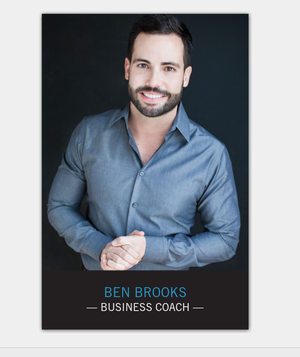
Ben: Welcome to The Lift, the show about leadership, growth, and getting what we want. I'm your host, Ben Brooks. For over a decade, I've worked with CEOs, their executive teams, HR departments, and entrepreneurs to identify what drives their success and what holds them back, and now I'm excited to share those insights with you. On The Lift, we pull up to see the bigger picture from accomplished leaders who know how to get things done in a rapidly changing world. We've got all of that and a lot more coming up next on The Lift. Hey, everyone. I'm so excited about today's episode, because we're doing something a little different. This week, The Lift is reporting live from the field. A couple of months back, we were invited to record an episode of the podcast from inside of a Finnish sauna. On a cold morning, I grabbed my bathing suit and headed to the Brooklyn side of the East River in New York City. Saturday. Yeah, peak time. It's Adam. I'm Ben. Hi. I was meeting with Adam Tanaka, who's the COO of Therme, and Therme may sound familiar if you listened to our episode earlier with Robbie Hammond. You'll actually hear us reference Robbie throughout the episode. Adam works alongside Robbie to help build these beautiful wellness spaces that are reimagining how people recharge in the modern world.
Adam: So, bathrobe, flip-flops, towel. Yeah, so —
Ben: We got robe, towel.
Adam: Most important thing you need: sauna hat. Do you even know what a sauna hat is?
Ben: I do know what a sauna hat is. And I told them on email that I'm dying to be wearing one. It's highly —
Adam: Practical, as well as highly fashionable.
Ben: The main reason I was so excited to talk to Adam was because I really wanted to wear one of those sauna hats.
Adam: It looks like you're wearing a, you know, a woolen bell on your head.
Ben: No, I'm kidding. But I really wanted to talk through how designing conditions for human connection is possible. One of the things I hear from leaders in an increasingly remote and disconnected world is just how hard it is to create spaces that actually feel restorative instead of exhausting. And not only is Adam the COO of Therme, but he actually holds a PhD in the sociology of culture, so he knows a lot about how and why people gather. And so why not host the interview from inside of a space designed to do exactly that?
Adam: Fabulous. Should we go in?
Ben: Let's go in.
Adam: Okay, great.
Ben: On this episode of The Lift, we're live from the Culture of Bathing Sauna Festival, the largest in the world, to talk about the role of third spaces as a form of social infrastructure. Oh, and I should note that the sauna is directly beneath the Williamsburg Bridge, which carries three rambling subway lines, so if you hear some of that rumbling, that's just the charm of New York City. Well, Adam, give our listeners a sense of where the heck we are right now.
Adam: Well, we are on the Brooklyn waterfront in the neighborhood of Williamsburg. Where we are sitting right now, we have an amazing view of the Domino Sugar Factory. So this was actually the factory that for, you know, over 100 years, I think, basically, you know, manufactured sugar for the entire nation, and it's an incredible structure that now kinda looms over this amazing new public space called Domino Park. I've long associated Domino Park with really interesting and cool activations. They had, like, a BMX thing here. They had art experiences. And so the fact that now we're able to deliver this kind of like, you know, world's biggest urban sauna village experience, in a way, doing it here, you know, makes sense. And so what's fun about this experience for us is you're kind of slightly secluded from the city, and yet you're completely immersed in it as well. And we really tried to position the saunas so that each one has a unique view, a unique perspective.
Ben: Well, we're schvitzing right now in a sauna looking at the other saunas, and this is a Finnish sauna that we're in right now?
Adam: Yeah, so actually, almost all of the saunas have Finnish ovens. One of the things that is really unique about our festival is we have almost all wood-fired saunas. That's really unusual in a city context. What I love about wood-fired saunas is you get the crackle of the fire, you get the flicker of the flames. You really kind of feel connected to the origins of, like, humans congregating around fire, you know, in prehistoric times. There's something very grounding and very connecting about that. So yes, we have some Finnish, we also have some Estonian, we also have some, you know, American brands. And we've also been bringing the space to life with sauna masters and performers from really all around the world, to showcase kind of just how rich and diverse this crazy, wild universe of bathing is.
Ben: So can you give a sense of just Therme and your bigger, you know, US vision for bathing?
Adam: So yeah, Therme Group — we're a, you know, roughly 20-year-old company that operates very large wellness resorts in Europe. And really our vision is of bathing as a form of infrastructure — and a form of infrastructure that can be experienced by millions of people, you know, every year. Already we welcome over five million people a year in our European facilities. And I think part of why we drive such high volumes — yes, it's affordability, the pricing is very accessible, but it's also a kind of intergenerational offering. So we have areas that are for kids, we have areas also where kids are not allowed, but it really means that everyone from age five to age 95 is able to experience kind of the pleasures of bathing. There's big pools, there's saunas, there's steam rooms, there's restaurants. You know, people are spending on average in our resorts about six to seven hours per visit, so it really is a kind of, you know, a —
Ben: Destination, almost.
Adam: A destination experience. Really in some ways it's harking back to the origins of public bathing in cities, which were the ancient Roman baths, which were usually located right in the heart of the city, next to the temple and next to the market. And so for us, the sites that we're pursuing globally, as well as in the US, are really these kind of iconic civic sites where you might put an opera house, a museum, a stadium, a library, because we want this to be an infrastructure that's accessible to many people. And you were talking earlier about, you know, Finnish sauna. The origins of Finnish sauna is very much as a daily practice, a daily ritual. It's not something that's a luxury. It's not something that's like a spa day that you go, you know, two or three times a year when you get your bonus or whatever. It really is something that's embedded into daily life. This is kind of the heritage that we are building on — embedding wellness and embedding these kinds of self-care rituals really into the public life of a city. And for us, doing it in public space is part of the point, because you see, you know, the city going by. It becomes normalized as something that's part of a daily routine, perhaps. We've had family days, we've had, you know, kind of queer nights. We've had club nights. We've had more wellness-oriented sound experiences, sound baths. And so the hope is that, you know, everyone sees something for themselves in a space like this.
Ben: Well, you know, for people listening, you probably don't sound like you were born in Texas like I was. Tell us a little bit about your family origin and kind of the connection to bathing and gathering, and why that matters to you.
Adam: Yeah. Well, my family is kind of like a crazy multicultural cocktail. I grew up in the UK, but my dad is French Brazilian Japanese, and my mother — plot twist — is from Texas. You know, this, in a funny way, I think really connects to the passion that I've developed for bathing. It's something that I didn't really realize at the start. But, you know, I still have some cousins in Japan, and when I was in my 20s I lived in Japan for a year and really became completely fascinated by the public bathing culture there. And there it has, like, two sides. There's the sento culture, which is more like the city everyday bathhouse, very cheap, and then there's the onsen culture, which is more like the destination hot spring in the mountains, in the nature, in the forests — more of an escape. And both of those I became really fascinated by. I actually traveled around the country visiting a lot of onsen, and it kind of planted this, like, little seed in the back of my mind that, huh, there is a way for this kind of public bathing to be really embedded into a society and into everyday, you know, culture and everyday life, and that is not something that either exists in the UK, where I grew up, or in the US, where I've spent my adult life. And so when I started working for Therme, you know, about six years ago as a consultant, I immediately saw what the potential was and what the vision was, because I knew there were other parts of the world where bathing was much, much more integrated into daily life, and then the benefits are really profound.
Ben: In our country, at least in the States, so much of us are putting walls up. You know, luxury is — it's closed, you know, big hedges and gated communities and suburban. But people seem... There's a loneliness crisis around gathering, and you know, you mentioned this, you know, earlier in your life you spent some time in clubs — a self-described club kid. And that is a thing for younger people, but increasingly younger people are less attracted to going out, alcohol, drugs, et cetera. What does bathing play a role sort of societally? 'Cause, you know, if loneliness is one of the top five killers of men now, you know, how do you see bathing as an alternative third space, potentially?
Adam: Yep, I absolutely love this question. I love this topic. I mean, I spent a lot of my 20s going clubbing. A lot of my friendships were kind of forged on the dance floor. And to me, actually, there's a huge amount of continuity between the spaces that kinda nightclubs and dance environments can offer and what bathing can also offer. These are basically spaces where you can connect with people in a more profound way more quickly, and also they're spaces where time slows down and moves in different ways. And so I really think that actually there's a lot of parallels between what people, you know, have historically looked for in nightlife experiences, which ultimately is human connection, and what people are finding in bathing as kind of social bathing and public bathing takes off in the US. And funnily enough, they're also spaces that tend to be dark, where you don't really see people fully, where you're sweating. And when there's, you know, something chemical happening in your body — moving, you know, and dancing changes your body chemistry, and contrast therapy, the combination of the hot and the cold, does, too. It lowers social barriers. It drives endorphins and serotonin. But you know, as you say, there's also a hunger for healthier forms of socializing, you know, forms of getting together that don't make you feel like crap the next day. And bathing definitely offers that. And actually, one of the things that I'm really kind of fascinated by is how these two spaces are kind of merging, how bathing is emerging as a new form of nightlife. You actually see, you know, DJs and club promoters starting to create experiences that are within bathhouses and within sauna environments.
Ben: Talking about gathering — JP Morgan here in New York City just built a giant headquarters they've worked on for 15 years, and I read an article that there's a Irish pub inside. It's, you know, their own. It's called Morgan's. There are 56 seats, and it is the hardest place to get into for JP Morgan's... You know, they've — 100,000 people, I think, in Greater New York that work for JP Morgan, and it's become this gathering place for them. But they have a, you know, a bar within the office. What is the role for city governments, public-private partnerships, you know, Therme? 'Cause some of these things — if you're JP Morgan, you're one of the largest companies in the world, you can create your own private spaces for your own employee community. But I'm kinda thinking about, who are we leaving behind? 'Cause Therme's not designed to be necessarily pure luxury, right? There's this kind of broader social good, but at the same time, you still have to make money and have these infrastructure things funded. How does all that come together?
Adam: Well, it's something that we think a lot about. And actually, both in Dallas and DC, where we have, you know, projects in development, we've already had now several years of community engagement and discussion with stakeholders about how they could put this kind of wellness infrastructure — I'll use the word infrastructure again — to work to advance their needs and meet their goals. And one of the things that I think is actually a huge opportunity with platforms like Therme, as well as, you know, this sauna village, is, you know, we're not full all the time. We're full a lot of the time. We're not full all the time, and that actually creates a really interesting opportunity to kind of backfill some of those slower days — whether it's a Tuesday or a Wednesday morning or whatever it might be — to do kind of customized and bespoke programming for community organizations, community partners. I'll give you a few examples. In our facilities in Europe, weekdays before noon, seniors get in half off, and we actually have special programming, kind of aquaerobics and other kinds of offerings, that are deliberately kind of designed to appeal to that age demographic. And that's an age demographic that actually really, really needs kind of social gathering spaces, perhaps even more than young people, in some cases. Although now I recently read that young people, for the first time I think ever in recent history, are more lonely than old people, which is a kind of crazy statistic. One of the other things that I also think is powerful here is we can bring in kind of facilitators from, you know, diverse backgrounds and diverse communities to bring this space to life. So for example, in October, we did a festival in DC that was a kind of small scale version of this, in which we invited a lot of community partners in to kind of bring the space to life. So we actually had a poet, based in the neighborhood in DC where we're developing our project, who came in and offered —
Ben: How cool.
Adam: — poetry readings in the sauna. We actually invited him to come to the New York Festival too. It was really fun. He was doing kind of community poetry readings in the sauna. But, you know, there's many other ways that this could go. We could imagine doing partnerships with youth organizations, with veterans organizations, with, you know, healthcare workers, essential workers. There's a huge runway in terms of where these kinds of partnerships can go, and it's something that personally I'm also very interested in. How do we also seed a nonprofit movement of sauna in the US? It's something that is more embedded, more established in Europe as a complement to kind of the commercial facilities. And I think Therme is kinda uniquely able to serve a very broad audience because of our scale, and because we have these different areas with different price points, we actually attract a very broad demographic. But even in addition to that, I think there's potential for, you know, hospital systems to integrate sauna, sports teams to integrate sauna, YMCAs — which already have some sauna facilities — to go bigger on that. Because, you know, these are spaces that offer not just physical health benefits, but I think social and community health benefits too.
Ben: What sort of values do we need to kind of agree on if we're gonna create these, you know, bathing infrastructure or third spaces? Because there's gonna be some trade-offs, and if it's pure profit maximization, I don't know if having a poet here does that. But if it's from a broader experiential or community and platforming sort of perspective, it creates a bunch of other outcomes. But how do you see kind of the values equation for yourself, your leadership team, your investors playing into that?
Adam: Well, again, I think I've used the word infrastructure a few times, and I really think that's key. It's kind of positioning these kinds of bathing experiences and wellness experiences as a form of infrastructure, and that means it can hit on almost all facets of life. And I think, you know, I'll use the term market here — I really think the market for these kind of experiences is pretty much infinite. It's everyone of every age. You know, once they're exposed to these kinds of spaces, they wanna come back. In fact, they're kind of addictive. You kinda get a natural high off the contrast therapy and the cold. And so for us, actually showcasing how these kinds of spaces can interact with art, with culture, with society, with different age groups, with policy issues — that is actually part of our core vision and value, to communicate that this is something that is for everyone. And I think in the long term, that's obviously beneficial to the growth of this space from a commercial perspective, but I think it's also something that is hugely important for kind of reframing wellness in the US, from something that is a luxury nice-to-have to something that is a baseline essential.
Ben: What role do you think executives have in thinking about the spaces they own or that they invest into the communities that they're a part of? Because this can't be just Therme, right? This has to be a lot of people thinking about, whether it's bathing or other infrastructure, social infrastructure. I think the big tech companies have done a good job of creating their own walled-in islands of that. You go to a Google campus or something like that, they have a lot of sort of social infrastructure, but only for their employees. There's a lot of people out there that I think that are excited about this, and they could individually come and show up. But if you're in a position of authority or power, how do people contribute to shared social infrastructure or influence it?
Adam: Well, it's interesting, because one of the questions we get asked a lot is, like, who's your target demographic in terms of Therme? Is it young people? Is it old people? Is it people of a certain socioeconomic status? Is it people who live in cities? Is it people who, you know, have kids? Whatever, whatever. And in fact, it's a very hard question for us to answer, because of part of the fact that we're so big means that we actually have multiple different segments. We are both for families and for millennials. We are both for seniors and for, you know, people in their 20s. And I think that is something that, you know, people are often looking for, like, what's their very narrow market, their very narrow product market fit, and I think for us it's much broader than that. And part of what we've tried to do with this festival is, again, it's the idea of using this as a platform that can be reimagined day in, day out, for different audiences. A little bit like maybe a music venue. You know, sometimes your audience is more rock and roll, sometimes your audience is more electronic music, sometimes your audience is classical or jazz. And I think that is something that is a reframe that is happening, especially in the US, where I think until a few years ago, these kinds of experiences were seen as somewhat niche. And I think for us it's part of this, like, short-term versus long-term thinking. You know, we are really thinking on a timescale of 5 years, 10 years, 20 years. Just building one of our projects takes about two years — just the physical construction of it. So all of this is about a much longer strategy of kind of transforming the way Americans — and even more broadly, because we're a global company, people around the world — perceive these kinds of experiences as something that is part of, like, daily life, and not something that's just a kind of a treat and a luxury. And I think in the long term, that's obviously conducive to our bottom line and to the success of our business, but it's something that we see playing out over a five to 10-year timeframe, rather than a, you know, one to two-year timeframe.
Ben: A lot of the infrastructure I see people get behind in governments is sports stadiums as social infrastructure. But I think, you know, that they often don't really work out for communities. Sometimes they're done well, but oftentimes they're these — this, you know, dormant infrastructure, where a football stadium, they play eight games a year, and then there's a few concerts, and there's just big, you know, parking lots around it, and it doesn't have the sort of creativity and interactivity and multipurpose thing. But yet, for whatever reason, they're incredibly popular for taxpayers to pay for private teams to make profit off of this infrastructure, and it seems like that's a no-brainer in every, you know, college stadiums, you know, pro stadiums, et cetera. What would it take for people to get bought into infrastructure that's not necessarily just for some niche purpose? You know, because I feel like there's a broader argument we need to make around this.
Adam: Yeah. It's a great question, and we actually often get compared to stadiums, because Therme facilities are about the size of a stadium. You know, 500, 600,000 square feet. You know, the typical land footprint is, like, 15 to 20 acres. And the types of sites that we're looking at are often the types of sites that might, you know, otherwise be also imagined for a stadium. And I think what's interesting is, you know, even though from a physical point of view, a footprint point of view, there might be parallels to a stadium — and maybe in terms of, like, annual volume of visitors, you know, two, three million visitors, there are some, you know, parallels to how many people stadiums attract — we have a much, much different kind of economic and social footprint than a stadium. You know, we're open every day from 10:00 AM until midnight, but that means both from a traffic perspective and a kind of, like, neighborhood impact perspective, we're much more benign than a stadium, 'cause we don't peak in the way that you do for a game or a stadium with massive congestion. It also means that, you know, the vast majority of our jobs are stable and not seasonal. And also we're not a seasonal business. We're basically busy all the way through the year, and we're not a weekend-driven business. We actually have more visitors during the week than during the weekend. And I think that's one of the things that, again, positions it as a kind of infrastructure that is being used on a frequent basis — not so dissimilar in some ways from a library or transit system or a school.
Ben: You know, I keep thinking about back to that poet as one example, or a queer night, or the bringing the elderly folks in. From a leadership perspective, that requires a lot of creativity, but also being willing to take risk. So how do you think about, from a leader perspective, being willing to take a bet on something, or encouraging these out-of-the-box ideas and being open to it maybe being a flop or not knowing how it's gonna go?
Adam: To me, that is actually one of the most important parts of creating new things, is you have to be willing for things not to work. And the only way to push the box is to do things that haven't been done before, and there's a chance that they might not work. And also, you often learn more from the things that don't work than from the things that do work. And so, you know, one of the projects that I was really excited about in the festival we did in DC, kind of the small scale sauna village, is we worked with some local muralists, who created an animation of murals around the neighborhood that was projected onto one of the translucent saunas, so that as you bathed in the sauna, you actually had the murals washing over your skin.
Ben: So cool.
Adam: And as you walked around the sauna, you saw this animation of the city kind of coming to life. And again, it was part of this kind of subliminal goal to weave these wellness experiences into kind of the neighborhood life. But I would only give ourselves kind of like a, you know, B plus, A minus on the experience. Like, there was, you know, some ambient light that got in the way. I think some of the guests did not fully understand what the animation was about, so they saw, oh, it's kind of a cool visual, but the kind of storytelling that we were trying to do wasn't fully communicated. One of the things that was actually incredibly meaningful and moving to me was that many of the muralists themselves were in bathing suits experiencing it. So for them it was something, like —
Ben: It's very full circle.
Adam: Totally surreal and, like, bizarre to be, like, sweating in their own painting, you know? But it kinda — it was one of those things where it's like, we learned a lot. If we do this again, we're gonna do it differently. But, you know, again, you don't try new things without some trial and error.
Ben: And from a, you know, just a last kind of executive question, as the COO: when you think about the environment where you say, "Hey, we got a B plus on this, so let's take a shot," how do you manage or lead that has your teams go do this? Because there's something about it. You must — it must be okay to get a B plus, or it must be okay. So what do you do to kinda create that safety or encouragement or even authorization for people to try the mural thing and not feel that they're gonna fail you, or that their job is at risk, or something else?
Adam: Yeah. Well, I think there's that concept of psychological safety, which is always one that I've taken very, very seriously — that really creative ideas and kind of development of new ideas and business strategies can only come from everyone being willing to speak up about both what's working and what's not working. So I think that's important. And I think the other thing is really having a clear North Star of, why are we doing this, why are we experimenting, and what is the overall outcome that we're seeking to achieve that all of these various, you know, kind of initiatives feed into? 'Cause I think if it feels scattershot, or if it feels unfocused, that's when people lose morale, that's when people kind of lose motivation. And the other thing I would say — and this is, you know, a kind of something that I really admire about Robbie — is like the enthusiasm and the passion that the leader brings into it from their personal point of view is also really important. So he and I are like literally here in bathing suits almost all the time, 'cause we also fricking love doing this, and we love being part of this experience and seeing how people are enjoying it, and we enjoy it too. And so I think that's another thing that's really important, is if you're creating experiences for people, you also have to experience them. If you're just creating them and then sitting in an office and watching video footage of it or something, you know, that's not the way to do it.
Ben: One of my best friends in the world, we met on a nonprofit board, and we were working on repealing Don't Ask, Don't Tell with the military. And I remember we were in San Francisco, and we went to a sauna, and we didn't know each other that well outside of the board, and we were there, and it was a sauna that was men's only, and you didn't wear clothes. There was something about it that brought us together. I wound up being, you know, in his wedding. I'm an investor in his company. We've had this incredible... But that all happened afterwards. What have you experienced happens when people kind of, you know — you literally take some of the armor off? All we have right now is our little felt, you know, hats and our robes and a bathing suit. What's possible when people sort of, you know, disrobe a bit and connect and have their bodies activated? 'Cause something special even in our interview is happening that might not happen if we were in a podcast studio.
Adam: Oh, this is one of my favorite questions, one of my favorite topics, because I think there's a bunch of different things happening. First of all, when you're in a sauna, there's actually something happening to your body chemistry where, you know, endorphins are running. You are feeling basically a kind of a natural high, because of the combination of hot and cold, that just makes you wanna be around people and connect with people. I think the second thing is, especially in today's very digital world, having analog experiences where you don't have technology mediating your relationship with people is something that is increasingly rare, and that as a result, I think people are increasingly, like, starved and desperate for. I think there's some quote from, you know, Sam Altman of OpenAI saying over the next 10 years, like, the premium on, like, real human experiences is gonna be exponential, almost like in direct correlation to the growth of this digital world. The other thing, which is something that we've tried very, very hard to curate throughout the Village but I think is something people might not notice: every single sauna has a slightly different configuration in terms of how the seating is set up and how people who use the sauna kind of face each other and just relate to each other physically, and that produces really interesting social experiences. So in some of them, you're more, like, in a line looking at a view. Those tend to be slightly less social. Maybe you talk to your neighbor, or maybe you don't talk to anyone. Then there are others that are more almost set up like a dinner table, where you have benches facing each other or, like us, benches kind of side by side, and that creates a really special and intimate kind of interaction. And it's one of the reasons why we made sure that many of the saunas are small. Four-seaters, six-seaters, eight-seaters, because actually those are the kinds of spaces in which you actually get to talk to people and get to talk to strangers. It's kind of like that rule of thumb at a dinner party — more than six people and the conversation breaks into, you know —
Ben: Sub-things, yeah.
Adam: Sub-conversations. And so actually it tends to be the smaller saunas where you see that kind of social magic happening. And I think particularly in a big city like New York, where people often feel kind of disconnected from people around them, and in winter, when people are having their kinda seasonal affectiveness and not wanting to leave the house, having a place that has that flicker of the fireplace, the orientation of, like, the hearth or the dinner table — it's something that just on a subliminal basis immediately makes you feel like you wanna talk to people and connect with people.
Ben: Well, as we wrap up this part of the conversation, we like to just ask, what are you kinda chewing on, or what will you walk away with?
Adam: Well, I'm really interested in this question of leadership, and kind of, when you're doing new things and testing new concepts, how you role model that in a way that, you know, encourages others to both take risks and also feel really engaged and kind of committed to the outcome of what you're working on. And so it's something that I'll definitely think about in other parts of our work that might be less, like, explicitly creative, but still involve that risk-taking.
Ben: One other thing, 'cause you talked about, you know, aligning the what and the why so you have a cohesive experience. So much of leadership then is the how to deliver that, and I think — a lot of times in strategy we have these great ideas and these visions, but the making of it is where the kind of the no shit test is in a lot of that. Well, you know, I wanted to end with what would be your tips or your advice for folks that are kind of curious about maybe being a part of a sauna or joining or taking... You know, would they take a customer on an event versus taking them to a steak dinner or a football game? You know, what would your kind of onboarding advice be for people to take some baby steps into getting what has been such a powerful experience of community and passion for you, Robbie, even myself?
Adam: Really it is helping people understand that there's a real huge universe of options if you wanna start to explore this world. So actually, right before we opened the Sauna Village, we organized a conference here that was for about 120 owners of bathhouses and sauna facilities from all around the world. We had people from Norway, from Japan, from the UK, as well as all around the US and Canada. And one of the things that I find most exciting about how this space is growing is the massive range of types of concepts that are coming online — from the massive scale of Therme all the way to a four-person sauna speakeasy, which is very intimate, and everything in between. And so I think what I would encourage people to look into is, if you wanna go to something that's more of a massive experiential thing, and you wanna be around people, and you like festivals, and you like going to, you know, kind of big events, then there's the bigger experiences for you. If you're someone who likes more intimate, more private, maybe slightly more exclusive types of environments, then there's much smaller ones that you can go to. And so find the entry point that works for you. And also, it is a space where, if you feel a little bit of intimidation, bring a friend. Go with someone that you trust, so that you can experience it first, you know, in that kinda way, and then maybe bring it into other aspects of your life. And you know, one of the things that is a surreal aspect of my professional life now is that a lot of my business meetings actually happen in saunas, and it is an amazing way where trust is established and communication happens in a more human way. And so I would encourage people — whether it's, you know, relationships with their parents, relationships with their spouses, friends, or business partners — you know, saunas can really be a space where all of your relationships can be positively impacted.
Ben: Maybe a new place for a date, too.
Adam: Totally. 100%.
Ben: Well —
Adam: Robbie —
Ben: Thank you for coming to The Lift.
Adam: Thank you for being with me in this sauna.
Ben: Thanks for joining me this week on The Lift. For more info on what you heard in today's episode, visit our show notes. You can find out more about the show at theliftpod.com. If listening to The Lift today was a good use of your time, please share it with a colleague, a friend, I don't know, your ex, your mother, anyone. Don't let good advice die with you. And for those of you who like to earn a little bit of extra credit, leave a comment on Spotify. We'd love to hear from you. The Lift is produced and edited by the team at editaudio. This episode was produced by Victoria Marin and edited by Ali Sirois. Our field producer for this episode was Will Coley. Our production manager is Kathleen Speckert. Our executive producer is Steph Colbourn. A special thanks to Korey Rich and Beth Gatsik.