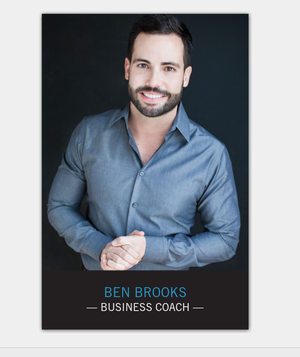
This week on The Lift, Ben is joined by meditation expert and teacher Michael Miller, founder of New York Meditation Center and London Meditation Center (and the first person to teach Ben to meditate 15 years ago).
Key takeaways:
Why practicing real meditation over simply going for a run is more powerful for stress relief and anxiety management
There are three main types of meditation, with Vedic meditation being ideal for busy, high-performing leaders
How a twice-daily 20-minute practice can improve sleep, reduce anxiety, and actually create more time in your day
Why most meditation apps and monk-style techniques don’t stick for people with jobs, families, and real-world responsibilities
How meditation helps executives show up as more present, creative, and emotionally regulated leaders at work and at home
Why becoming a “net giver” (not a “net taker”) starts with stabilizing your own nervous system first
This week, Michael Miller unpacks a big claim: the right kind of meditation doesn’t just help leaders feel calmer – it can actually give them more time back in their day.
When Ben met Michael, he was leaving a demanding corporate job and needed something that would help him manage anxiety, stay focused, and show up more powerfully for his next chapter. The practice Michael taught him – Vedic meditation – has been a daily anchor ever since.
Michael starts by debunking a line most leaders have heard (or said) at some point: “Running is my meditation.” Yes, intense exercise can quiet the mind temporarily as your nervous system finally gets to complete its fight-or-flight loop and you get a brief sense of relief. But that’s not the same as accessing a deep, restorative state that rewires your baseline for stress, focus, and emotional regulation.
From there, Michael breaks down the three main categories of meditation in clear, practical terms:
Concentration/focused attention: Trying not to think, staring at a candle flame, forcing the mind to stay on one object. It “works,” but it’s hard work and often leaves people feeling like they “can’t meditate.”
Open monitoring/mindfulness: Classic app-guided practices (watching the breath, feeling your feet on the floor, noticing thoughts like clouds in the sky). Helpful, but highly dependent on external guidance and often difficult to sustain in a stress-heavy life.
Automatic self-transcendence (Vedic meditation): The technique Michael teaches. You use a personalized mantra that gently attracts the mind inward. The mantra becomes subtler, thoughts quiet down, and you naturally “transcend” thinking into a state of pure awareness. No forcing, no concentration.
Vedic meditation, he explains, was designed for householders: people with jobs, families, and responsibilities, not monks living in caves. Instead of needing hours of practice or multiple 10-day retreats, this technique is done 20 minutes twice a day, eyes closed, anywhere you can sit. It’s meant to fit into a busy schedule and deliver a clear ROI on time and energy.
Michael shares his own before-and-after story. While working at Variety magazine in a relentless, deadline-driven environment, he was constantly wired and anxious. After learning Vedic meditation, he noticed he was sleeping better, feeling less anxious, and thinking more clearly – all without changing jobs or moving to a monastery. The anxiety “vibration” that used to run in the background started to quiet down.
Ben echoes this with his own experience as a CEO and executive coach. His morning meditation helps him start the day grounded and intentional. The afternoon or early evening meditation is often the difference between “I just need to go home and shut down” and actually enjoying a client dinner, a date, or a walk with his dog. Instead of reaching for extra alcohol or scrolling to numb out, he finds he has the capacity to be present.
Michael also addresses why most meditation apps don’t stick. Research he cites shows that 95% of users stop using an app within a month, and that most people complete only a handful of sessions. It’s not that apps are bad; it’s that techniques designed for renunciates (or for short-term relaxation) don’t translate well into the lives of overstretched leaders trying to juggle real-world constraints. In contrast, people who learn Vedic meditation in person quickly see the benefits, which makes it much easier to keep going.
The conversation then zooms out into leadership. Meditation isn’t just about feeling calmer for your own sake; it changes how you show up for others:
You have more space between stimulus and response, so you’re less likely to snap, shut down, or overreact
You’re more present and creative, which makes you better at complex problem-solving and decision-making under pressure
You can be a more consistent and emotionally regulated leader for your team, your family, and your broader community
Michael frames it as a question of impact: In a stressed, reactive world, are you a net giver or a net taker? If you’re constantly depleted, your presence drains others, even if your intentions are good. When you regularly reset your nervous system and reconnect with your deeper self, you’re able to give more attention, clarity, patience, and creativity – all without burning out.
The episode closes with practical pointers. Michael shares how listeners can learn more through his and Jillian Lavender’s work at the New York Meditation Center and the London Meditation Center, and why “well begun is half done” when it comes to choosing a technique and a teacher. Ben concurs: if you’re serious about leadership growth, mental health, and sustainable performance, meditation isn’t a luxury. It’s a core tool in your leadership toolkit.
If you’ve ever thought “I’m too busy to meditate,” this conversation might flip that script – and help you see how the right practice can give you back more time, presence, and capacity than it takes.
Links:
Full Transcript
Read the full transcript
Michael: Anytime someone says to me, running is my meditation, I say, oh, that's very interesting. You know, knitting is my rock climbing. They look at me and they say, what? No, it's not. And I say, you're right. It's not.
Ben: Welcome to The Lift, the show about leadership, growth, and getting what we want. I'm your host, Ben Brooks. For over a decade I've worked with CEOs, their executive teams, HR departments, and entrepreneurs to identify what drives their success and what holds them back. And now I'm excited to share those insights with you. On The Lift, we pull up to see the bigger picture from accomplished leaders who know how to get things done in a rapidly changing world. We've got all of that and a lot more coming up next on The Lift. Hey everyone. Today we're joined by Michael Miller. He's the founder of New York Meditation Center and London Meditation Centre. And a fun fact: Michael is actually the one that taught me to be a daily meditator almost 15 years ago, which has totally changed my life. On today's show, Michael and I discuss meditation and how it can help busy leaders connect both with themselves and others, and, to many people's surprise, how it can actually help them find more time in their day. Let's get into it. Michael, welcome to The Lift.
Michael: Hi, Ben Brooks, how are you?
Ben: I am awesome and I am so glad to be talking to you. How are you this morning?
Michael: You know, I'm really, really well.
Ben: To get our episodes going, we'd like to ask a few rapid fire questions and warm us up. I'm curious, what's your favorite food?
Michael: Well, I am strangely a fan of pasta. I think people associate meditation with super healthy and don't connect pasta to that. You and I need to share a pasta meal when I'm next in New York.
Ben: I am down. Well, what's your favorite place on earth?
Michael: Rishikesh, India. It's a little village in the very north, right on the Ganges. Although I had been meditating for a little while, it's where I went on a retreat, and sort of this life path that I find myself on started to crystallize. And I've gone almost every year for 20 years, and I have very, very good friends there. It's quite a stunning place.
Ben: I've been to India, but I hope to join you in Rishikesh someday. And what was the first job you ever had where you were paid for time or effort?
Michael: Well, the very, very first — I would've been maybe 14, and I worked at a strawberry farm as a summer job. I grew up in the Midwest, in Iowa. The manager was this funny old hippie guy who was the first vegetarian I ever met in my life. And everyone called him Strawberry Mike, because he would just walk the fields overseeing everyone who was picking, and the whole time he was just eating strawberries — his hands and his mouth stained. Strawberry Mike. And it was, you know, quite a good job for the summertime.
Ben: And when you think about how you've evolved as a leader since your strawberry picking days, what would you describe your leadership style as?
Michael: I would say collaborative. I think the best leaders are those who really work with people, not over people. And this is something I put a lot of attention on over the years.
Ben: Other than meditation, how do you ground or center yourself?
Michael: I have a 12-year-old, and that is something that really requires you to be grounded, to spend time with her. She's a rock climber, and, you know, just recently I was at a competition with her, and it was a fascinating thing for me to be in myself and let her do her thing and remain stable. And so strangely, in that moment anyway, I grounded myself by getting outside of myself, and it being about her — not being about my needs or wants in that moment, but actually surrendering my preferences. Because, you know, to be up early on a Saturday morning, three and a half hours north of London, would not have been something that I did on my own. And what a fantastic thing to let go of my own stuff and be there for someone else in as clean of a way as I could.
Ben: I don't know what I was expecting there, but that really touched me. Well, Michael, you know, we had met through Robbie Hammond, who's one of the co-founders of the High Line. Robbie had said to me, you really need to meditate. And he wasn't wrong, but I needed to chew on that for a while. And, you know, this is, I don't know, 12, 13 years ago, and I got introduced to you and learned to meditate in his West Village apartment at six in the morning, one January week. I remember so clearly.
Michael: I remember that course for some reason. There were some really interesting people on that course.
Ben: And that was the week that I was leaving my corporate job for the unknown. So it was a perfect time to learn. And I'm curious — you know, you were in LA, you were in entertainment, and you're at a publication focused on the entertainment industry. How did you discover meditation, or how did it discover you?
Michael: Well, it's interesting. If I go further back, I went to university in Iowa, to the little state college where my parents met. You know, it was a relatively small world that I had grown up in, and I had a professor who was a bit of an old hippie, and he had meditated a lot, and he, you know, kind of talked to the class about it and then gave us time one day. And I had an experience in just sort of making an attempt that was not particularly satisfying, although I also had this feeling: there seems to be something to this. And so I kind of dabbled for 10 years, trying things out and not really very committed, not really getting any expert instruction, but it hung around. I went to graduate school at the University of Washington in Seattle, and I started a career then in the music, theater, entertainment business. You know, my first real, real job was working for a music promoter in Seattle in the nineties. Like, what a time. What a mood. Yeah, yeah, it was absolutely a mood. There was a vibe going on that was fantastic. And somewhere in that, I got so caught up that the idea of meditation really fell away. And it wasn't until I had gone to LA and ended up in this publishing role, which was fantastic and incredibly intense, and I was addressing it in a way that, you know, now I can recognize very clearly was not going to be sustainable. A friend of mine learned to meditate and I saw a big difference in her. I witnessed her get really clear and calm, and I thought, okay, something to this. And I jumped in and I took the course, and it was the right thing, the right moment. I was in the place where I was available for it, and I think that's the biggest thing. I really felt the change. You know, I was sleeping better and I was feeling more focused. I was getting more done, and — the big thing for me was that I was less anxious. You know, I was in a very intense, deadline-driven environment — Variety magazine, so we had two daily papers and a weekly paper and a monthly magazine, so it was like boom, boom, boom, all the time. And I just got a little more quiet inside. I don't know if others really would've recognized how anxious I was. I felt it, you know, that nervous vibration going on all the time, and for that to fall away and to feel clear and calm and confident — that was a new experience, and it made me want to keep doing it.
Ben: You mentioned sort of unsustainable. What are the kind of things that, you know, you might not associate meditation as an alternative to — but what do some people do to manage the sort of inner chaos and turmoil that is our brains and our emotional states?
Michael: Yes. Well, I mean, people do a lot of things. When I say — and you and I have touched on this before — you know, when I say to someone, oh, I teach meditation, you know, you'll hear things like, oh, well that's really interesting. You know, running is my meditation.
Ben: That annoys the crap outta me. People have said video games are my meditation, and power lifting is my meditation. And someone's like refurbishing their home is their meditation.
Michael: Yeah. Anytime someone says to me, running is my meditation, I say, oh, that's very interesting. You know, knitting is my rock climbing. And they look at me and they say, what? No, it's not. And I say, you're right. It's not. You know, I understand why people say these things, because they're thinking about outcome. You know, how do I quiet my mind a little bit? How do I feel like I am in the moment? How do I calm my excitation a bit? And, you know, running will do that to a certain degree. You run hard enough and long enough, your prefrontal cortex shuts down. Long-term planning, moral reasoning, higher judgment goes offline. You're not worried about what you said in the meeting last week or whether you can pay the mortgage next month. You are merely and simply in the moment, and that is a relief. If you are worried all the time and you run hard enough and long enough, you're exhausted afterwards, and that physical agitation that stress delivers to us is eased, because you've blown it off. You know, you've basically been in the fight or flight response all week long, and you run six and a half miles on Saturday, and finally your body is doing what it wanted to do all week, which is to run away from a predator. You know, and your boss is not actually a predator, but that's — your body has a binary response to some demand, like an angry line manager firing emails off to you. You know, your body responds like, oh, there's a saber tooth cat that's stalking me, and you wanna run. So I get it, and I do appreciate it, and I also understand your annoyance, because when you experience meditation, you can feel that this is a different thing. There is something significantly, proportionally different about what happens when your eyes are closed for that 20 minutes that then has a knock-on effect the rest of the day. So when it comes to my unsustainability, I was playing too hard to kind of blow off the stress of the week or even the day. I was not being the kind of leader that I wanted to be. You know, I was being sharp and short with people in a way that, you know, didn't serve those relationships, didn't actually get more done, didn't leave me feeling that good about myself, and I just felt stretched. I wasn't able to give myself to family and friends in the way that I wanted, because I was sort of burning through everything I had in the workplace. And to have more capacity as a result of meditation, and to feel calmer, and to have the gap — the space between input and response — be able to respond instead of knee-jerk reacting, that felt valuable.
Ben: I think it'd be helpful to define meditation, because I think that people — if it's not rock climbing or running — how would you have people understand what it is, or various types or ways to meditate?
Michael: There are three major categories of meditation. So the first would be focused attention, or concentration. So this is where you sit cross-legged on the floor and you stare at the candle flame, or, you know, you arrange yourself on the couch and keep your feet flat on the floor, and maybe you hold your hands facing up, and then you close your eyes and you grit your teeth and you try not to think. Don't think, don't think, don't think, don't think. And this type of meditation, you know, honestly it's quite hard work. A lot of people come to us having tried things like this with a feeling of, I can't meditate, like my mind will not stop. So this is a concentration style, but, you know, that will do something for you if you work hard enough and long enough. Then there's open monitoring, which would commonly be referred to as mindfulness. And so the idea here is to bring yourself into the present moment and keep yourself there. So this is what most of the apps are promoting.
Ben: Guided meditation apps. Yeah.
Michael: Guided meditation. You know, feel your feet on the floor and monitor your breathing. And when thoughts come, just notice them floating past like clouds in the sky. And, you know, now as you go into your next activities, do that in a mindful way. Do the dishes and just do the dishes. Don't think about what the CEO sent to you earlier. Just do the dishes. Don't plot how you're gonna respond to her later. Just do. You know, if actually one's present moment is filled with stress or anxiety, even just fatigue, it can be difficult to get into that moment. You know, mostly it requires input from outside. I have to listen to the Indian flute music, or have someone guiding me, or be lying on my back in the yoga studio with, you know, the lavender eye pillow and someone doing a gong bath behind me. And again, all of that is fantastic and really lovely, and it is better to intend to be in the present moment and be mindful and aware than to not take that into consideration at all. Actually, my partner, Jillian Lavender, is writing an article right now about the meditation apps. A really interesting piece of research just came out that said 2,500 apps landed in the app store between 2015 and 2020 that were related to meditation or mindfulness. And interestingly, what this research shows is that 95% of people stop using their app within a month, and most people are only doing two or three or four sessions before they abandon it. It says something about the difference between in-person instruction and really knowing what you're doing, versus just sort of being guided from the outside by a device that I'm trying to get off of anyway.
Ben: That's a great point. Yeah.
Michael: But also the techniques themselves are tricky. And, you know, people have a hard time feeling successful and therefore wanting to continue it. So there's concentration, there is mindfulness, and then there's this third category called automatic self-transcendence, which is a lot of words. Automatic in that it is easy and spontaneous. Transcendence in the sense of stepping beyond — self-transcendence, moving beyond your thinking. And this is what I teach. We call it Vedic meditation, and the Veda is the body of knowledge that comes out of ancient India. It's where we get meditation and yoga and Ayurvedic medicine. It has passed the test of time, and the reason that people like it, and the reason that when I came to it, it felt so different, is that instead of asking you to control your mind or your attention, it is giving your mind something to do that it's very interested in and very charmed by. And that is a little sound, a little sound called a mantra, that is chosen and personalized for the student by the teacher. Once you learn your mantra, what you do is you sit down, you close your eyes, and you think the sound inside silently. As you think the mantra, it begins to self-refine. It gets more quiet and more subtle. Your mind gets drawn toward it. It is attractive. And so your mind is moving toward the mantra, and the mantra's getting more quiet, more subtle, and the mind moves into very subtle thought. And then the mantra disappears, and your mind is left in this state of no mantra and no thought — pure awareness. The state of serene inner contentedness. You, without your thinking. And it's your ground state. It is the source of your energy, and your intelligence and your organizing power and your creativity and your happiness all live in that place. It's not something you have to try to do. The mantra does the work of drawing you downward. You get dropped into that state. When you come out, that state has infused you with its qualities. So you come out feeling energized and mentally refreshed and emotionally balanced, ready to take on what comes next. And that is easier. It's easier. When I learned it, I was like, my God, why didn't someone tell me this in the first place? And I think the other big thing — this is not something you have to do for six months and get good at, and you remember this yourself, that you get this feedback loop very, very quickly. I think everyone comes at meditation not just, I want to meditate, but I wanna gain something from having done that. You know, I'm not meditating just for the 20 minutes that I do it. I'm meditating so that it will have an effect, and I'm hoping it's going to change the other 23 hours of the day, not just give me 20 minutes of something nice. And so seeing ROI, seeing return on investment of time and energy — because if I'm going to meditate for 20 minutes twice a day, that's what moves you forward most swiftly — if I'm going to do that, I need to see that that is more worthwhile than other things I could do with 20 minutes. Need to see that ROI.
Ben: What — you know, I can tell you — well, I guess I'll start with what I've experienced. I'd like to — yeah, I'm really interested actually — the anxiety thing. I didn't know I really had anxiety until a few years ago, working with a therapist, but I knew that I didn't feel ease and there was a lot of worry. When I learned to meditate, I had a BlackBerry for work, and now that we have these very sophisticated mobile devices and social media and always-on cloud computing, it has been even more important for me to sort of pause and organize my brain. And I find that that second meditation, often after a busy day, is the difference between me having an enjoyable business dinner or date or walk with my dog, versus just wanting to get home, or just wanting to have a couple extra glasses of wine to take an edge off, or something else. And so much of it is about calming myself, and also in the morning, starting my day powerfully, 'cause it is something I have control over. There's been a lot of benefits to me, but it's in particular as a CEO and an executive — to be more aware and controlling of myself allows me to have a lot more command of different situations. I am able to handle a range of things that I'm not expecting, because I can be really there, and when I'm really there and not distracted or overwhelmed, I can deal with what's in front of me, which oftentimes is opportunity. Sometimes it's challenge. But in particular, I'm extra creative. I can close a deal, I can navigate a situation, I've got an interesting solve. And I think a lot of that is because I'm there, hopefully, and nowhere else. I have so much more to work with.
Michael: I really like the way you're framing it, and I think especially for people who are in roles like what you find yourself in, it comes back actually a little bit to what we were just talking about. Different types of meditations have a different history. And many techniques of meditation do come from a tradition of renunciates, like monks, people whose preference it was to withdraw from the world. And there are two issues with that, when we as people who are engaged in the world try to practice a technique designed for people like that. First there's a practicality issue. You will get told you need to come on this 10-day silent retreat, and at the end of the retreat they'll say, okay, good beginning. Now, if you can get up at three thirty in the morning and meditate for an hour and a half to two hours each morning, and then if you can come on two more 10-day retreats in the next 12 to 18 months, you're really going to be off to a good start. And, you know, I have a job and I have a family — like, what in the world are you — the practicality of that is just completely divorced from what most people's lives are about. Then there is the effect of that. So if I managed to do that — what is a monk's preference? To have some distance between them and the world, to withdraw inward. And that's great for those people who live in caves and in monasteries. For most people, that's not what they want, because if they start practicing that technique, they actually feel disconnected and disengaged in a way that they don't want to. The early masters of Vedic meditation were householders — we call this a householder technique — people who were engaged in the world, had jobs and families and responsibilities in society, and as a result, the technique is more practical. You know, everybody hears 20 minutes twice a day and panics internally. I certainly did when I first heard that. And then you do it, and exactly what you're experiencing — you know, I can do it anywhere. I can get up early and I feel so different. I just actually taught a lawyer here in London. She was sent along by one of her partners who had learned, and she said, I was really worried about the time. Now I get up and I meditate, and I feel so much more focused and energized, and I'm in the car reviewing my notes and checking my emails, and I get to work actually 45 minutes ahead of the game. Because it used to be that I'd show up not having done any of that and have to sort of dig in for almost an hour before I was ready to take on the day. Now I hit the ground running in a completely different way. I feel like it has earned me time. Actually, I have more time, not less. 40 minutes is earning me an hour or more, and that's a good return. But then also, it creates connection and integration. It allows you to step into situations like what you're talking about in the moment, and therefore available and flexible and prospective, looking at this as an opportunity. Instead of rebelling against the difficulty and wishing I weren't a part of this world — actually, I am a part of this world, and this meditation is helping me take my very best self into that world. And that's generous.
Ben: And for people that are interested in learning, and they're interested in maybe this Vedic technique, how can they learn more about you and Jillian and your work?
Michael: Yeah, so there's a few great ways. I mean, you can go to our websites, London Meditation Centre and New York Meditation Center, and you can see and read a bit about us there. But on both sites you'll get links to a few things. Jillian has written two books. Her first book from a couple of years ago is Why Meditate? Because It Works. I love that title. Really great. It's really great. She actually has a chapter, which is "Running Is Not Your Meditation." So you've gotta go back to that and look at it — you'll be really happy. It lays out the myths of meditation. It lays out the benefits of meditation. And then her second book that came out just this spring is called Do Reset, and it's about meditation as the ultimate reset, coming back to being. You are not a human thinking. You are not a human doing. You are a human being. And if you can come back to that state of pure consciousness, that gives you access to intelligence and creativity and balance in a way that nothing else does. I have a podcast, which, Ben, I would love for you to be on as well. We're gonna do a trade-off.
Ben: Deal me in. Steal me in.
Michael: It's called Speaking of Meditation. So I think those are really good places to start. Reach out to us. We have, you know, colleagues around the world that we can connect you with, the people that we know and trust. And if you — because you do have to learn in person — you cannot effectively learn Vedic meditation online. You wanna learn, right? Because well begun is half done.
Ben: Well begun is half done. Well, I think what you really inspired, as you were talking about that — you said earlier in our conversation, you have to be ready. But what I'm hearing — in listening to the pod, or reading the books, or the articles that you publish on the website, and the other, you know, events you do — it helps kinda get you to ready. Because I think just diving in, you hear, oh God, I'm gonna meditate now because I heard one podcast, versus really kind of, you know, giving yourself the change management journey to start it when you're truly ready.
Michael: Yeah, absolutely. Absolutely. And we live in fortunate times. There is a lot of stuff out there in the world. You know, there are 2,500 apps — download another one. You know, maybe the next one will stick a little bit more. I mean, between Jillian and I, we're starting to approach 10,000 people around the world that we've taught. There are three who came to us with the report of, I have been using an app to meditate every day for the last year or more. Of all those people, three people. Now, they came really ready for the next — that had given them an experience. A lot of people have tried something like that, felt a little something, and they've thought, oh, okay, well maybe this is worth exploring a little bit more. You know, some people go to their local Buddhist center and sit on the wooden stool, and there's incense burning and there's a big golden statue up front, and that really resonates. You know, that really feels meaningful to them, and that's great. Find what works in the moment you are in right now. You know, I would posit that if someone is still listening at this point, that they're ready to do something, and you have been stressed for long enough, because we all have. Yes, you should run, and yes, you should cold plunge, and yes, you should eat well, and yes, you should get good amounts of sleep, and if you wanna use some device to track whether it thinks you're sleeping well and whether your heart rate recovery is where it should be, do all those things. Those are all fantastic. And be self-sufficient. Don't depend on having to get to the steam room or have your ring charged up or whatever it is, to be able to just sit down wherever you are and turn inward and touch your deepest, most self. You know who you truly are, and then take that self into the world, because we live in a world that is stressed and filled with suffering, and at the end of the day, you are either a net giver or a net taker, and we want to be givers. All of us at some level want to be giving back to the people we love and those we care about and our society. You know, everybody wants a more peaceful society. Everybody wants to go to a forest that's green. That has to happen at the level of the individual trees. You make the individual trees green, then you've got a green forest, and that's where you have to start. It has to start from the self, and then it's incumbent upon us to offer it back to the world. And so Robbie Hammond came to you and said, you should meditate, because he could see you needed an oxygen mask. And as soon as you were ready, you clocked it and you took it and you put it on.
Ben: And I think it's a beautiful way for us to wrap our conversation, because we started with what can meditation do for you, but we're ending and what can it do for others. And I think being a better version of yourself for your 12-year-old daughter — because I'm sure she forgets the harness equipment and you've gotta go back on the tube to your home. And that would never happen to your kid, I'm sure your kid's perfect. But, you know, or your business partner and life partner does a thing that annoys you, or something else. Just for our ability to, you know, be in the world in a more positive force, when all of the social media and everything has this rage machine and this division. You know, a lot of the technology is having us be worse versions of ourselves, 'cause you can monetize that with ads and other things. But I think the idea of being more patient and more loving, or just more articulate about what we need. And so I think a lot of people listening to this are very committed to being good managers and executives and leaders. And that really does come from the inside out. That tree — we, you know, we often say in organizational development, the focus of change is the organization — the forest, the company, the society, the country. But the agent of change is always the individual.
Michael: And, you know, if you want to enjoy the fruit of the tree, water the root of the tree. Now make sure that is nourished at its baseline, and then there's going to be something that's worth harvesting.
Ben: Welcome to the Uplift, a segment where we ask guests to promote something that they have been obsessed with recently. And you know what? That thing may just be perfect for you too. So let's hear what our guest wants to share and uplift this week. So Michael, what would you like to uplift today?
Michael: I'm glad you asked this, because it's something I've been thinking about. I'm sure you are a big user of AI.
Ben: We are. We are certainly experimenting.
Michael: Yes, yes, yes. So, you know, I've been experimenting as well. I find it really interesting, and I saw a fantastic play the other night, produced by one of our students, called Doomers, that was kind of a fictionalization of those few days when Sam Altman was fired and then rehired, and the shuffle on the board. Very, very interesting. Doomers is the play. I've been thinking about AI in a very specific way, because I read an article about how different generations use AI differently. And, you know, I'm very Gen X, and it was saying Gen X uses it as advanced Google. You know, I wanna learn about something, and so I search that out and I have a little conversation, and, you know, I get more about a subject or a product or something like that. Which, when I read that, I thought, well, yeah, that's exactly what I use AI for. And then it talked about how millennials use it more for business and life optimization, and even as much as like childcare difficulties. Like, how do I talk to my child? Or how do I get these things done? Or how do I schedule this? And maybe, you know, using agents to do things, but it's really about optimizing their experience. And then how Gen Z, and maybe even a bit Gen Alpha, use it as a talking partner, and, you know, are really exploring themselves and going deep, you know, almost to the degree of a therapist. And I found this so interesting, that this writer was seeing this delineation, that different generations were using it so differently. And I thought, well, I don't just want to be the old guy who's only using it in one way. And so it's been a really fascinating experiment for me as I have played around it a little bit — how can I use this tool in a way that other people are using it, and in ways that I might not have ever considered. That is really interesting for me.
Ben: Well, Michael, thanks for joining today, and I can't wait to join you on your podcast, Speaking of Meditation.
Michael: Thanks for having me. I feel uplifted. I appreciate your perspective and your conversation, and I'm glad you're out there as a proponent of meditation. Let's get together for a meditation and some pasta when we can next be in the same place.
Ben: Thanks for joining me this week on The Lift. For more info on what you heard in today's episode, visit our show notes. You can find bonus resources at https://www.theliftpod.com/. If listening to The Lift today was a good use of your time, please share it with a colleague, a friend — I don't know, your ex, your mother, anyone. Don't let good advice die with you. And for those of you who like to earn a little bit of extra credit, leave a comment on Spotify. We'd love to hear from you. The Lift is produced and edited by the team at editaudio. This episode was produced and edited by Ali. Our production manager is Kathleen Speckert. Our executive producer is Steph Colbourn. A special thanks to Korey Rich and Beth Gatsik. There's only one way to go: upward.