Episode 17 - Conflict at Work: Amy Gallo on How to Have the Hard Conversation You’ve Been Avoiding
Most organizations don't have too much conflict – they have too little. For Amy Gallo, author of Getting Along: How to Work with Anyone (Even Difficult People) and contributing editor at Harvard Business Review, the default mode in most workplaces is “artificial harmony”: teams that look aligned on the surface while real disagreements, unspoken feedback, and simmering resentments pile up underneath. Her prescription isn't to create more friction for its own sake; it's to help leaders understand that avoiding conflict isn't actually the safe path, it just feels precariously like one.
Why do leaders avoid conflict — and what does it actually cost?
Something like 76% of employees report using avoidance as their primary conflict management style. Managers estimate spending 20 to 40% of their time handling conflicts, yet nearly half report feeling unprepared to address them effectively. And workplace conflict costs U.S. employers an estimated $359 billion annually in lost productivity.
Turns out, avoidance has a price – and "keeping the peace" and "actually having peace" live in two very different zip codes.
Amy Gallo, a Harvard Business Review editor and the author of Getting Along: How to Work with Anyone (Even Difficult People), has spent a decade documenting what that price looks like in practice. Teams that look harmonious turn out to be running on what Patrick Lencioni famously called "artificial harmony" – the appearance of alignment with none of the substance. It’s basically the organizational equivalent of a Potemkin village – everything looks fine from the outside, but things might be crumbling on the inside.
“I can think of one, maybe two clients who've reached out to me because there's too much conflict. More often, I'm brought in because there's not enough.”
– Amy Gallo, Harvard Business Review editor and author of Getting Along: How to Work with Anyone (Even Difficult People)
The irony is that the leaders most likely to avoid conflict are often the ones who got promoted precisely because they were “easy to work with.” They learned early that harmony was rewarded. By the time they're running a team or a company, that instinct is deeply grooved. But it's working against them.
Amy's framework for breaking the pattern starts with a simple recalibration: before you decide to stay silent, actually evaluate the cost of staying silent. Many of us instinctively weigh the risks of speaking up. We rarely apply the same scrutiny to the risks of not speaking up. What feedback isn't being given? What decision is being made without the information you're withholding? What relationship is slowly drifting because neither person will name what's wrong?
Should leaders focus on being liked or being respected?
The pursuit of likability is one of the most common roots of conflict avoidance at the executive level. Leaders who have been rewarded throughout their careers for being pleasant, collaborative, and easy to get along with often find, once they reach the top, that those same instincts are now costing them. They don't give the feedback that needs to be given. They keep the underperformer too long. They let the client relationship limp along rather than have the honest conversation that might reset it.
“The most talented executives are easy to get along with, but also are willing to say [the hard things]. It's the difference between being respected and being liked, and way too many leaders focus on being likable instead of being respected.”
– Amy Gallo
Direct, even uncomfortable honesty, delivered with care and self-awareness, tends to build stronger relationships than the kind of frictionless agreeableness that masquerades as warmth. When you bring up a hard topic, you're not risking the relationship; you're demonstrating that you trust it enough to stress-test it.
Amy also points to an emerging threat that's accelerating this dynamic: AI. Tools that respond exactly as we want, that validate rather than challenge, that can be reprogrammed the moment they produce an inconvenient output. Which means they're quietly conditioning us to be less tolerant of the normal human messiness that real collaboration requires. We've essentially built a coworker who will never push back, never have a bad day, and never tell us our idea needs work. What could possibly go wrong?!
“We're now all dealing with tools that are telling us exactly what we want to hear and we're being trained to be intolerant of people who don't tell us exactly what we want to hear.”
– Amy Gallo
How do you have a hard conversation without damaging the relationship?
The practical question underneath all of this is: how do you actually do it?
It’s all about behavior, not mindset. Research from Julia Minson at Harvard Kennedy School on conversational receptivity shows that you don't have to fully believe you're open to a different perspective in order to demonstrate it. Specific phrases like “tell me more,” “why do you feel that way,” and “help me understand” can shift both the other person's experience of the conversation and, over time, your own relationship to disagreement.
For leaders who want to shift the culture on their teams, Amy argues the work starts with honest self-examination. What is your own relationship with conflict, and how is it showing up in how you lead? Are you modeling the directness you claim to want? And perhaps most critically, are you taking responsibility not just for your relationship with your direct reports, but for the relationships they have with each other?
“Your team looks to you at every point to see how you behave, to determine how they should interact with one another.”
– Amy Gallo
The leader who says “I want more debate” while visibly shutting down at the first sign of pushback isn't creating psychological safety. They're creating a more elaborate version of the silence they were trying to fix.
One question she recommends leaders build into every significant decision: what if I'm wrong? Not as a rhetorical gesture, but as a genuine invitation. It's a small act of humility that signals something important: that this team is a place where being wrong is survivable, and where the conversation that follows is worth having.
What to do this week:
The next time you find yourself about to let something go – a piece of feedback you haven't given, a conversation you've been postponing, a dynamic on your team you've been hoping will resolve itself – stop and make a list.
Write down the actual cost of staying silent: what keeps not getting done, what the other person keeps not knowing, what the relationship slowly loses. Then write down the cost of speaking up. Compare them honestly. We’re willing to bet that the silence column is longer than you think. (It usually is. Silence is sneaky that way.)
Related Episodes
– Toxic Leadership Explained: What Makes a Bad Boss with Mita Mallick
– Judgment at Work: A Framework for Better Leadership Decisions with Sir Andrew Likierman
– Lead Like a Learner: “Squiggly Careers” and the Power of Vulnerability with Helen Tupper
Stay Connected with The Lift
Subscribe to The Lift on Apple or Spotify
Join our mailing list
Take our listener survey
Follow Ben on LinkedIn & Instagram (& Jetson, too)
Full Transcript
Read the full transcript
Amy: Conflict is often a way toward one another, toward a closer relationship, toward a closer bond.
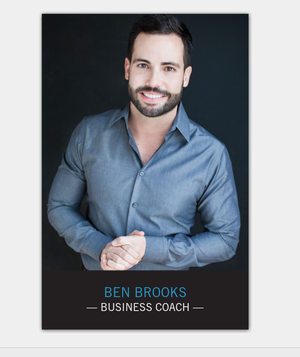
Ben: Welcome to The Lift, the show about leadership, growth, and getting what we want. I'm your host, Ben Brooks. For over a decade, I've worked with CEOs, their executive teams, HR departments, and entrepreneurs to identify what drives their success and what holds them back. And now I'm excited to share those insights with you. On The Lift, we pull up to see the bigger picture from accomplished leaders who know how to get things done in a rapidly changing world. We've got all of that and a lot more coming up next on The Lift. In my CEO and business coaching practice, so many of our sessions are focused on my clients avoiding or taking a circuitous path around a key issue. I encourage them to be a lot more direct, more explicit and forthright. Every leader I know has at least one and often many conversations that they keep postponing 'cause it feels like it's just not gonna go that well, that it could cause too much conflict and, frankly, a lot of drama. Well, today's episode is about navigating these crucial and tough conversations that are necessary to be effective. Our guest is Amy Gallo. She's a speaker, podcast host, and the author of a book called Getting Along: How to Work with Anyone, Even Difficult People. Amy and I have been connected for years. She actually featured me in the Harvard Business Review when she wrote an article about what to do when someone offends you at work, and I had a banger of a case study for her. Today Amy's gonna help us talk about the conversations we dread, the people who push our buttons, and how leaders can handle conflict with clarity, backbone, and a little more self-compassion. She's even gonna make the case for us having a lot more conflict. So let's get into it. Amy Gallo, welcome to The Lift.
Amy: Ben, thank you so much. I'm glad to be here.
Ben: I know our paths crossed a long time ago when you were writing an article for the Harvard Business Review, and I've been following your work ever since. I've been so excited to have you on the show.
Amy: We started — I was thinking it was nine years ago that we talked about that article. That's amazing. Yeah.
Ben: And it was, you know, what to do when someone offends you at work. I think it ended up being quite widely shared on HBR, and this is well before cancel culture or anything else like that. That was just a general sense of, we don't always get along, and how do you handle things when that happens? And you featured a pretty painful moment in my career, and I just really appreciate your work in this area.
Amy: Oh, thank you. Yeah, that article was very popular — one of the more popular ones I've written for HBR. And I don't know if you know this, but I revised it actually after I got some feedback on it. And this is an interesting thing about dealing with negative comments at work or difficult people: a lot of the feedback I got about the piece was that I was putting too much onus on the person who had been offended or targeted to handle the issue. And so I went back, did a couple more interviews, and revised the article. Your story stayed the same 'cause it was such a helpful story in the way you navigated it. It was beautiful, but it was a humbling moment, let's just say that. I've never revisited an article, but we had gotten so much feedback on it, it felt worthwhile to do.
Ben: Well, we'll make sure to link the revised version in the show notes for everyone to check out. You know, Amy, I was thinking in advance of our conversation: the world is full of strife. People are not getting along. Don't we all just wanna get along? And yet you've dedicated a lot of your research and your life and your work to conflict — to people having it out, having disagreements — and there's so much discord and disagreement in the world. Why does it matter to you, that you've given so much of your life to this field of work?
Amy: I will admit that the past few years, I have wondered, why am I encouraging people to have conflict when there is so much of it already in the world? And the real reason for me, the sort of reason I continue to do this work, I feel so passionately about it, is that I think actually conflict, as it's portrayed and experienced in the world — when we look at geopolitics, when we look at the way TV shows are portrayed, reality TV, politics, any of that — it's portrayed as this thing that is relationship damaging. We cancel people, we cut them out of our lives. We stop talking to them. There's all of this sort of negativity that comes to our relationships as a result of fights, disagreements, conflict. But the research actually shows in reality, when we're talking about a team, when we're talking about an individual and their relationship with one other person or several other people, that conflict can actually be good for the relationship, especially when it's navigated thoughtfully and intentionally. And so I'm really trying to help give conflict a facelift, and a sort of a redo of, there is positive to come from this. We just need to be much more thoughtful and deliberate about how we handle it.
Ben: I think there's a lot of shades of conflict, and I think oftentimes we've got, you know, aggression and outrage and all sorts of things like that that are forms of conflict. But I think what we're talking about here is how do you have managed conflict in a way that moves things forward and could enhance a relationship?
Amy: Exactly.
Ben: When I think about conflict for myself and my own experiences with it — and sometimes, as clear as I like to be, I can struggle or resist it at times — I think about how I was conditioned, how I grew up, and what I learned about conflict. I was curious to start, you know, a little bit with you. What environment did you grow up in, and how was conflict for you before you started studying it?
Amy: Yeah. You know, I like to joke, I grew up in a household that ended up in divorce, so I'm very familiar with conflict. But the reality is, there was no explicit conflict. I don't remember my parents screaming. I don't remember there being this sort of moment where I knew, oh, our family is never gonna be the same. It was what I think most people experience, which is sort of under-the-surface disagreements that often came out in certain ways and sort of snuck into the tone of voice or the way a sentence was delivered or a decision about — but it wasn't as explicit as you might think might have been for someone who ended up dealing with conflict for the rest of their lives as a profession. That said, I do feel like I was always incredibly curious about human interaction, and I was always curious about the things that were not said. And that was true certainly in my family structure, but also as I started to graduate from college, started to join the workforce. Early in my career, I actually was a management consultant. And I remember sitting in these meetings with executive teams, with our clients, and watching them have conversations and thinking, well, they're not really talking about the thing. They're talking about other stuff. And there's like three layers of the real issues underneath. And that to me was fascinating. And I remember sitting in those sort of office buildings, those conference rooms, and thinking, what if I just said, "You're actually talking about how you don't like him," or, "We're actually talking about whether you're gonna fire 2,000 people. You're not talking at the level we need to be talking at." And I did not do those things — I was a 20-year-old young woman — but it did make me very curious to think about, start researching, how do we get people to be more explicit, more direct, more upfront, and be unafraid to say, "Actually, can we step back? 'Cause I think what we're really talking about is X, Y, and Z, not A, B, C."
Ben: I remember going to my grandparents on both sides. One side was so harmonious that you could hear a pin drop. Everything was always fine. And the other, I would hide on the other side of the house when they would play cards, 'cause I thought there was gonna be violence, and there'd be screaming and F words and things like that. And the only thing they're disagreeing on is how they played a hand of cards — not even for money or anything. It was just — it's like I grew up with either, you know, kind of silence or violence. There was that thing, and just, as this person who's become quite anxious, conflict to me has often meant a bad thing to avoid. And I've got a lot of superpowers in being diplomatic and adjusting my style. But you know, as I went through therapy, my therapist — he's very sharp and very skilled — he said, you know, "conflict is underrated" was his first statement. And this is early in our work. And he said, you know, if you look at to aggress, right, is to move towards someone, and that is actually intimacy and a sign of respect, to deal with them. And we mentioned divorce. I'm no expert on divorce or marriage, but I do know a lot of divorces are a slow drift, not an explosive end. And so it's a lot about that — what's not said — that has people get further and further away.
Amy: Well, I'm curious — it sounds like you enjoyed going to the silent grandparents instead of the violent grandparents. Is that right?
Ben: Yeah. I mean, all my grandparents —
Amy: — to make you choose —
Ben: I mean, if they're tuning in from heaven on their favorite podcasting platform, I hope they're giving us a five-star rating. Like and subscribe, Grandma, Grandpa, both sides. But I think I was definitely more comfortable, for sure, and at peace in the harmonious group. But I also was sort of intrigued, though scared, about the sort of aggressive group. But again, I think as a young person, my — that aggressive group — but I kept thinking, something is really wrong here.
Amy: And I can imagine, you know, 7-year-old Amy in the same situation that 7-year-old Ben was, and I would be like, "Take me back to the silence, please. That's so much more comfortable." But 50-year-old Amy is like, "Bring me to the rowdy card game." Because they're talking about the things, right? They're not afraid. And I think there's a lot of love in that — the ability to push back or say, "Oh, you're absolutely wrong." I think there's a lot of love and connection in that. To your therapist's point, to aggress is to move toward. I often say to leaders or to individuals, when you are bringing up a tough topic, it's helpful to say — if it's true — "I am only bringing this up because I trust you and care about our relationship. I'm willing to take this risk of rupturing our relationship," which conflict sometimes does, "because I care about it." Conflict is often a way toward one another, toward a closer relationship, toward a closer bond, and I find there's some relief in that. In fact, my sister-in-law, her first Christmas with us — she always talks about how I opened a gift from my mother and I said, "Eh, I think I'm gonna return this." And she was like, jaw dropped, and was like, "I cannot believe you just said that to your mother." And my mom was like, "Okay, here's the receipt," like, blah blah. You know, we had gotten to a point in our family dynamic where we could just be blunt with each other. It's one of the things I absolutely adore about spending time with my mother — we're very honest with one another. There's that relief in it of, like, I didn't have to pretend I liked it. I didn't have to bring it out when she shows up at my house.
Ben: Pretend to use it, yeah — store it somewhere, not throw it away.
Amy: There is something very freeing about being able to say something even though you know you're taking a risk and possibly hurting the other person, but you're also trusting the relationship to survive that moment.
Ben: How does conflict play when you don't know the person well, or you might feel vulnerable, like there's a power dynamic at play? 'Cause I would imagine if your mom was funding your law school or something like that, that might be something that was at play.
Amy: There are all of these dynamics that go into how do you approach a moment of honesty, directness, even aggression. And part of it is really trying to tune into, what do I know about this person? So I know my mother very well, right? I know how she's gonna react to me saying I'm gonna return this. You know, if it was my sister-in-law, her first Christmas with us, I don't yet know how she feels about us. I don't know. You know, I probably wouldn't have said it so bluntly. But there are ways you can think through, okay, what is the dynamic here? And what I often encourage people to do is to think about, what are the pros and cons of speaking up, of saying what's truly on your mind? Oftentimes we think of the cons: I'm gonna damage the relationship, the client's never gonna hire us again. But we rarely think about the consequences of not speaking up. So not only what are the pros and cons of speaking up, but what are the pros and cons of staying silent? And we have to remember that's an action. I think we think of that as the default — I just sort of will let things go, we'll get that smooth, harmonious silence. There are consequences to doing that. And in professional environments, there are severe consequences to doing that. Like, if I don't tell the client what I really think, they actually might not hire us again. If I don't give this feedback to my direct report, they're going to continue to make that mistake, and I'm gonna continue to have to invest my time and energy in making up for that. And oftentimes we think the easiest path is the path of no conflict, when the reality is, in the moment, that discomfort we feel is real. And it's a signal to us that we need to be careful, but it's not a signal to us that we need to stop. We need to actually proceed, but do so with kindness, with compassion, with self-awareness. And going back to your rowdy card game — imagine if someone had taken 7-year-old Ben after and said, "Hey, let's talk about that noise. That was really loud. Can we talk about what that meant, and why that wasn't about you? And they still love each other," right? Like, if you actually help people process the moment of conflict, and you have the self-awareness and the emotional intelligence to do that, it's an incredible learning moment for everyone involved. When you don't really know who you're dealing with and you don't know how they're gonna react, you start to do little tests, right? You might push back and say, "You know, I see it a little bit differently. Could I share my opinion?" And you'll watch how they react. If they're like, "Wait, you just disagreed," right? You might not share the full opinion; you might share a little bit of it. I never encourage people to be disingenuous or false. You can tone things down and do some little, you know, experiments, tests — see how comfortable this person, how strong is your relationship, to withstand even a small moment of disagreement. And that'll give you clues or allow you to build up to those larger moments.
Ben: And I love the "consider the cost of not saying anything." 'Cause especially if you think about people with their managers, I think the default more often than not — and you tell me if you agree — is that people avoid the conflict at work.
Amy: Oh, absolutely.
Ben: There's like a tiny little exit road called Take Conflict, and then they're like the eight lanes down the freeways straight ahead — say, continue with all the green arrows to don't say a thing, or just move on, everything's fine. You're keep calm and harmony. Don't make harmony.
Amy: Yeah, we want harmony. Following the signs to harmony — that's what we want. We're hardwired. I mean, think about it: we've survived in groups, right? We've survived by having harmony. We haven't survived by having all-out brawls and fights. Yet it's such a critical part of harmony. Otherwise, it's what Patrick Lencioni, who wrote the Five Dysfunctions of Teams, calls artificial harmony. We actually think it's harmony because we're driving down the highway, but there's a lot not being said — you know, ideas, resentments. You know, there's so much under the surface. So we think it's harmony, but nothing is actually getting done. I've been doing this work now for about a decade, and I can think of one, maybe two clients who've reached out to me because there's too much conflict. More often, I'm brought in because there's not enough, 'cause they're on that eight-lane highway and that exit is just like, "No thank you. No thank you. No thank you." Sometimes the worst culprits are the C-level executives, right? 'Cause they've gotten there, they've gotten to the level they have, by creating harmony, by creating that sense of, "Oh look, we all get along. I'm easy to deal with." And so they not just reject but project that disagreement, conflict, is unacceptable. And then they come to folks like you and me and go, "Why isn't anyone giving us feedback? Why didn't we hear about this thing that was going wrong?" And they're so confused. It's like, well, you've been inadvertently or intentionally telling people, "Do not bring me bad news. Do not disagree with me. Do not disrupt the dynamics, the power dynamics, we have going on here. And yet I wanna hear everything." It's just these complete mixed messages.
Ben: I had goosebumps, because the street I grew up in, in my neighborhood, was off Harmony Road. I've never thought of this in my entire fricking life. Harmony Road — you turned off of Harmony. And that, and it was a multiple-lane highway. So maybe this is my subconscious coming through. We're having a little — I don't know if this is Freud or something else going on here.
Amy: You know, I wish right now I could tell you I grew up on, like, Disagreement Lane, but, because I feel —
Ben: Like it would be so perfect. Like Discord Avenue or something. Yes, exactly. And especially in larger organizations, so much of success is getting along with your colleagues, and it's often not the smartest people or the most results-oriented people or the biggest change agents that get ahead. The ones that tend to survive often are the ones that have irritated people the least, or had the fewest enemies, or had sometimes the fewest dust-ups. They're the ones that rise to the top, but then they're hardwired that their success strategy is don't have too much conflict. And then it turns out that that's what the C-suite looks like. Is that what you're seeing with your clients?
Amy: Absolutely, right. It's interesting, 'cause I work with audiences that are entry level all the way up to executive. Usually I almost always ask a question about how many people identify as conflict avoidant versus conflict seekers. The avoidant is somewhere between 60 and 90% of every group. The senior-level folks tell me, "I am a naturally avoidant, but I've learned that I have to deal with conflict more and more, the more senior I get." There's so much promotion and success and accolades that get put on people who are easy to get along with. I would argue the most talented executives are easy to get along with but also are willing to say it like it is — those things, I think people think, are not the same, right? They think that someone who is direct, perhaps even aggressive, upfront, you know, says it like it is, are gonna be the people who, you know, ruffle everyone's feathers. And that's not always the case. Someone can be all of those things, still have incredibly strong relationships, right? It's the difference between being respected and being liked. And I think way too many leaders focus on being likable instead of being respected. And one of the first things, when I'm working with executives who want to get better at conflict, is I say, let go of being liked. Because you're making tons of choices that you remain silent in these critical moments where you should be speaking up, pushing back, giving feedback, and you're choosing silence because you think it's what's gonna make you likable. Or, even worse than silence, you're saying something you don't actually mean just to — disingenuous, yes, exactly — just to smooth things over. If you start saying what you actually believe — not completely, right? We're not bringing our total, like, it to work unhinged —
Ben: Like, just completely lack of thoughtfulness about how it occurs for the other.
Amy: That's right. We're avoiding that. But if you bring thoughtful directness, mediated honesty — if you're bringing that to the relationship, and also high expectations with a lot of feedback, you are going to gain respect, and people will like you because they respect you. And this is becoming so much more acute in the age of AI, because we're now all dealing with these tools that are telling us exactly what we want to hear, and so we're getting sort of conditioned to be sycophants to one another, and we're being trained to be intolerant of people who don't tell us exactly what they want to hear. One of the biggest things that scares me about AI and workplace dynamics is that we now have a collaborator who, if they don't do or say what we want them to, we can just reprogram them. The intolerance that creates in us of the normal human messiness that is essential to collaboration terrifies me, because I think we're just gonna get to a point where that eight-lane highway to harmony is gonna become a 16-lane highway, and there's gonna be very few exit ramps where anyone is choosing the more friction-full, you know, the more difficult, the more unharmonious path.
Ben: And I think that the discomfort of things in general is making us less productive in the workforce. Technology is making us kind of softer — what we expect, we're willing to deal with. You know, there's a lot of concern about, is this hard for me now, in a way that 30 years ago — is it hard for me? Was it? It was — of course it's hard, it's work. And now it's like, well, if it's not easy, I'm not sure if I want to do it. And I mean, you think about what's at stake in a relationship. You know, you talked about your mom and the gift. If you were in a meeting with an executive and her whole direct report team was in there, and they're showing off the new launch of the brand, or talking about a direction or the strategy or the priorities for the year — to be able to say, like, "I don't agree with these," or "I don't like these," could be, some might say, career limiting. I mean, people worry about their own economic safety in a job market that might be tight, or they might be in a geography, you know, where there's not a lot of employment, or they have benefits for a loved one that are critical to their medical care. I mean, there's a lot under the surface that might also have people shy away from leaning in.
Amy: Yes, absolutely. And I think that's what I was talking about before in that pro-con, sort of the evaluating the risks of speaking up and the risks of staying silent. Sometimes the risks of speaking up are so great, right? Like you said, career limiting, career ending. In some cases, they need this job, especially in today's job market, right? There are very good reasons to stay silent. And I think, unfortunately, those reasons are becoming greater. And I think this is where we need executives, and people like those who listen to your podcast, to really step up and to say, "I don't want sycophants. I don't want to be agreed with all the time. I want to create a culture that has friction, that has tension." You know, there are so many important tensions that teams navigate all the time, and if we try to make them, to your point, easier, smoother, you're losing some of the essential work that needs to be done. So I really have a great fear that we're headed, exactly like you said, toward, like, "Is this easy? Nah, I'm not gonna do it." We're getting so used to just this smoothness, this frictionless experience. That's just not — ugh. That, I think, that's the only thing I can say is, like, ugh. I don't want to be in that world.
Ben: You know, I hear a lot of executives say the same thing of, "I want more disagreement, I want more debate. I want us to get in this room and have it out," et cetera. And yet they're, you know, not modeling that themselves. They'll say, "I want you all to debate."
Amy: It's like gladiator, right?
Ben: Exactly.
Amy: Yeah.
Ben: So what would you say to an executive or a team leader or a manager or a site leader that wants more healthy, managed conflict — to do with themselves, not their team, to start to create that openness and that safety?
Amy: You're in my current thinking — this is my next book that I'm working on now — is how do leaders lay the groundwork for their team to have healthy conflict? And the whole first section of the book is what they need to do. And one is to make peace with your own relationship with conflict. So, like what you did at the beginning of our conversation, to start reflecting on, how was I trained as a young person? How was I socialized to think about conflict? You really need to understand what is your own personal relationship with conflict. And if you don't know that as a leader, you need to really investigate that — therapy, coach, whatever it is — start to figure out, what is your own feeling about conflict, and how does it show up in your leadership? Are you avoiding things? Are you engaging too aggressively in things? Are you saying one thing in a meeting, but then your body language is — you know, "I wanna hear other opinions," but then as soon as a different opinion comes up, you're sort of closing your arms. Not only how do you feel about conflict, but how are you portraying that to your team? I think that is the very first thing. The other piece is that respect versus likability. I worked with a executive last year who was just wonderful, and she said, "Honestly, the best gift I've gotten in my career is having teams who adore me." And I said, "That's amazing. And we need to undo that immediately." Yeah, I was gonna say — I'm like, 'cause adoration as your end goal is going to mess you up every single time. And there was feedback she wasn't giving. There was someone she should have fired three years ago. There was a client who was taking up so much of their time and energy that she really needed to have, you know, sort of released into the wild long before. We just had to sort of inspect, okay, if your goal is adoration or likability, what's that stopping you from doing? And then the other piece of it — this isn't so much about what the leader does internally, although it is sort of internal work — is that I think a lot of leaders are hesitant to take responsibility for the relationships the team has with one another. So much, when you talk about relational leadership, it's talking about Ben and his direct report: how do you relate to that person? How do you form a bond? How do you do all the things you need to do to make sure that relationship's strong? But Ben, as the leader of your company, you also have a responsibility for how those people interact with one another. And I really believe leaders need a relationship strategy to think about, how am I laying the groundwork for high-trust, resilient relationships on my team? So how am I encouraging them to have disagreements, not only with one another — with me, right? How am I allowing them to bounce back from that? How are we learning from moments of disruption or setbacks? And how do I not sort of take the attitude of, they're adults, they can figure out how to relate to one another — which is true — but how do I take the attitude of, they're adults, they need to figure out how they relate to one another, and yet they look to me at every point to see how I behave, to determine how they should interact with one another? And so I need to send the right signals, set the right model, but then also get actively involved in how they interact with one another.
Ben: A hundred percent. And I see C-suite teams, C-suite leaders, I've seen — and I don't find sort of a healthy middle often. It's either "I will parent you" or "you're on your own, kids." And I think that there's — you know, and yet there is something to be responsible for, the team dynamic, I think, the higher up. I find that people think that's in the job description, that we've hired people who've been to finishing school, et cetera, but people are quite different. So I have not seen a real good model to say, don't get entangled and do it for them, but also don't push it away. Because if you push away the conflict they're having with each other there, that also says, "Don't have conflict with me. I'm not your conflict person."
Amy: I'm speechless, because I'm like, yes — like, yes, yes, yes. That's all I can say to that. Because I actually was having this conversation with a executive who I'm gonna do a workshop for his team. He was like, "This is not my responsibility. My CFO should know how to deal with conflict." I'm like, "Okay, but your CFO doesn't, so what are you gonna do?" And what the inevitable result is, that when you don't actually take responsibility, it's fiefdoms, right? That's where these silos — that everyone — everyone's like, "Oh, silos, because we don't have the right incentives, or we're not — our systems aren't set up." I'm like, no, the silos are because those people don't know how to interact. And that's one of the big frustrations I hear from CEOs: "My executive team doesn't act like a team. They act like individual contributors. There's no one challenging each other. There's no one taking responsibility for the enterprise view." You know, I know I take a conflict lens on everything, but I think so much of that is the inability for the CEO to say, "I need to see you having conflicts, and you, CFO or CMO or CHRO, don't know how to do it. So I'm gonna coach you on how to do it, because that is my job and it is essential. I can't just trust that someone at your level knows how to do this. It's essential to the work we do for me to help you get good at this."
Ben: One thing I heard you say, Amy, I wanna make sure we got in, was changing behavior versus mindset. And I do think that, you know, as we get older, we get stuck on our ways. We have certain convictions, beliefs; we have scar tissue from the past. Oftentimes in conflict, I think people think that it's win-lose: I gotta admit that I was wrong. Or, you know, and you get into these real ego-stricken things. But change of behavior is quite malleable. Tell us about that distinction.
Amy: Yeah. And this actually — new research, or not new research, but it's really getting sort of more light, seen in the light of day — is done by Julia Minson and some of her collaborators at Harvard Kennedy School, around what they call conversational receptivity. They're really arguing that you don't have to just believe, "I'm open to hearing what this person has to say" — you have to demonstrate it. And we focus so much — and my own work, to some degree, is focused on — how do I change my mindset so that my behavior follows. But you can actually change your behavior first. What worries me about that order is that it then starts to feel disingenuous. So in my head, I'm like, "I wish Ben would never say another word," and I'm like, "Ben, I'd love to hear what you wanna say." Do you pick up on that incongruence? And I think that concerns me. But I think for those of us who are sort of set in our ways and socialized in a certain way and used to be in a certain way, we can start to change our mindset by practicing different behaviors. So even just — sometimes I'll coach people, like, just have a few phrases you pull out, and you don't have to a hundred percent believe them, even if you just 70% believe them. Like, "Tell me more." "Why do you feel that way?" Just even a few phrases that will invite feedback, will invite more thinking, will change my mindset, even though I'm not a hundred percent bought into it quite yet.
Ben: We wrap up this segment. Amy, when you think about managers — if the default is probably not enough conflict, and obviously we don't want to go from very little to a lot, 'cause we could sort of break the system or the trust — what is a way that managers could think, no matter where they are on that conflict scale, to click it one more up?
Amy: One of the key things is asking yourself the question, and then asking the group this question, of: what if I'm wrong? I think part of the harmony is trying to sort of feel like we're in the right direction, we're doing the right things, we're making the right decisions, we're good stewards of the organization's resources. But what if you're wrong, and what would you do differently if you're wrong? And I think that's a really important question to ask the team too, of, like, okay — especially when you're reaching consensus — "This sounds like a good idea, but what if we're wrong?" And just having that conversation. I think it's one of the things, whenever I enter a conflict or enter a situation that's gonna be tense, I really try to sort of bring that humility, 'cause my instinct is to just prove I'm right, right? It's like, my confidence has gotten me so far in life, and so if I'm just really a hundred percent sure about this, it'll just go. So I have to show up with that question of, what if I'm wrong here?
Ben: Last thing, Amy, is we like to ask what's sticky from the conversation — so anything that, as we were chewing on it, or you had a certain moments of thought?
Amy: I do think that that eight-lane highway is such a good visual description of the way most of us feel but can articulate, of, like, "I just wanted to go smoothly. Let's just keep driving. Let's not take any breaks." That is really sticking with me as an image.
Ben: I'm envisioning that person, you know, screaming the F word, and they're with their windows closed in the car, if the person kind of looking over at them because they couldn't merge — it's like, "No, everything's okay. No, everything — everything's fine. Baby on board. We're good." We're ending today with a ground floor moment, a segment where guests recall a humbling or defining early career experience that shaped their leadership style. What comes to mind for you, Amy?
Amy: So, when I was working as a consultant, I was working with someone named Rosario, who was a good friend, and we worked well together. Partly, we got along really well. We liked the same things. And I remember working late one night on this project — we were in this conference room and a couple people had left the room — and he said — you know, I had just been sort of presenting to the team and getting us moving toward what the client needed — and he said, "You know, are you aware that at the end of every sentence there's a silent 'you asshole' in your tone?" And I was like, "What?" And he basically was telling me, you are overconfident to the point of condescending. And luckily, I loved Rosario. I really respected him, and as shocked as I was at the feedback, there was a moment of, like, oh shoot, that is absolutely true. And it really changed my — one, I was like, I don't want anyone to feel like I'm calling them an asshole. And two, it just made me realize how subconscious a lot of the really difficult behavior — and I think it really became the basis for my book Getting Along and dealing with difficult people, which is, like, none of us are above being the difficult person. We have all been the know-it-all, the pessimist, the passive-aggressive one, the biased coworker, right? We've all been there. And so really understanding we're in this sort of messy human interaction thing every day with one another, and to give one another grace, but then to also get the Rosarios in your life, who will tell you where you're messing up.
Ben: Well, Amy, here's to more healthy conflict and celebrating being respected versus just being nice. And we'll put a link to all of your great articles, your podcast, book, and anything forthcoming. Any other place where we should find you online or follow your work?
Amy: The best place is LinkedIn or my website, which is amyegallo.com. Lots of resources on there. And one of my favorite things I've been doing lately is putting together reading lists on different topics, 'cause there's so much material and so much of this. So, trying to sort of pull out my favorite eight to 10 articles on a particular topic. There's one on gossip that's really fun.
Ben: What a conflict curator. I will check out the gossip one. So, well, Amy, thank you for coming to The Lift.
Amy: Thank you, Ben. So good to see you.
Ben: Alright everyone, let's turn today's episode into action. Here's some key takeaways from Amy this week. First up, if you're dealing with a tricky situation and you're not sure if you should speak, make that pros and cons list. Make sure you really focus on the pros — what could be the upside of speaking up? Next, think about the amazing question that Amy brought up: do you wanna be liked or respected? To be respected, you often need to have those hard conversations. And if you're in a position of authority, it's extra important to be the one that raises them. And finally, if you're entering a situation that could be tense, ask yourself the question that Amy presented to us at the end of the episode: what if I'm wrong, and what would I do differently if I'm wrong? It could help bring some humility into a tense interaction. Thanks for joining me this week on The Lift. For more info on what you heard in today's episode, visit our show notes. You can find out more about the show at theliftpod.com. If listening to The Lift today was a good use of your time, please share it with a colleague, a friend — I don't know — your ex, your mother, anyone. Don't let good advice die with you. And for those of you who like to earn a little bit of extra credit, leave a comment on Spotify. We'd love to hear from you. The Lift is produced and edited by the team at editaudio. This episode was produced and edited by Ali Sirois, with additional production support from Victoria Marin. Our production manager is Kathleen Speckert. Our executive producer is Steph Colbourn. A special thanks to Korey Rich and Beth Gatsik. There's only one way to go — upward.