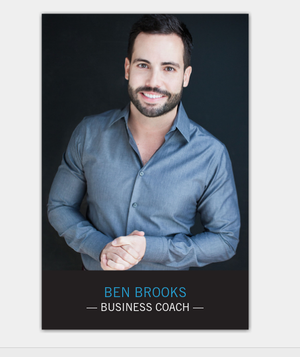
Trish Steed, CEO and principal analyst at H3 HR Advisors, and Steve Boese, H3 HR co-founder and a program chair of the HR Technology Conference, host Ben Brooks on At Work in America for a conversation about leading through AI disruption, economic uncertainty, generational friction and relentless pressure to perform. This week The Lift shares that episode, with thanks to the HR Happy Hour Network.
Most Leaders Are Bracing, Not Planning
By most objective measures the economy is steadier than the mood around it. What's rattling people is the forecast rather than the weather, and the forecast arrives all day long in the form of AI, joblessness, trade and whatever the government might do next. Ben Brooks, founder and CEO of PILOT, says that gap is where leadership energy is going.
"Most executives and leaders I know are thinking a lot about the future, but they're probably fearing a lot more than plotting."
His read is that this is backwards. When everyone else gets scared, that's the moment to play offense, and it takes more courage than most teams have on hand right now.
Fear also has a signature at the individual level, and it's self-defeating. Someone worried about losing a job stops speaking up, stops asking for things and keeps their head down so nobody chops the tallest poppy. A few months later they look like an underperformer.
"Sometimes we have these things where we are trying to avoid an outcome and the behaviors actually increase our odds of having the outcome we don't want."
The Strategy Test Most Companies Fail
Steve Boese offered a test he borrows from a strategy thinker. If the opposite of your strategy is something no sane company would ever pick, your strategy isn't saying anything. Nobody is campaigning to be the least trustworthy supplier in their market, which is exactly why "most trustworthy" fails.
Ben's version is blunter. Strategy is about where to play and how to win, and the detector is detail. Making it specific is where the trouble starts, because somebody inside the building has to lose. The executive who wants Latin America hears that the company is doubling down on North America instead. That conflict is the work rather than a sign the process broke.
Make the Implicit Explicit
Underneath strategy sits something more mundane. Every role carries responsibility, authorization, accountability and goals, and in most organizations at least one of those four has never been said out loud.
"If they're implicit, let's make them explicit so we can see if we're aligned."
Most companies are still writing five-year plans and adding three percent to last year's budget. That habit survived for decades and is finally being exposed, because the world is moving faster than the methods built to manage it.
The Exit Interview That Changed How Ben Leads
PILOT runs exit interviews about three weeks after someone leaves, with a standard question set, payment for the person's time, and Ben conducting them himself. One of those conversations recently handed him three pieces of feedback. He was too lenient. He needed to be far more directive. He needed to spend his time with higher quality audiences. It lined up with what a coach had told him and with the company's own engagement data, and the triangulation is what made it stick.
"This is developmental work for me."
The problem wasn't clarity. It was that he kept working to bring everyone along on calls where the team had already landed in the same place and just wanted him to decide. What he hears back now is relief, including relief when the answer is that the decision belongs to them and he names what they should optimize for. PILOT picks a one-word strategic theme each year. This year the word is faster, and his own hesitation had become one of the things in the way.
Trish Steed put the employee side of it plainly. People may not love the direction, "but at least there's a direction." What drives them out is the stretch where nobody can say what the company is doing at all.
Conflict Is Least Common Where It Is Needed Most
Research PILOT has been looking at finds that conflict thins out the higher you go, which makes sense as a survival strategy, since being a constant pain is not how people last in senior roles. It's also exactly wrong, because the top of the house is where the arguments about strategy, priorities and standards belong.
Steve named the trap from his own profession. An analyst reads a product announcement and declares what it means for an entire market roughly thirty seconds later.
"Have a little bit of humility, have a little bit of reflection, have a little thoughtfulness."
Trish added the historical note. The senior partners she learned the most from early on were the gruff ones. "They didn't hold back. They were authentically them." Asking people to soften was needed in plenty of cases, but the trade left us with workplaces where people talk about each other rather than to each other.
The Surgeon General's Warning on Feedback
PILOT built a 360 product where employees interview their own managers and enter the responses themselves, which flips the usual script. The piece that turned out to be missing wasn't the questions. It was readiness, so they started warning people first. This might not feel great. This might remind you of your mother. Ben calls it the Surgeon General's warning on the outside of the package, and without it feedback gets resisted rather than received.
A Culture Deck Beats a Catering Budget
Above the level of process, most organizations have never agreed on how they actually work together. PILOT helps clients write what it calls a culture deck, a set of operating principles that run horizontally across functions rather than up and down a silo. People can hold different beliefs and still share behaviors, which is itself a form of inclusion.
One principle might be that a complaint about a colleague goes to that colleague, and that anyone who hears it secondhand says so and redirects it. Another is a single standard for how customers get treated whether they reach sales, delivery or finance. Customers don't care which division answered, because only one name appears on the invoice.
Inclusion Happens in Micro Moments
Trish described the alignment she saw working in healthcare, where everything pointed at the patient outcome. Ben's version is the janitor on the hospital loading dock who, asked what he was doing, said he was helping to heal children. Her sharpest image came from the playground. Nobody wants to be the kid who doesn't get picked for kickball, "and that's how we wind up treating each other as adults."
Some of the backlash against formal inclusion programs was fair, in that gestures stood in for harder work. The harder work is writing down the unwritten rules so the internal labor market actually functions. A meritocracy only works once the standards are specified.
"Inclusion is often in the micro moments. It's not something that can be controlled or managed from on high."
It's whether someone got invited to lunch, got asked about their weekend, or got noticed on a day they seemed low. That's also the only way leadership scales, because management is the achievement of results through others.
What to Do This Week
Pick one role on your team and write down what that person owns, what they can decide without you, how they're held accountable and what their goals are. Say out loud whichever of the four has never been said.
Take one decision your team has been waiting on and make it. If you'd rather they made it, tell them that directly and name what you want them to optimize for.
Run the opposite test on your own strategy statement. If no competent competitor would ever choose the reverse, you have a slogan and you owe your team a real choice.
Before your next piece of hard feedback, prepare the person for it. Tell them what it might stir up and why you're giving it anyway.
Related Episodes
Stay Connected with The Lift
Subscribe to The Lift on Apple or Spotify
Join our mailing list
Follow Ben on LinkedIn & Instagram (& Jetson, too)