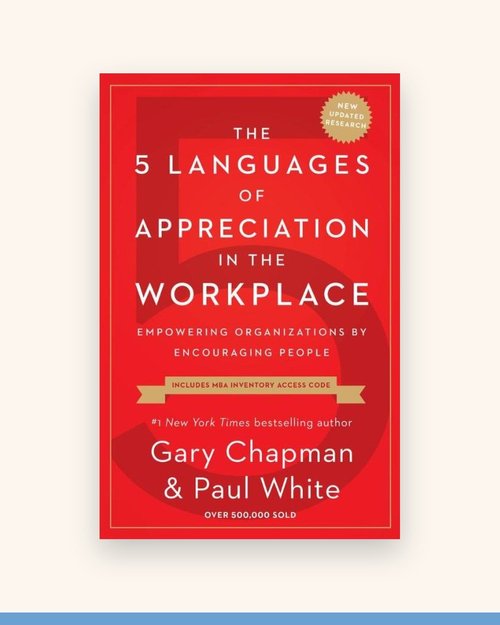
Dr. Paul White is a psychologist and the co-author of The 5 Languages of Appreciation in the Workplace, written with Gary Chapman, author of The Five Love Languages. In this episode, he explains why an employee recognition program can leave half a team feeling invisible, how younger workers are shifting the most preferred languages of appreciation, and how to make your best people feel appreciated enough to stay.
Why Praise Misses Half the Team
Dr. Paul White describes himself as a psychologist who has done research all along the way, and the research behind his work with Dr. Gary Chapman produced an uncomfortable finding for leaders. Words of affirmation is the language of appreciation that people choose most often, at about 44 to 45% of the population. That still leaves more than half of employees for whom praise and compliments will miss the mark.
The workplace framework adapts Chapman’s five languages: words of affirmation, quality time, acts of service, tangible gifts and physical touch. White notes that physical touch is rarely chosen as a primary language in the United States, so the work focuses mainly on the other four.
How a Marriage Led to a Workplace Assessment
White first met the five love languages in the middle of his own marriage. His language is words, and his wife’s is quality time. He spent a long stretch praising her, which was fine but never hit the mark. He learned to take walks with her, to listen to what she was thinking, and to respond to her instead of turning her remarks into a platform for his own stories. Today that looks like long dinners with the television and music off and his full attention on her.
The idea moved into business through his consulting work with family-owned companies. In one North Carolina meeting, a father said the succession plan was fine and his son was stepping up. Across the hall, the son called it a disaster and said he could never please his dad. White concluded that the problem was less about business than about relationship, and he began to wonder whether the languages would apply at work.
It took him a year to reach Chapman. He called or emailed once a month until Chapman came to his city for a marriage seminar. A 20-minute meeting stretched to 45 minutes, and a shared faith background and the same undergraduate school helped build trust.
Appreciation Is Not Recognition
White separates the two ideas clearly. Recognition is organizational, usually driven by the C-suite or HR, and often public. Appreciation is personal and one-on-one, and it can be private. That distinction matters because about half of the population is introverted, and a public spotlight can be embarrassing to them, so an action intended well produces the opposite result.
Recognition programs grew out of the 1950s and 1960s as a motivational tool, particularly in manufacturing. Around 2010, White says, recognition professionals told him the programs were not hitting the mark and that they did not know what else to do. He now sees good results when companies run both. Appreciation programs do not cost a lot, and they reach the large solid middle of performers who rarely hear anything because they are not hitting the high marks.
What Is Shifting for Younger Workers
Quality time has risen from about 22% of the population to the low 30s among younger employees. White points to remote workplaces and fewer everyday interactions, and he adds that words are cheap while time is one of our most valuable resources. He also cites good research showing that younger workers, especially after COVID, have some deficits in social skills and in starting conversations. His simple fix is to spend part of a team meeting catching up on weekends and how the kids are doing in soccer.
The Business Case
When people feel valued, retention goes way up, and losing experienced people is one of the most costly variables for many companies. White also reports that appreciated employees are more productive, that productivity leads to profitability, and that people who feel connected inside the organization connect better with customers. The first sign of a lack of appreciation is disengagement, and then people leave.
Making It Specific and Personal
The most effective thank you uses the person’s name, names what you value about them, and explains why it matters to you. White contrasts “thanks for providing me a job” with “thanks for giving us the day after Thanksgiving off so we could spend time with our family.”
Actions look different by setting. In a school, an act of service might be watching a teacher’s class at recess so she can make calls to parents. On a construction site, it could be helping clean up the job site at the end of the day. At an investment firm facing a Friday deadline, it could be taking over someone’s daily communication so they can stay focused. Tangible gifts are about personal connection, not raises or promotions, and White’s example is that a Yankees fan will not appreciate a Mets gift.
To find a person’s language, White’s team developed the Motivating by Appreciation Inventory, which has been taken by almost half a million people in 10 languages. It takes about 15 to 20 minutes and identifies a primary, secondary and least valued language, followed by 25 to 30 specific actions for the person’s industry. Teams then build a group profile so colleagues know how one another likes to be shown appreciation and how they do not.
The most powerful setting is person to person. White encourages even fully remote teams to meet in person once or twice a year, citing new neuroscience research showing that messages are clearer and less likely to be misinterpreted face to face.
Appreciation Can Flow Upward
White points out that recognition follows the organizational chart, while appreciation can flow in any direction. Supervisors, managers, vice presidents and CEOs benefit from hearing it from people who do not report to them. He describes a South Dakota manufacturing company where employees express appreciation for how the leader leads and provides jobs.
The AI Question
White is studying how AI affects workplace relationships, and for now he steers away from it for personal appreciation. His concern is the perception, whether or not it is accurate, that AI-generated messages are less real or authentic. He suggests that leaders put a pause button on the practice until the issue is better understood, and that being as specific as possible makes a message harder to dismiss as coming from a program.
Make Them Unpoachable
White’s closing advice is to identify two or three people who would be a real hit to the organization if they left, and to strive to show them appreciation in a way that is meaningful to them. It does not take a big bonus or a family vacation. It takes daily life kinds of things, and a practical first step is to have them take the assessment and share what they prefer.
Related Episodes
What to Do This Week
Stop assuming your team wants to be appreciated the way you do. Ask each person how they like to be appreciated and match it: give full attention to those who value quality time, take something off the plate of those who value acts of service, and show gift lovers that you know them.
Be specific. Start with the person’s name, say exactly what you value, and tell them why it matters to you.
Make a short list of two to three people you cannot afford to lose, figure out what would make each of them feel valued, and shine the light of appreciation on them regularly.
If you want to go deeper, take Dr. White’s assessment at appreciationatwork.com.
Stay Connected with The Lift
Subscribe to The Lift on Apple or Spotify
Join our mailing list
Follow Ben on LinkedIn & Instagram (& Jetson, too)