Episode 01 - Lead Like a Learner: Helen Tupper on “Squiggly Careers” and the Power of Vulnerability
This week on The Lift, Ben is joined by Helen Tupper, the CEO and co-founder of Amazing If and the author of Squiggly Careers and Learn Like a Lobster.
Key takeaways:
Learning is a core leadership skill, not a side project
Vulnerability accelerates learning and leadership growth
Personalized, “squiggly” career paths drive engagement and adaptability
Turning off autopilot improves learning at work – small changes like reflection loops and varied routines increase learning agility without adding time
“Mistake moments” – openly reviewing errors – are powerful learning tools
Diversifying how and where you learn leads to longer-lasting growth
In this premiere episode of The Lift, Helen Tupper makes a bold case for modern leadership: learning isn’t a nice-to-have anymore. Learning is the job.
In a world where roles, tools, and expectations evolve faster than most org charts, the leaders who thrive aren’t the ones who “already know.” They’re the ones who stay curious, adaptable, and willing to be a beginner, even (especially) when it feels uncomfortable. Helen opens with a line that frames the entire conversation: Vulnerability is a normal part of the learning process – it’s not something to fight against; it’s something to grow through.
Her work challenges the idea that career progress should look like a straight climb upward. The “career ladder” model is limiting for individuals (because “up” isn’t everyone’s goal) and limiting for organizations (because it stalls talent mobility, cross-pollination, and resilience). Instead, Helen advocates for squiggly careers: development that can move sideways, diagonally, in loops, or into brand-new lanes. This is a career driven by learning, not just promotion.
Senior leaders often feel anchored by responsibilities to teams, reputation, family, and the pressure to appear “certain.” But Helen says it’s more about age than career stage. People often become open to pivots during moments of change: restructures, new mandates, burnout, or opportunity windows. The question shouldn’t be, “What if I lose?” but rather, “What if I learn?”
Helen introduces the earned dogmatism effect: When someone sees themselves as an expert, curiosity can quietly shut down. They begin to protect the identity of “knowing,” which makes learning feel like a threat. For senior leaders, this can be especially sticky because executive culture often rewards confidence and punishes uncertainty.
But when leaders act like they don’t need to learn, teams learn less, too. The culture becomes one where success is aligned with certainty. That undermines psychological safety and makes it harder for anyone to ask for help, admit mistakes, or experiment.
A major myth Helen dismantles is that learning must be time-consuming. Leaders often push learning to the bottom of the list because they picture courses, certifications, or big formal programs. Instead, Helen argues for “learning in the flow of work” by engaging in small practices with outsized payoff.
One of her simplest tools is asking a series of questions that serves as a quick reflection loop after a meeting, conversation, or decision: “What? So what? Now what?”
What happened / what did I notice?
So what does it mean (patterns, feelings, implications)?
Now what will I do differently?
This kind of micro-reflection turns everyday work into a learning engine without adding hours to the week.
Ben and Helen explore curiosity as “collecting and connecting dots.” Your brain will connect the dots naturally, but you have to collect them by varying inputs and breaking routine. Helen shares the “backwards bike” idea (a simple left/right reversal that forces your brain out of autopilot) as a metaphor for leadership learning: small rewires like shorter meetings, walk-and-talks, and different question prompts create conscious attention, which creates learning.
And when the emotions show up – frustration, fear, failure – Helen normalizes them as part of the process, not proof you’re doing it wrong.
Helen’s upcoming book Learn Like a Lobster uses the lobster as a powerful metaphor: To grow, a lobster must shed its shell, a process that takes energy and leaves it temporarily vulnerable before it grows back stronger. That’s the leadership invitation: If you want to keep growing, you can’t cling to the shell of “competence at all costs.”
For perfectionists and high-achievers, Helen shares two practices that make learning safer and more consistent:
“Mistake Moments”: Instead of rushing past errors, Helen’s team shares and unpacks them (what happened, why it happened, and what they’ll do differently). It releases shame, banks learning, and role models healthy vulnerability.
Ask for feedback first: Feedback is less threatening when leaders initiate it. Helen uses “What worked well? Even better if…” because it keeps you in the driver’s seat and builds a habit of continuous improvement.
Helen shares her own current “shell-shedding” experiment: evolving her podcast format in public by learning openly rather than staying comfortable on autopilot.
If you’re a senior leader feeling pressure to have the answers, this episode offers a liberating alternative: lead like a learner, because your adaptability is now your advantage.
Links:
Employee Coaching and Development for the Hybrid/Remote Workforce
3 ways to measure your adaptability - and how to improve it | Natalie Fratto
Stay Connected with The Lift
Subscribe to The Lift on Apple or Spotify
Take our listener survey
Full Transcript
Read the full transcript
Helen Tupper: Vulnerability is a normal part of the learning process. It is not something to fight, it is something to grow through.
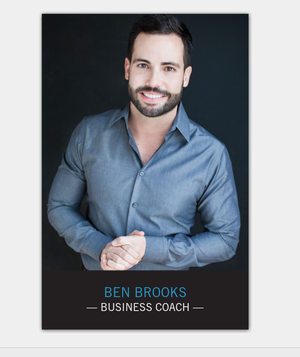
Ben: Welcome to The Lift, the show about leadership, growth, and getting what we want. I'm your host, Ben Brooks. For over a decade, I've worked with CEOs, their executive teams, HR departments, and entrepreneurs to identify what drives their success and what holds them back. And now I'm excited to share those insights with you. On The Lift, we pull up to see the bigger picture from accomplished leaders who know how to get things done in a rapidly changing world. We've got all of that and a lot more coming up next on The Lift. Hey, everyone. Today, we're joined by Helen Tupper. I first met Helen at an EY CEO conference, and I was immediately charmed. And it's not just because of her beautiful British accent, but also her passion and experience for learning. Helen's held a number of leadership positions at some very big companies like Virgin, Microsoft, and BP. She then went on to start Amazing If, an award-winning company with a mission to make Squiggly a smarter way to navigate careers. She's written a number of books, including the bestseller The Squiggly Career, You Coach You, and has a new one in the works called Learn Like a Lobster. Today, Helen joins us to talk about how we can keep growing and learning throughout our careers and how we can overcome that fear and vulnerability it takes to learn and try new things. All right, Helen, well, welcome to The Lift.
Helen Tupper: Thank you for having me, Ben.
Ben: Glad you're here. And at the beginning of every interview, we like to start out with a few rapid fire questions.
Helen Tupper: Okay.
Ben: So, coffee or tea? Coffee. Oh, okay. Favorite accessory, fashion or otherwise?
Helen Tupper: Oh, like shoes — stilettos only.
Ben: Any particular brand?
Helen Tupper: Louboutin, Choo, Manolo. I mean, the classics. Yeah, the classics.
Ben: What was your first job ever? The first time you ever made money for time or effort?
Helen Tupper: Oh, babysitting, which I feel like is where loads of people start. But I used to babysit for the Royal Air Force. And so you could go around the base. If you were known, then you could set up a little babysitting business for the Royal Air Force.
Ben: Were the kids well behaved as children of military parents or were the parents tough?
Helen Tupper: The children were lovely when they were asleep.
Ben: Okay, okay. That's the secret of babysitting. Yeah, get them to sleep. When you think about you as a leader, what influenced your style of leadership?
Helen Tupper: I think seeing how my energy creates energy in other people. You know, I've worked for some managers where just their support and their trust and their energy has led to my success. And so I've just tried to rely probably more on my energy than my expertise in a lot of the time.
Ben: Energy rather than expertise. I like that. I think I've done a lot of that myself. If you had a best friend that was just going to describe you in a few words, two or three, four words, how would they describe Helen Tupper?
Helen Tupper: Well, I do have a best friend that I run a business with. So she would say the energy. She would say relentless. Energy, relentless. And I think she would say driven.
Ben: And can you think of a time in your career that was sort of scary?
Helen Tupper: Yeah, when I used to work for Virgin, which I had an amazing job. I worked at Virgin head office. And there was a point of time when I was launching a new business for Virgin at the same time that I had a new baby. My little boy, Henry — that's about 10 years ago now. So new business, new baby. I had just started my MBA. And for some strange reason, I'd also started a side project that had become the business that I now run. And it was the point at which I thought, oh, you may have taken on too much. Thankfully, all those things went well. But at the time, it was hard.
Ben: So, Helen, you mentioned Virgin and you worked at Microsoft and you worked at some big companies and you've obviously sold and consulted to many others. And just before we dive in, can you kind of just give us a sense of what you mean by squiggly career?
Helen Tupper: So with squiggly careers, what we're trying to do really is confront the idea that careers should look like a ladder, which has been the dominant description for development for a really long time, over 100 years. And you've got companies built on this concept. And our belief is that it's very limiting for individuals because there are more ways that they can develop than up. And seniority is not everybody's motivation. And it leads to lots of people getting stuck. But it also means for organizations that their talent can stall. They're not moving people around in a business. And so we believe that a squiggly career — which when we say squiggly, we mean give people the freedom and flexibility to develop in different directions. You know, up isn't the only way. Promotion is not the only way people can progress. And so we believe that's better for individuals because it means that they have more resilient careers. They're not dependent on just one opportunity. And we think it's better for businesses because they keep people for longer and they benefit from their talent moving around the business. Ideas get shared, networks get built. It is better for business when people have squiggly careers.
Ben: You know, I've noticed that sometimes people that are earlier in their career are more likely to say, hey, I'll take a rotation. I'll go, I'll move to Malta for six months, or I'll try this thing on this new software implementation, or I'll do a stretch assignment. But when people get further along in their careers and these executive roles, and they start to have kids and dogs and spouses and other things, do you notice a difference in their appetite for being squiggly?
Helen Tupper: I always think about age versus stage with careers. And I'm always a little bit reluctant to say, oh, when people reach this age, this becomes their motivation. I feel more comfortable thinking about stage. And I do see different points in time when a career stage means people are more open to squiggly. So for example, when people are going through a restructure, and there's a particular career stage, regardless of age, where lots of people are questioning, do I use this as an opportunity to do something different in my career? Or often, people might kind of want to make a pivot. There's definitely points in people's careers where they're just more open to pivoting. I think the sources of stability and safety can sometimes make people, I don't know, risk averse to squiggly careers because they might think, particularly if they've got a confidence gremlin about failure, they might think, but what if I lose? But what if I lose? Whereas we would say, but what if you learn? You know, what if you learn? I think learning is the currency of a squiggly career. So we're always looking for people to look for the learning.
Ben: So if learning is the currency of a squiggly career — I think oftentimes people think of success, right, of their career, and success can look like stature, accoutrement, reward, power, recognition, benefits. But learning is a currency. It's not always a currency that you immediately sort of cash in or spend. Sometimes that learning is in the safe deposit box and you use it a lot later. So there's — is there a longer payback reward on some of the learning?
Helen Tupper: Yeah, I do think learning has a longer payback. But when you look at career like a ladder, learning often looks like going on a course. So you kind of mark learning, you have this very obvious, "Oh, I have learned and my learning is done. My certificates on my LinkedIn," or, you know, "I've got that status that I have learned." Whereas I think what we are saying in a squiggly career is you are always learning. You know, you used to go to work to learn to do the job, but now learning has become the job for everyone. And so I think it is continual practice that we need people to do so that their skills stay relevant and their career remains resilient. And I think this in squiggly careers, the shift in how people think about learning is really, really important. It cannot just be, "I am going on a course." It needs to be, you know, what have I learned today? Like, what have I learned from Ben by listening to this podcast? Like every conversation is an opportunity to ask a question where you can learn. It doesn't just look like the course thing. It's a real reframe, I think, that we need to help people to see. And I know that the research forever has said informal, social, on the job learning is where adult brains develop the most.
Ben: And yet we put a lot of our money and a lot of our status and recognition on the formal part, you know, going back to university, your graduate school, or getting a certification or taking a course. For a lot of people who listen to this podcast are more senior executives and they're often in senior managerial roles. I sometimes find that once people get to a certain stature, right, they've kind of made it and they get quite busy. They're in demand and everyone wants some of their time and they've got a lot of things. Do you notice things that either inhibit or increase the likelihood of someone taking squiggly journeys? You know, are there things that get in the way or things that make it more likely to happen?
Helen Tupper: Yeah. I mean, so the first is the assumption that learning takes a lot of time. So if it takes time, I often put it to the bottom of my to-do list rather than thinking about how I add learning into my everyday, you know, through small experiments or questions, for example. So that's definitely one of them. I think the other thing is this thing called the earned dogmatism effect. Have you heard of this? It's a funny thing. It's basically when people perceive themselves to be an expert. So, you know, the moment at which I say, "I think I am the expert in career development" is the moment I basically stopped being curious and I stopped thinking, well, what can I learn from Ben? What can I learn from people that are listening to this podcast, for example? And so, you know, it's a difference between the know-it-all, learn-it-all piece that Satya Nadella talks about. And I think if you hold yourself as someone who already has all the knowledge they need, I think that is the moment that you are going to start getting in your own way. Whereas if you hold yourself as someone who can learn from different people in different situations, you're constantly curious. And so I think we've got to cultivate that individually, but also collectively — like learning teams. We are really passionate about how learning happens in teams, because then it becomes continual and part of the culture and a lot easier to do.
Ben: Isn't that though, when you're senior, you're expected to be the expert, you know? If you're the head of IT security, or you're the head of marketing, or you're the person on product — to say "I don't know" or "I'm learning" or "I'm figuring this out" when you're senior vice president. I feel like there's a lot of pressure in bigger and legacy organizations to not show the vulnerability that perhaps you don't know or that you are learning.
Helen Tupper: Yeah, no, I can definitely see the pressure. And I, you know, I have felt it, and I've been in roles in technical companies where I thought, I don't know what I'm doing, but I need you to think I know what I'm doing. But I would look to Amy Edmondson's work on psychological safety. And so what she has shown in her work is that teams that have high levels of psychological safety have the highest levels of performance. And some of the things that contribute towards a team having a high level of psychological safety are being open about the mistakes that you make. For example, I have shared a mistake moment with my team this morning, something that happened yesterday, because I want them to see me role modeling that when I get something wrong, I can share and reflect and learn from it. So I've done that this morning. Another thing that contributes to a low level of psychological safety is when people don't see their leader asking for help because they present themselves as a perfect leader who knows everything and does everything right. But actually what we want is leaders that recognize that they've got gaps that are getting in their way and they are willing to ask their team for help in order to get better and fill those gaps. And that not only helps the leader get better because they're not pretending to be perfect, it also shows the team that asking for help is okay. And that, you know, when they hear someone do it, they're much more likely to be able to do that for themselves as well.
Ben: So there's sort of the knock-on, the second level order consequence of not only are they stalled in their learning because they got that dogmatic effect, but they're also then signaling to their team, this is how you succeed, is you masquerade knowing it all. When in fact, any person that's honest after a drink or two that's in an executive role say, holy crap, I don't know what the hell half the time. But there's a sort of — I'll call it kind of playing office. And we sort of — we get our costume on and we go to work, and then we're in a meeting and we say something smart or, you know, we ask the right questions. And I think that there's just learning when we're kids, you know — it's encouraged. They go to school and learning is capital L and it's yellow and it's wonderful. And of course, you learn — "what you learn today, honey," you ask at the dinner table. But as adults, that's not the idea, right? The idea is like, what did you do today?
Helen Tupper: Yeah, and I use really simple mechanics for myself and my team to support learning. So things like, I will always reflect with "what, so what, now what" — for me is a really simple reflection tool that helps me. So I can come away from this conversation today and I can just spend five minutes thinking: What did Ben and I discuss? So what are my thoughts and feelings and reflections on that? And now what am I going to do differently or as a result of that conversation? And it's so quick, but it means that you capture the learning from the moment. And I think there are so many places that we can do that individually and collectively, and leaders can create the space to do that too.
Ben: Well, I think you talked earlier about kind of decoupling learning takes a lot of time to the idea of the, you know, the three-part question you just asked — how long does that take to ask and then answer, a minute or two? But that's learning. And maybe it's a very potent — you think about ROI on two minutes of your time, that would be potentially a very high return on a very tiny investment of time. But I think, again, people are associating learning in this very formal way. So it sounds like reflection and self and situational awareness is a part of that learning.
Helen Tupper: That's one aspect of it. I think we need more moments for sort of rapid reflection, because that's kind of quick learning. I also think there's a definition of curiosity that I really like, which is that curiosity is collecting and connecting the dots. And so I think we have to be really conscious about collecting dots, and dots can be, you know — it's little, little bits of information. It's a nugget from this conversation today. You know, our brains are designed to do the connecting, to generate ideas and solve problems, but we have to do the collecting. And so I think you can do some rapid reflection, you can collect lots of different dots, but we just have to give our brains a chance to do what they are brilliant at. But if we're speaking to the same people, and we're asking the same questions, and we're doing things in the same way, then we are just not benefiting from what our brain can do.
Ben: And that collecting, you know — I think sometimes I joke, you know, why do people go to work in the mornings? Because they didn't die in their sleep. And it's just that, you know, we get up and we have ritual and we have routine and whatever your morning routine looks like. It's a little like when you see a park or something where you see a path where people just walk and you see a well-treaded path. You're going to collect less if you're always the same route, the same path. And I actually saw something recent in PILOT — we're a remote first company, and I believe in remote work. But they were talking about you collect more when you vary your routine, that there can be a boredom or a monotony. And so even though hybrid has some problems, the idea of actually going to the office — if you resist going to the office, you actually collect a lot, which could be a conversation in the cafeteria or the elevator or the parking lot. It could be something you see on the TV screen or the poster board in the break room. But all of that is the opportunity to collect. You don't know — if you're kind of foraging, if you will, you don't really know what you're going to find because you're not actually out to go find it. You can count on the connection happening. But the collecting — there is some behavior to sort of get out of your tightly woven path.
Helen Tupper: There's a really nice TED Talk that I love by Natalie Fratto about adaptability. And she talks about your adaptability quotient. It's a really short TED Talk, but there's a specific bit in there that I've always liked about the backwards bike experiment. Have you heard of it?
Ben: No. I'm scared already just thinking of a bike going backwards, but go ahead.
Helen Tupper: I feel like I should do some health and safety caveat in that I'm not advocating people do this. It's just an interesting insight into operating on autopilot. So riding a bike is something that a lot of us learn to do when we are a child. We kind of do it without thinking now. And what some people have done is they have re-engineered their bike so that when you move the handles left, the bike goes right. And when you move the handles right, it goes left. And it's a very simple change. But our brains really struggle to cope with, well, how do I ride the bike now? Because we've been doing it on autopilot for so long. And it takes you back to being a beginner. You have to relearn how to ride a bike. But suddenly you notice more, you become more conscious of it, and you can learn to re-ride a bike. But the point is that we are operating on autopilot a lot in our day — with the tech that we use, with the way we run meetings, with the way we have one-to-ones with our managers or our teams, for example. And I actually think if we did more of that rewiring and say, well, instead of it being a 60-minute meeting, let's make it a 10. And instead of it being a Microsoft Teams call, why don't we do a walk and talk? We should try to rewire, and it helps you to be more conscious and to spot more things and to collect more dots along the day, which is what we really want to do. So I think trying to turn off autopilot is a small but a significant part of how we let more learning in.
Ben: I sometimes notice people get really irritated or frustrated because it breaks the pattern in their brain. Like if I move the handle right, it goes right. And I like the if-then relationship. Our brain is built on if-then relationships. But then it's like, if right, then left. And it's like, oh my gosh, no, how do I do this now? And I think that's the frustration of maybe something new or something different, because I think we all talk about in corporate boards, talk about innovation, and we got to use AI and we have to be more agile and we have to be creative. But then when you start to — it's like — gets back on Who Moved My Cheese a little bit, and that we're all in that mode. And so as people are learning something and they try the bike, you know, handle the other way, what are some of the emotions that they might expect to experience as they learn something to do it differently? Because it sounds like from an innovation, oh, isn't that curious? Isn't that interesting? But on the personal level, don't people often have some sort of resistance or rejection or fear or anger as things start to change that they're used to?
Helen Tupper: Yeah, I think you've got — I guess you've got frustration, fear, and failure as compound feelings in this moment.
Ben: Different F words.
Helen Tupper: Yeah, different F words. F plus F plus F equals capital F, you know. But, I mean, I think accepting that that's a kind of normal part of the process — when you think about learning curves, it's not necessarily that you're doing something wrong if you're getting frustrated or if you kind of have a fear of failure. That's a very common confidence gremlin. But this is something that we have to go through. I think you and I are talking — we've got a new book out called Learn Like a Lobster. And one of the facets that we are kind of leaning on from lobsters is that in order for a lobster to grow, it has to shed its shell. So it has to recognize that its current context has become a constraint to its growth. It has to use quite a lot of energy to break out of its shell, and then it is vulnerable. It's got fear, it's got potential failure, it's probably really tired, you know — it's got all those feelings that we just talked about. But for the lobster, what happens if they go through this process is that shell, it grows back bigger, better, stronger, and then they can keep growing. And I think what we are trying to say is that vulnerability is a normal part of the learning process. It is not something to fight, it is something to grow through. And if you can find more moments where you are doing things that you've not done before, and accept that that feels a bit scary and difficult to do, you will grow better because of it. But if you don't do that, you are going to stall and get stuck and you are likely to get left behind in a world of work that is constantly changing. And that's the risk of us not doing this.
Ben: How do you think about, you know, being left behind in something — these changes are coming. But I remember this happened with social media 15 years ago in the corporate world, or digital marketing or cloud or collaboration software. I remember we had a guy who was the president of a company I worked for, and publicly traded company. He said, "You'll never see me on that damn Twitter thing." And he was just so resistant. Now, I wound up getting him to be our top internal video blogger for our internal social learning site and things. But it was all about not making about the technology, more about getting his message across. But his first reaction was rejection, was resistance, was dismissal. And I think some of that was one of the Fs, the fear. So how do you think executives can think about themselves? Because there's the content of what you learn, which is very intoxicating. But there's getting out of your — that shell. I mean, that's the shedding part and the molting part that I think is the inhibitor for a lot of executives and managers.
Helen Tupper: So maybe we'll talk about two things here. So one, I think there is a how do you personalize what to learn — so rather than just following the crowd of "I need this, I need this, I need this," because you get so distracted then and so overwhelming. So how do you find a bit of focus and personalize what you're learning? And then I think there is how do you learn in a way that is efficient. And these are two different things. I would talk about personalizing the learning first. What we will often do when we're talking to people is I kind of have this navigator, and I kind of have this matrix of what do you need to know for the job that you do now. So you've kind of got this kind of top box. So that's very essential learning. What do you need to know for the job that you do now? There's probably some stuff that your company is telling you you need to know, some industry specific stuff.
Ben: Systems, processes, things like that.
Helen Tupper: It's rarely the stuff that people love, but you know, we have to have some stuff in that box. So I get people to kind of write that down. Then you've got, well, what is nice for you to know for the job that you do now? So it's not role critical, but you're probably slightly more engaged in that. You know, people's answers might be slightly different. There's a bit more energy in that kind of learning. And then we're going to go further into the future. And we're going to think, well, areas of interest for you next. Doesn't have to be the next job, but just broad areas of interest for you next. You need to name some of those things. So I might say, oh, you know, academia could be quite interesting. Maybe I could go work in an executive learning and development role in a large corporate. You know, they're areas of interest for me. So then you go, well, what do you need to know for those areas that are interesting for you next? And there'll be, you know, a set of learning that would be important if I did want to do those things. And then you go, for those areas that you're interested in next, what's kind of the nice stuff for you to know? You know, what kind of AI stuff could you learn, or what storytelling skills? You know, none of that's essential. But again, it will often have a lot of opportunity involved in it. So I will sit down with people and I will map their learning based on the role they do today and roles that they might be interested in in the future. And you get a much more personalized approach, regardless of what's going on in the media. You really got to get this bespoke approach to someone's development. So I will often start there and I'll say to people, where do you want to go? We've mapped this for you. Where do you want to go now? And the point is, we want people to learn in different timeframes. I don't want people to put all of their learning investment just in the job that they do today. I want them to have things that excite them, things that will enable them, things that open doors for their future development. And that looks different for everybody. So we start there, and I'll pause for a moment because the other thing I want to talk about is once people have decided what those things are, then we need to design their development so that it's efficient. So I'll do that next, but I wondered if you've got any thoughts on that.
Ben: Yeah, well, I'm just — my head is spinning. There's a nonprofit a few of my friends have been on the board of, and I think it was called BookTrust. And they found the number one thing that got kids to read for pleasure was having a choice in what they read. And so I think when you talk about this desire part of it — I think so often we think of compliance training we have to do, or we have Series Six or Series Seven or something for the FSA or whatever. We have these things that we must do. But I think you tapping into what people maybe want to do — but it still requires people to then actually check in if they're going to design their careers, you talk about with Squiggly Careers a lot. They would actually have to think that tapping into the desire, because it kind of gets out of the compulsory part of our brain into the compelling part of our brain.
Helen Tupper: A hundred percent. That's exactly what we want to do. And to give people permission to personalize what that looks like. So we do that bit, and then you have to design it so that it actually is effective. And what we know is that sort of slightly more traditional ways of learning — so whether it is kind of a one-way learning experience, you know, I'm just watching some online video or even reading a book — you know, and I love books, but the reality is that learning on its own doesn't last very long. So apparently 8% of learning is retained when you read a book. Now I'm not saying never —
Ben: Don't read a book, sure.
Helen Tupper: Yeah, of course I'm not saying that. But what I am saying is when you design your development, you need to add a few other things in. So you might want to start with your personalized curriculum. What do you want to read? What do you want to watch? What do you want to listen to? Just start there, fine. But then you need to add some other things on. So the next thing I would do is I would think, well, who is an expert in this area that I could talk about this with? And that could be someone in your company. It could be a friend — doesn't matter who it is, but somebody that you could discuss this thing that you want to develop expertise in. Because learning lasts 50% longer when we talk about it with someone. If you and I are having a conversation about whatever AI thing we want to use, then I will start to remember this because of the discussion we've had. So I would start with — you know, and you could create your own group of people, peers who want to learn the same thing. That discussion still has the same impact on the knowledge that we retain. The next thing is experimentation. So our learning lasts longer when we put that into action. You know, you're learning by doing, for example — apparently 70% longer. So if I think, well, what is something that I can try out in my team? Or what can I add into that meeting? From the learning that I've done, that knowledge starts to be retained a lot longer. And then the most effective thing that we can do to retain the knowledge that we've spent all this time investing in is find a way to share it with someone else. And you could say teach, but I think teaching has some baggage. So I would much rather think share. And that could be a five minute presentation, a meeting; that could be a five minute post you write on LinkedIn. You know, "Three things I learned from listening to the podcast today." But that process of I'm absorbing the information, I'm reflecting on what I think, and then I'm generating something that someone else can learn from — it's like our brain has to create more loops that mean that the learning lasts longer. And if you can personalize your learning — so to your point, you kind of get that compelling connection to it — and then you curate what you're learning and how you're learning in a way that it lasts, that is just so much better than just I'm going to go on a course or I'm going to learn what someone's told me to do.
Ben: And I think a lot of executives think in the very, "I'm going to read this book — tell me the best book on AI or the best book on sustainability or the best book on DEI," whatever the thing might be. And, you know, I remember early when I was starting PILOT, I had a mentor, kind of peer advisor, and he was in media. He was at Condé Nast, the magazine company. He was at Bloomberg. And I was needing to get better at speaking, and I knew video was going to be a part of what we do. But I was pretty stiff. I was used to reading a teleprompter and being very prepared. And he gave me an assignment, two things to do. And one was to start doing a weekly video that I posted on social media no matter what. But I made a series called Make It Happen Monday, and I did 52 weeks. And it was a little tip or a thing, and all sorts of things came up. I would be embarrassed, or I'd do a bunch of takes, or I'd forget to do it, or it'd be 11:30 at night, and I'd go out on the street, and it'd be dark. But it was like this thing. I got this sort of repetition, these cycles. But the other thing is he had me take improv classes, and it was so much about being in the moment and working with things. I had to get over maybe the humiliation of being that beginner in public, and I would make mistakes or it might not make sense, etc. And I knew that there was a big part of me that wanted to be really good and project the competence. But I got through enough cycles that I realized — you mentioned sort of, you know, the energy versus the expertise — I would bring more of that energy and that would carry me through. And that's what actually people connected on, not me having the perfect point or saying it exactly, but, you know, how I said it, not just what I said.
Helen Tupper: Yeah. I mean, it is exposing, right? Learning at work means learning in public and your mistakes are visible. But you know, when I look at the people that I admire and the successes that they've had, it is the people that have done hard things and it is the people that kind of share their learning story. And I find that inspiring when I look at who I admire and how I want to grow and develop. It's not the people that present themselves as perfect. I feel like that often isn't very relatable. No. It is the people that tell the shell-shedding stories — it was really hard and it's really difficult — and how they did it. And I'm like, yes, go you. And I want to do that, too. It's those things that people connect with.
Ben: What advice would you have for the either recovering or actively struggling perfectionist out there, or people that have a shame button or something else? Because there's a lot of people that get into senior roles and positions, but that uniquely struggle with criticism or feedback or looking good. And so that would maybe keep them in the way of a journey like this. What advice would you have for them?
Helen Tupper: Yeah, two small things. One I mentioned earlier, actually, that's been so helpful for me personally as a leader and also the culture of our team, Amazing If — and it's mistake moments. So mistake moments is a small way that you demonstrate vulnerability, but then give yourself the opportunity to learn. So we are all making mistakes all the time. What tends to happen is we want to move on from it really quickly because we're like, "Oh, that was awful. I'm just going to do the next thing. I'm going to do the next thing." So we miss out on the learning. And we often kind of carry that with us. You know, our little inner critic starts to tell us stories about what, you know, we're not very good at. And so what we have is mistake moments. So anytime somebody in the team makes a mistake — so yesterday I did one. I forgot to sign something off. And I'm in a different country to my team at the moment. There's a six-hour delay. It wasn't ideal. My team picked it up. But I was, you know, I was feeling like that was a mistake. I was frustrated with myself. So we just use Microsoft Teams — that's the channel that my company uses. So when you have a mistake, you share it on there. We call it a mistake moment. You share what the mistake was, so it gets it out of your head, so you're not carrying the weight of the mistake. You share your reflections on it — like, why did that happen? — which means that you're kind of processing it. And then you do a, what would you do differently next time? So for example, when I'm in a different country, I should probably reduce my workload because I can't do as much as I would normally do. And then that's the learning. And I bank that learning. My team sees it. So if someone's in the same situation, they can benefit from that learning next time. And it is a small way that you demonstrate vulnerability. You say, you know, I got it wrong. And it's okay because we learn from it and I move on. And you get a lot of support from people. No one goes, "Oh, Helen, you're awful." They go, "Okay, I can see why that would really annoy you because you hate doing things like that. But, you know, it's okay." And so you feel better because of it.
Ben: So, you know, if I were to be a manager, it sounds like you're saying that the culture can really help an individual. So you think about — I think a lot of times in our careers in leadership, I think very sort of self and individualistic and determinist, but the environment. And so your team's channel around the mistake moment makes it safe or okay to learn and to be imperfect.
Helen Tupper: That's the first thing. The other small thing I think is feedback. Feedback is so exposing.
Ben: Absolutely. So feedback helps learning. I want people to have feedback, but I think it's so much easier if you get better at asking for feedback.
Helen Tupper: Yes. Because then you're in control, right? I'm in control of who I ask the feedback to. I know that it's coming. I'm like, "I'm ready." And so I just use "what worked well, even better if" all the time. And so I'm like, just get on the front foot, ask for the feedback, and then you're less likely to get something you weren't expecting from people.
Ben: What impact do the managers have on people doing that or not doing that?
Helen Tupper: Managers' role modeling is so important. And I think actually the role of managers is evolving a lot because of AI. So, you know, a lot of the operational tasks that managers would do, I think over the next year to two years, you know, some of those will become obsolete. And so hopefully we're kind of sort of evolving, well, what does being a brilliant manager mean? And I think a lot of that is, you know, the climate you create for learning, the space that you give for people to personalize their success, and everything I talk about, squiggly careers. But to the evidence — I actually read some really interesting research on this in the last 24 hours, which is in Harvard Business Review. I'm sure we can put the link to it in show notes. But it said that people who've had — some research on the difference that good managers make. And there were two stats in there that I was like, "Oh, that's interesting." The first is that a good manager is more likely to result in someone wanting to what we call squiggle and stay. So move around a business, basically, you know — they're more likely to be committed to the company they're working in and do something else in potentially a different function. 30% more likely to make a lateral move. But then the other bit of data was this isn't just about somebody's next move in an organization. It is about their long-term remuneration. So these people, seven years after they have worked for the good manager, they get paid 15% more than people who didn't have a good manager. And so I'm like, gosh, let's create managers that cultivate squiggly careers and create environments where people can learn. That pays off for the business — they keep good people for longer — and it pays off for the individual because they get paid more over the long term. To me, it's like a really obvious win that managers hold so much power.
Ben: Versus learning just being this fluffy, nice sort of enrichment thing. This is actually retention, compensation, performance — like very left brain, hard metric type things. Before we wrap up, I was curious about if you've had a lobster learning in the last six or 12 months, or moment — is there anything that you've been — the shell is molting and you're a bit vulnerable and you're in the process of right now?
Helen Tupper: Yeah, it's really interesting. So a part of the book — and there's kind of another lobster trait — is lobsters have this thing, indeterminate growth. So they never stop growing. So the learning connection there is, well, how do we never stop learning? And there's a couple of things you can do, you know — the quality of questions that you ask, the data you collect for your development, and experimentation. So I have been experimenting a lot actually with our podcast, and it's really exposing.
Ben: Okay. Okay.
Helen Tupper: Okay. So, you know, we've had a podcast for a while now, and I think —
Ben: Quite successful. Number one in the UK for careers, I believe.
Helen Tupper: Yeah. Yeah. You know, 500 episodes, and, you know, you kind of have that, well, if it's not broke, don't fix it. But equally, we've been doing it for a while, and we have a company value of being useful. So we're thinking, well, how could we be more useful? And so we're experimenting with different formats. We're experimenting with, you know, different types of episode, different lengths. We're experimenting with video and different thumbnails, a whole load of things. And some of them, you know, we're not that comfortable with. My business partner, who's a massive introvert, is like, "Why are you sticking my face on a thumbnail?" And I'm thinking, oh, I'm not sure that's quite right. But we are having to learn very publicly, because obviously I have to put that out into the world to then get feedback from people who either like it or don't like it. And it is difficult, but I know it will be better because of it, because I don't want to operate on autopilot, just to loop back to what we talked about earlier. So it is hard and it is difficult, but I just trust in the process. I trust that I will learn and grow because I'm doing this.
Ben: Welcome to The Uplift, a segment where we ask guests to promote something that they have been obsessed with recently. And you know what? That thing may just be perfect for you, too. So let's hear what our guest wants to share in Uplift this week. Helen, what is something or some things you'd want to uplift today?
Helen Tupper: It's actually quite a new thing. It's new to me, so hopefully new to some other people too. So values are one of the squiggly skills that we think people should invest in to support their development. And I have recently discovered a free tool that is very useful from the Values Institute. So it not only helps you work out what your values are, it then helps you think about ways in which you can bring them to life in your day. It creates your personal dashboard. It is so useful, and it is free, and it's just from the Values Institute. And I feel like more people should know about this tool, because I think it would help more people with their squiggly career.
Ben: Wow. I know many people talk about their values. You say, "Well, what are they?" And they're like, "Well, my values are my values, you know," or "It's my faith," which is important. But I think having a tool to do that — so we'll put that in the show notes. And I will tell you, for defining the — for my company and myself, when I got to do that through some executive education, has been life-changing in clarity of decision, confidence, steadiness, prioritization. So I think that the values can be a hugely guiding thing, but they're often very hard to define. And it sounds like someone's cracked that nut.
Helen Tupper: I think so. I think so. No affiliation, just admiration for it.
Ben: All right. Well, Helen, thank you for joining The Lift.
Helen Tupper: Thank you for having me, Ben.
Ben: Cheers. Thanks for joining me this week on The Lift. For more info on what you heard in today's episode, visit our show notes. You'll find links to Helen's work at Amazing If, including her podcast and great resources that help you identify and tame your confidence gremlins. You can find bonus resources at https://www.theliftpod.com/. If listening to The Lift today was a good use of your time, please share it with a colleague, a friend, I don't know, your ex, your mother, anyone. Don't let good advice die with you. And for those of you who like to earn a little bit of extra credit, leave a comment on Spotify. We'd love to hear from you. The Lift is produced and edited by the team at editaudio. This episode was produced and edited by Ali Sirois. Our production manager is Kathleen Speckert. Our executive producer is Steph Colbourn. A special thanks to Korey Rich and Beth Gatsik. Join us next week on The Lift. There's only one way to go. Upward.