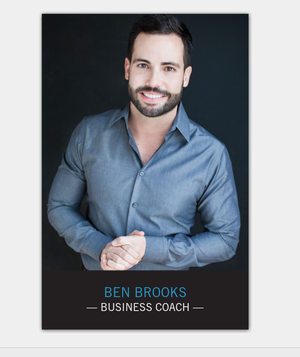
Episode 10 - Managing yourself first: Margaret Andrews on self-awareness and leadership
In this episode of The Lift, Ben is joined by Margaret Andrews, Harvard professor of executive education programs on leadership, emotional intelligence, and self-management, founder of The MYLO Center, and author of Managing Yourself to Lead Others.
Key takeaways:
Self-awareness is the foundation of great leadership
Emotional intelligence matters more than many leaders realize, particularly when it comes to communication, trust, and feedback
The best bosses stand out for their interpersonal skills, not just IQ or technical expertise
Feedback and emotions are data, and leaders who learn to interpret both can make better decisions and build stronger relationships at work
If you want to change how people think, you have to change how they feel
Leadership growth starts with self-reflection: understanding your values, your definition of success, and the people and experiences that shaped you
What makes someone a truly effective leader? According to Margaret Andrews, it starts with a skill that many business schools and workplaces still undervalue: self-awareness.
The core idea of this conversation is simple but powerful: before you can lead other people well, you have to understand how you think, feel, behave, and impact others. That sounds obvious, but in practice, many leaders skip this step. They focus on strategy, process, execution, and technical skill while overlooking the emotional and interpersonal habits that shape every meeting, every relationship, and every decision.
Margaret’s own path into this work started with difficult feedback. Early in her career, a boss told her she lacked self-awareness. It was painful to hear, but it became a turning point. Instead of dismissing the comment, she began asking deeper questions about why she showed up the way she did, how others experienced her, and what she needed to change in order to become a more effective leader. That journey led her to develop a framework for managing yourself before leading others.
In the conversation, Margaret shares six essential questions leaders can use to better understand themselves:
Who and what ideas shaped you?
What life events changed you?
How do you define success?
What are your core values?
How well do you understand your emotions?
What feedback have you received over the course of your life?
These questions get at the heart of leadership development because they force people to examine the beliefs, experiences, and emotional patterns they bring into the workplace every day. Margaret makes the case that leadership is not just about getting results through others. It is also about understanding the forces inside yourself that affect how you listen, react, communicate, and influence.
Margaret asserts that people are not nearly as rational as we like to think. If you want to change the way people think, she says, you first have to change the way they feel. That insight has huge implications for managers, executives, and founders. You can have the smartest strategy in the room, but if you do not understand the emotional reality of the people around you, your message may never land.
Margaret also shares a practical exercise she uses in executive programs: think about the best boss you ever had, then identify the top reasons they were effective. Across years of teaching, she has found that most people’s answers do not focus on IQ or technical brilliance. Rather, they focus on interpersonal skills: things like listening, trust, empathy, communication, calm under pressure, and the ability to make others better. In other words, the qualities that make someone memorable as a leader are often the very ones organizations treat as secondary.
This episode is especially valuable for leaders who have relied on competence, speed, achievement, or hard-driving standards to succeed and are now realizing those strengths may not be enough. Margaret offers a more sustainable model – one rooted in emotional intelligence, reflection, and behavioral change. She also draws an important distinction between personality and behavior. You do not have to become a different person to grow as a leader, but you may need to change how you behave.
For anyone trying to become a better manager, a more grounded executive, or a more thoughtful human being at work, this conversation is both practical and deeply personal. It is about more than leadership theory. It is about how your inner life shapes your outer impact.
If you want to lead others more effectively, start here: know yourself better, manage yourself more honestly, and build from there.
Links:
Managing Yourself to Lead Others (Margaret’s book
Stay Connected with The Lift
Subscribe to The Lift on Apple or Spotify
Take our listener survey
Full Transcript
Read the full transcript
Margaret: If you want to change the way people think, you have to change the way they feel. People are not as rational as we think — we like to think, let me say that. We're very emotional beings, and that is not a weakness. That is part of being human.
Ben: Welcome to The Lift, the show about leadership, growth, and getting what we want. I'm your host, Ben Brooks. For over a decade, I've worked with CEOs, their executive teams, HR departments, and entrepreneurs to identify what drives their success and what holds them back. And now I'm excited to share those insights with you on The Lift. We pull up to see the bigger picture from accomplished leaders who know how to get things done in a rapidly changing world. We've got all of that and a lot more coming up next on The Lift.
When I think back on being in business school, there was something missing. So much of the content and curriculum focused on technical skills, process — but almost nothing was focused on emotional intelligence or how we manage ourselves. Margaret Andrews is here to help us do just that. She's held senior roles at MIT and Harvard, where she now teaches some of the most popular executive programs, including the always-sold-out Managing Yourself and Leading Others — and you better believe I looked her up on RateMyProfessors, and her students love her. She's the founder of a leadership development firm called the Milo Center and has recently published a fantastic book based on this signature concept. Margaret believes that better leadership begins with self understanding. Today she's gonna teach us how to improve ourselves to be better people, so we can go on to improve our workplaces, our communities, and those we work with. Well, Margaret, welcome to The Lift.
Margaret: Thank you so much. It's great to be here.
Ben: For those of you that aren't able to see this, Margaret is behind what looks like a Barnes and Noble. There is a couple hundred books there, including her fabulous book, Manage Yourself, Lead Others. I gotta ask you — what percentage of these books have you read that are behind you?
Margaret: Most. I will say most of them, in some capacity. There — there are definitely some where I zero in on a chapter or something like that, but most of them. And some of them are still aspirational.
Ben: I had a college professor once, Carol Johnson, who said, you know, you don't have to read the whole book. She's like, you can just go to the thing that you want.
Margaret: So, that's right. I find the intro is always good, 'cause that points me where I really wanna look, and then I dive in wherever it makes sense.
Ben: Margaret, we in our research saw that we had worked at the same company — different time — but Mercer Management Consulting, Oliver Wyman.
Margaret: Oh yeah. Yeah.
Ben: And we both have a consulting toolkit, or scars, or whatever else in between.
Margaret: Yes — a little of both, perhaps.
Ben: A little of both. Still, I think, a great place to start a career.
Margaret: Absolutely. It is — was — such a great learning opportunity, and you'd learn a lot of professional skills there — analytic skills, emotional skills, communication skills, et cetera. So yeah, it was a wonderful place to work, and I still keep in touch with several people from there too.
Ben: And I think it speaks to even the title of your book, around managing yourself. I think a lot of consulting taught you to manage your work, your schedule, your relationships, your updates, all of it. And while we had a lot of hands-on supervision from partners and others in between, it was a real awareness that I had to be really responsible for my work in a way that I didn't know in my first corporate jobs.
Margaret: I think that's true. You know, my first job out of college was for Deloitte, and I was on the tax side at that time. And you know, of course, to get certified as a CPA, I had to do some audit work as well. And I'll tell you, one of the big lessons there that I learned was what they called work paper technique — to kind of figure out, you know, how you got to where you got to. And so what I found so interesting is that there were multiple people that would check over your work before, you know, the audit was released or the tax return was finished or something like that. And then when you get out in consulting, I found that — woo — there aren't, you know, four levels of review on these things. So it makes you very, very careful about, how can I tick and tie this number and find my way back to it.
Ben: Well, one, we wanna talk about your book. You had me at the title.
Margaret: Thank you.
Ben: I work with executives all around the world — almost every team I've ever worked with, across all industries. The first thing that the executives start talking about with leadership is about they and them and those and the — the theys. It's very sort of othered, if you will. To start with me or I is seldom a part of a lot of the leadership doctrine. How did you come to this distinction and realization? 'Cause a lot of researchers and academics, you know, don't start where you start on this, or think of it the same way.
Margaret: Yeah. I mean, you know, I discovered it kind of on my own, because I had my own not so great leadership experience. And that was when I had a boss that we just didn't really — I'm gonna say gel — as a team, if you will. And one time when we were having a meeting, he looks across the desk at me and says, you're not self-aware. And it was not said in a, oh my goodness, you probably don't know this and let me help you. It was kind of said in a way, you know, you're broken and can't be fixed.
Ben: A label.
Margaret: Yeah — a label, yes. And so I was of course very defensive and didn't wanna hear that. You know, I'd had a decent amount of success in my career to date, and no one had said anything even remotely like that before, so it just felt like it came out of the blue. But once I calmed down and started to think about it, I realized, you know, I actually think he's right. That there were certainly — my relationship with him was not great, and I think there were a few people on my team that were, I'm gonna say, afraid of me. And none of that was ever my intention, but it was the result. And you know, when there is a common theme, you have to look to, well, what is the — where's the common denominator? And that all pointed back to me. So I just started thinking about this, you know — okay, this is something that, if I didn't create it — all of it — I certainly had a strong hand in it. So what am I gonna do about it? And started just doing research, you know, looking at academic studies and leadership books and, you know, history and philosophy and all kinds of things. And really hit on this idea that you have to understand yourself, and then manage yourself, to better understand, develop, and lead other people. So it's not all my thinking originally, right? You know? It comes — goes back to ancient philosophy. You know, we've certainly heard know thyself, right? Carved into the Temple of Apollo at Delphi. And lots of different philosophers — the Stoics, of course, part of that. So it's easy to understand. It's not always easy to do.
Ben: Yeah. I am curious about — if your boss at the time had a body camera on, what would he have observed that had him label you as not self-aware?
Margaret: Hmm. I would say, in a way, I would — could be very hard charging, very confident in my own assessment of things. I think, one — for me personally, one of the hardest things was to learn to take someone else's perspective. And as that, I would say listening, right? Listening into what they were saying, to better understand the perspective. Because very oftentimes, you know, they had a different take on things, and it was a valid different take. It doesn't — sometimes it doesn't mean you're gonna completely change what you do, but you may do it a little differently, and that was very helpful to learn.
Ben: It reminds me, Margaret, of when I was actually at — at transition from Oliver Wyman to Marsh McLennan Companies, the parent company. The former head of Oliver Wyman — she lives in Boston — Nicole Gardner, we'll give her a shout out. She —
Margaret: Oh, I know Nicole. Yeah. Yeah.
Ben: Did you know Nicole?
Margaret: Yeah, I know Nicole. We worked together at Mercer before it was all Oliver Wyman. Yeah. So she worked there for a long time.
Ben: So — so I had approached Nicole to co-found an LGBT Employee Resource Group in about 2007, and you know, she was a great executive champion for LGBT rights. And then I went on, and from consulting to HR, and she was then — I was working with her in an HR context, 'cause I was at the parent company. And I remember she was so loving and patient with me, which I needed. And she said, hey, can we — can we sit down and have coffee? And she said, you know — it was a similar "you're not self-aware," but Nicole packaged it in a more digestible package than a label. And she said, you know, in a lot of these rooms you're working harder, you think faster, you have more perspective than a lot of these folks that are even 20 years older than you in these rooms. But you think that the prize is just to have the right answer or the right plan. And she's like, I want you to think in your mind of a little pie chart, and 60% of the pie is what you're trying to say — what's the plan, where are you driving the work, what's the ask — and she used some consulting vernacular — and 40% is their experience: of you, of the work, what they're dealing with. You're just thinking of a hundred zero, not 60 40. So I took that to heart, and I actually printed out a pie chart with that ratio. And for years, I just always taped that graph — and so every meeting I went into, it was the first thing I saw before I opened my notebook, was that little reminder to think of the other. Because I was thinking about myself, sort of masquerading that I was thinking about the org or the shareholders — and certainly I was at a certain point — but I was really focused on my own success or, you know, getting things done or looking good, and that actually made me less effective.
Margaret: I love that, and I can absolutely see Nicole saying that, and in the very caring way that you described. But I also love your little pie chart. I think that, you know, those kind of little tiny reminders of things — I teach the class Managing Yourself and Leading Others, and very oftentimes people say, oh, you know this so well. And I say, well, why do you think I teach it? Because it's a constant reminder to myself — absolutely, myself. We all need these reminders. And so whatever you do — you know, whether you tie a string on your finger or, you know, have a pie chart on your notebook or whatever it is — it's not a one and done, right? We have to be reminded of that. And what you say about thinking that we have to have the right answer — I think that very oftentimes does get us, I'm gonna use the word, in trouble. You know, growing up I always thought — I grew up in a kind of an engineering family; both of my parents went to MIT. So you know, it was about logic and those kinds of things. And so I always just thought the best idea won. You know, you'd have a debate on ideas, and I just thought, you know, well, the best idea — of course it always wins. And then I realized, oh gosh, that's actually not true. It's the best networked idea that often wins. And that gets to hearing people, understanding them. You know, what's that old saying? I don't even know who said it, but: no one cares what you know until they know that you care. And it's kind of — it's a little bit like your pie chart.
Ben: You know, in leadership we talk sometimes about self-awareness, situational awareness, and social awareness. How do those link in your mind? Because there's the island of you — to learn and to regulate and to manage and tie strings around your finger, et cetera. But how does that then link to the context or situation you're in with others — you know, colleagues, clients, you know, government partners, et cetera — and also then the social relationship, the situational, around, let's say, the business context: tariffs or inflation or quarterly earnings or nonprofit fundraising goals. How do those things link in your mind?
Margaret: Yeah. And you know, kind of as you're saying them, I tend to think of, like, concentric circles, right? But the core of it is the you, right? Because you are at the center of your world, in many respects. So you have to understand yourself. Then you have to understand the people that you're with, and the context. I'm so glad you said that, because I think so much of leadership and life is about the context, and the context is always changing. So even if you've been working with somebody for a long time, they have good days and bad days. They're very happy one day and they're really mad the next day, or they didn't get a good night's sleep the night before, and they're just not quite themselves. And then there's the larger context — what's going on in the business, what's going on in the industry, what's going on in the world. So, you know, you have these things, and they're all dynamic. They're all changing. You know, we have days where we wake up on the wrong side of the bed. You know, I wish that wasn't true, but you know it is. So, understanding ourselves — 'cause a lot of times people ask me, well, why is that so important in leadership? And I say, because if you understand yourself, you are more grounded. You understand sort of who you are, how you got to be who you are, and also, you know, situations that have changed your life, what your values are. If you really do understand yourself, you understand your emotions and how they can impact you as well as other people.
Ben: And I've talked to people that sometimes resist that, 'cause they — we just gotta get the work done, or I gotta just manage them, or we gotta drive results. And I — well, of course. And when I worked at Lockheed Martin outta college, we had top secret clearances and things like that, and we talked a lot about not being able to be blackmailed by adversaries. And I took — and I don't mean this in a literal sense, but just as an object lesson — to think about: if you don't know yourself, and others might know you more than you, they can manipulate you.
Margaret: Yes, absolutely.
Ben: They can push your buttons, they can be reductive. Do you agree with that? How do you think about that?
Margaret: Yeah, I do. I do think that that's important, and I like your point. The other thing that I'll say is, I oftentimes hear people say that, oh my gosh, I don't have time for this. You know, we're in such a hurry, et cetera. And I think of the idea that sometimes you have to slow down to speed up, right? If you work in a chaotic environment, sometimes just a few moments of stillness, to think or to have a certain type of discussion with somebody, just clarifies things. So when something is not working effectively, you gotta look at, well, is there something I need to do differently? And very oftentimes in leadership, it's — we need to maybe think a little bit more about how we're reacting to things, how we're coming across to other people. So you know, if we need something done, we can bark at somebody to get it done, or we can explain to them the purpose of what's going on and why we need it more quickly. You may have very different outcomes.
Ben: I think people get comfortable in their dysfunctions if they're in a hurry, as you give an example.
Margaret: Yes, yes.
Ben: And sometimes they'll say — well, how long have you been in a hurry for? I'm like — well, what do you mean?
Margaret: Great question.
Ben: And they're like, we just have a lot. It's Q4. We have a lot going on. I said, but is that a familiar feeling? Well, yeah. And then you go, and all of a sudden it's like, well, I've been in a hurry. And for how — oh, since I was eight. Oh — why is that? One of our parents left and I had to make money for the family, and I felt behind in life ever since. And you're like, okay, well, this is not about Q4 then.
Margaret: I love that question though, because it really stops you and makes you think about that.
Ben: And a lot of the reason I think people resist exploring themselves is the reason they need to explore themselves. They might be overly sensitive or insecure, or they might be unloving or unkind to themselves, or impatient, or lacking curiosity. But that's actually — the reason that it's an impediment is the reason that they need to work on it.
Margaret: That's exactly right. And one of the things that I tell people — and I mention in the book, because I think it's very helpful — is a quote by CS Lewis, and he says, you can't go back and change the beginning, but you can start where you are and change the ending. And I think that is a lovely thought, right? In the sense that, yep — stuff happens. Stuff happens that sometimes you have no control over. But you do have more control and more agency over your future, and the future starts now. So what do you want it to become? You know, who do you want to become? And then to think about, well, how did I start, and how did I get here, and where do I wanna go — therefore, what do I need to do a little differently?
Ben: You're saying, you know, we can reshape ourselves. If someone's listening to this, say, well, gosh, am I self-aware — how would people know?
Margaret: Yeah. I go back to some research that Tasha Eurich did. Tasha Eurich is a researcher who wrote the book Insight, and all of her research is around self-awareness. So she asked people, do you think you're self-aware? And about 85, 90% of people say, yes, I'm self-aware. And then they do, you know, a series of assessments, et cetera. Looking at — self-awareness is understanding the emotion that you're having in the moment, and understanding the impact that you have on other people. And when they did these further assessments, it turned out that about 15% — that's one-five percent — of people thoroughly fit the definition, her definition, of being self-aware. So 85, 90% thought they were; 15% actually turned out to be. So that's a big gap. So it turns out probably most of us are not quite as self-aware as we think we are.
Ben: The two parts of the research you said — around people understand what's going on with them emotionally, and the impact that has on others. I noticed there's a lot of folks that will claim to be self-aware, and sometimes they even take assessments and things, and they tend to almost label themselves in a way that they're stuck with how they wound up. And they'll just say, well, I'm direct. Or, when I get nervous, everyone's gonna feel it. And they have this sense of what's going on with them. But there isn't that connection of the — so what does that mean for people that I'm working with or in my proximity?
Margaret: Yes, I think that's true. And I think a lot of times we think, well, that's just who I am. And then the question is always, you know, well, is that who you wanna be? Because you can change some of these things. And so I'll say a couple things there. One is that when we're talking about that — who do you wanna become — we're very oftentimes talking about changing our behaviors. And a lot of times people think, well, I can't change my personality. And I say, we're not trying to change your personality. You're trying to change your behavior. And they're very, very — and I think that gives people a little bit of peace. Like, oh, okay, right — I can change my behavior. It's not easy. I have these six questions that I use for people in terms of understanding themselves, and two of them are related very much to what you just said. So I'll just go through them quickly.
Ben: Yes. Great. So you have the whole set.
Margaret: Great. But the first one is around who and whose ideas have shaped you. And this is of course a massive question — and the more you think about it, the longer the answer is, right? These are people that helped you and people that hurt you, because both types of folks have influenced you. And so of course it's parents and siblings and extended family and childhood friends and, you know, the baseball team that you were on, right? Coaches, et cetera. The teachers. But it's also those dorm room conversations that you had, the book you read that changed the way you thought about things, or a movie you saw — all of these. It's — so it's people and ideas. And my own answer to that question is six pages of single spaced type, right? So it's a long list when you really get going on it. You start to think about it.
The second one is around situations and events that have impacted your life. And I always say these are lucky accidents and unlucky accidents. The unlucky ones are very obvious — it's the car accident, it's the time you got sick right before the big interview and blew the interview, or something like that. But the lucky accidents are there too. The one I hear all the time is about somebody saying, I really didn't wanna go to that party that night, but I went, and that's where I found my spouse, right? I met my spouse. But other ones are, you know, you stop by somebody's office and talk to them, and they told you about a job that was perfect for you. So, you know, there's all these different ways.
And the third question is around your definition of success. And this is your own personal definition of success — this is not your parents', it's not society's, it's yours. And this is in your personal life and professional life. And I have some, you know, kind of further questions to help you think about that.
The fourth one is around your values, your core values. And these oftentimes change throughout our lives. Yes — there's no good or bad, that's the other thing on these things, right? So some people say, when they've gone through this, you know, gosh, I realize that my family was not my top priority. And I said, fine — it's good to know it, right? Doesn't mean it's not a priority. It means that it's not your top one. And so, you know, in terms of values, I say to people, you know, look at your calendar. What would your calendar tell you about what you value? But also, what makes you angry? When you read a story or witness something, what makes you angry? And there's usually kind of a common theme to these things. And I say, well, the reason why that's interesting is 'cause that anger is pointing to a value.
The fifth question is around emotions, and that is, to what extent do you understand your own emotions and feel them? And then the sixth question is around feedback — what type of feedback have you received over your life, in your personal life and your professional life? Emotions and feedback — those two questions are actually related, because very oftentimes the feedback that we get is about how our behaviors impact other people, and very oftentimes it's when we're having a strong emotion.
Ben: I think these are really interesting questions to sort of navigate, and most people would probably agree — like, they're self-aware that feedback's a good thing — and the reality, most people don't handle it well, they don't solicit it often, et cetera, despite it being so obvious. And I can relate to that even myself — that earlier on, a big part of the way that I navigated surviving being gay was being successful. Sort of the Michael Jordan syndrome, they call it sometimes — I'll show you. So it was competence, right? And I was gonna be a leader, and I was gonna achieve, and I was gonna win the award, and I was gonna make the money, or I'd buy the house or I'd do the thing. And the feedback, in my mind, threatened my winning strategy or my survival mechanism. Even though it actually — if I hadn't taken it so personally or been defensive — probably could have actually increased my chance of success, even though I was playing a somewhat unhealthy game. And I'm just curious — from some of those things, in those six questions, are there things that people uncover that might help them understand a little bit more about why they're not even considering the impact that they have on others?
Margaret: So I wanna ping off of something that you said just a moment ago about, you know, you were using this as a compensation. And I think that that is true of lots of us — that we are compensating for something, or that we think, I'm just — if I do this, no one will notice that, whatever. Or I won't notice that — yes — whatever you wanna say. And I will oftentimes hear people say, well, this is what has made me successful, so therefore this is a winning formula. But then we have Marshall Goldsmith, who very famously said, yes, but what got you here won't get you there. And so a lot of times we do have to change the way that we're doing things to get to a next level. So, you know, very oftentimes it's our intelligence and our work ethic and our subject matter expertise that makes us very successful in our earlier career. But as we are leading other people, it becomes less about us and more about them. But that doesn't mean it's less about us understanding ourselves. In fact, it means we have to understand ourselves more when we're leading other people, so that we can more effectively develop and lead them. There is oftentimes a reluctance to — one, look at ourselves, but two, also to make these changes. Again, you know, hey, this is what made me successful. But the thing is, okay, a lot of times we're losing traction, right? We're not having kind of the same level of success, which means that, okay, maybe it's time to change it up, to look a — you know, maybe what else is going on? And to your point earlier, you said, you know, well, maybe I would not have been as successful had I done these things. And the point is, is that we don't know. Maybe it would've been — we — more successful, if you had — so, but the point is, is what do we need to change now?
Ben: I'm curious, you know, when leadership — the sort of Venn diagram between leadership development and, let's say, cognitive behavioral therapy, or broader mindfulness and wellbeing, meditation — even some people explore psychedelics, et cetera. I don't see those coming together a lot, but yet it's so fundamental to understand some of these things. Where people say, well, don't I just need to learn how to lead better meetings, or create a better strategy, or hold people accountable — I would say yes, and: you have to understand that humans are irrational, things are not A to B in some linear relationship. There's so much complexity and nuance. What's your role on the broader — beyond just, you know, what we think is maybe narrowly leadership development, at least our connotation — how do the things around emotional intelligence, through therapy or their mindfulness, play into leaders being more effective?
Margaret: I guess I might say two things. One is that we tend to judge ourselves by our intentions. I intend to be a good friend, I intend to be a good boss, I intend to be a good teammate, whatever it is. But other people judge us by our behaviors. Right? So we may have the very best of intentions, but that is not what we're going to be judged on. And the other thing I'll say, which is very, very much related to what you're saying, is that if you want to change the way people think, you have to change the way they feel. People are not as rational as we think — we like to think, let me say that. We're very emotional beings, and that is not a weakness. That is part of being human. And so when you are having certain emotions — when making a decision or, you know, in a conversation or something like that — pay attention to them. They're trying to tell you something. So I think that our emotions are part of what makes us human, and they are part of the human experience. Some of them we like more than others, but they're all there for a reason.
Ben: And they're data. They don't necessarily control us or tell us what to do, but it is information.
Margaret: It is information — information, absolutely.
Ben: So Margaret, for the students you have — and many of whom are mid-career and professionals — they think, gosh, I want to better manage myself. Where would they start, or what might they do?
Margaret: Yeah, so I have an exercise that I do with folks. And what I ask them is, I say to think about the very best boss you've ever had. Could be your current boss, the one right before your current boss, the first one you ever had — anybody. It has to be somebody that you worked directly for. And then I ask them to create a list of, what are all the reasons why this person was your best boss? Right? And there's so, so many reasons. It could be, you know, they were super smart, or they were the very best at search engine optimization, or, you know, that they were good at conflict management, or they saw something — and it could be all kinds of different things. So then I have them create a list, and I say, go for at least eight — at least eight reasons, right? Break down the big reasons into smaller reasons. And then afterwards I say, okay, now narrow that down to your top three. It can't be two, it can't be four — has to be exactly three. So they do that, and of course that's a little bit harder. And then I say, okay — I've been doing this exercise for close to two decades now, with people from all over the world, at every level of an organization, different industries, et cetera, and the answers that you have for your top three are almost always in one of three buckets. And the first bucket is IQ, meaning this person was exceptionally intelligent. The second one is around technical and functional skills — coding or, you know, whatever it is. Design, something like that. Design, yes, exactly. And then the third bucket is around interpersonal skills — also known as emotional intelligence, relationship skills, soft skills, superpowers, whatever you wanna call them. And so then, when we're in a room together, they have three post-it notes, and they've written one of the reasons on each one of them. And I say, okay, go put on the board where they are, in which bucket. And what I found over the years — and I started keeping track of it — is that 85% on average — 85% of those post-it notes — are in that third bucket, around interpersonal skills, and the other 15% is relatively evenly split between IQ and technical and functional skills. So what this is saying is not that IQ or technical and functional skills are not important. But what it's saying is that for leading other people, interpersonal skills are the most important. And I usually do that very early on in an executive education program, because that just sets the context for everything else. And I ask people, you know, did you think that person understood themselves well? And people think, yeah, yeah, they did. Do you think this person managed themselves pretty well? Yeah. Yeah, they did. And then I'll ask — which I think is the acid test — I say, would you work for this person again? I see a sea of nodding heads. And I say, that is what leadership is — that they developed you. And I ask, you know, did that person ever give you feedback? And people say yes. And I say, did you always like it? No. But did they make you better? Yes. Right? So that's what this is all about. And so they have this context for it. And usually that person also got results too. That's what it's all about.
Ben: Well — odd numbers, post-it notes, prioritization. You're a woman after my own heart. And I do think that it is so important with managers — you know, people will go back and get more degrees and learn more technical skills and all that, and those are important threshold competencies. But I think that differentiation is, can you work with others? And ultimately the definition of management is the achievement of results through others. It's a leveraged model. This is through people. And so that's the interface between each other. So that's fabulous. We're ending today with Lift Your Cause, a segment where guests get to champion a cause, a movement, or mission that's got them fired up, and tell us why we should be paying attention to it too. So Margaret, is there something on your radar that we should know about?
Margaret: Yeah. I believe that the world would be a better place if we all understood ourselves a little bit better. And sometimes understanding ourselves better is helped by being with people that are not like us. And so one of the causes that I'll say I'm big on is about international understanding. And when I was at UC Berkeley, I lived in the International House, which is essentially a dormitory of roughly 600 people — half are non-US and half are from the US. And so of course, you know, you have roommates from all over the world, et cetera. And now I'm on the board of it, because I do — I care a lot about it. You have lifelong friendships there, and you have discussions that you couldn't have anywhere else, and it helps to shape you and the way you see yourself and the way you see yourself in the world. And that, you know, different people can have different thoughts and opinions — doesn't mean they're not good people.
Ben: Margaret, thank you for being on The Lift. It's so great to connect. My mom would never say it's a small world. She says we lead big lives.
Margaret: Oh, I like that.
Ben: So thanks for leading a big life and joining us on The Lift.
Margaret: Well, thank you so much for having me. This has been very fun.
Ben: Alright everyone, let's turn this episode into action. First, take Margaret's thought exercise about that best boss you ever had. Write down the many reasons why they were great, and then force rank the top three — the three that really made the difference. Let that serve as some inspiration for the kind of manager or leader that you desire to become. And second, Margaret had six powerful questions to help you better understand yourself. I encourage you to take a minute to dictate or write down the answers to: number one, whose ideas have shaped you? Number two, what are the situations and events that have impacted you throughout your life? Three, what is your own personal definition of success? Four, what are your core values, knowing that these can change over time? Five, to what extent do you really understand your own emotions and allow yourself to feel them? Not an easy question. And number six, what type of feedback have you received over your life, both professionally and personally? Knowing the answers to these questions will help you better manage yourself so you can better lead others.
Thanks for joining me this week on The Lift. For more info on what you heard in today's episode, visit our show notes. You can find out more about the show at theliftpod.com. If listening to The Lift today was a good use of your time, please share it with a colleague, a friend — I don't know, your ex, your mother, anyone. Don't let good advice die with you. And for those of you who like to earn a little bit of extra credit, leave a comment on Spotify. We'd love to hear from you. The Lift is produced and edited by the team at editaudio. This episode was produced and edited by Ali Sirois, with additional production support from Victoria Marin. Our production manager is Kathleen Speckert. Our executive producer is Steph Colbourn. A special thanks to Korey Rich and Beth Gatsik. There's only one way to go — upward.